Reine Khalil, Zein Kallas, Montserrat Pujolà, Amira Haddarah
{"title":"新型可持续原料:蟋蟀粉和角豆粉的高蛋白零食的感官特征","authors":"Reine Khalil, Zein Kallas, Montserrat Pujolà, Amira Haddarah","doi":"10.1002/fsn3.4392","DOIUrl":null,"url":null,"abstract":"<p>To fulfill consumer trends in sustainable and healthy food choices, this study explored the application of edible insects and carob powder as sustainable and nutritious ingredients in developing a high-protein snack, known as a protein ball. Four formulations were developed and characterized in terms of moisture content, water activity, color, texture, microbial count, and nutritional profile. Finally, the sensory profile was determined using the flash profile method, and the developed product was compared to a commercial product. The effect of replacing the conventional protein source with cricket flour and cocoa with its sustainable alternative, carob, on the measured characteristics was determined. The results showed that cricket flour significantly decreased the lightness color values (from 40 to 30) on the internal surface of the protein ball. Texture remained largely unaffected initially; however, after 2 weeks of storage, cricket flour significantly decreased the hardness (from 15 to 12 N) and chewiness values (from 1.6 to 1.0 N mm). Moreover, cricket flour significantly increased the aerobic count (from 3–4 log to 5 log cfu g<sup>−1</sup>). The sensory space of the cricket samples was separated from the milk protein samples, mainly related to flavor attributes, while the commercial sample was distinguished by dryness and sweetness. In general, carob powder did not affect the measured parameters compared to cocoa. This study demonstrated the suitability of utilizing cricket flour and carob powder in a high-protein snack without substantially compromising the product's organoleptic properties. Future research could investigate the consumer acceptability of the product.</p>","PeriodicalId":12418,"journal":{"name":"Food Science & Nutrition","volume":"12 11","pages":"9443-9457"},"PeriodicalIF":3.8000,"publicationDate":"2024-10-14","publicationTypes":"Journal Article","fieldsOfStudy":null,"isOpenAccess":false,"openAccessPdf":"https://onlinelibrary.wiley.com/doi/epdf/10.1002/fsn3.4392","citationCount":"0","resultStr":"{\"title\":\"Organoleptic characteristics of high-protein snacks with novel and sustainable ingredients: Cricket flour and carob powder\",\"authors\":\"Reine Khalil, Zein Kallas, Montserrat Pujolà, Amira Haddarah\",\"doi\":\"10.1002/fsn3.4392\",\"DOIUrl\":null,\"url\":null,\"abstract\":\"<p>To fulfill consumer trends in sustainable and healthy food choices, this study explored the application of edible insects and carob powder as sustainable and nutritious ingredients in developing a high-protein snack, known as a protein ball. Four formulations were developed and characterized in terms of moisture content, water activity, color, texture, microbial count, and nutritional profile. Finally, the sensory profile was determined using the flash profile method, and the developed product was compared to a commercial product. The effect of replacing the conventional protein source with cricket flour and cocoa with its sustainable alternative, carob, on the measured characteristics was determined. The results showed that cricket flour significantly decreased the lightness color values (from 40 to 30) on the internal surface of the protein ball. Texture remained largely unaffected initially; however, after 2 weeks of storage, cricket flour significantly decreased the hardness (from 15 to 12 N) and chewiness values (from 1.6 to 1.0 N mm). Moreover, cricket flour significantly increased the aerobic count (from 3–4 log to 5 log cfu g<sup>−1</sup>). The sensory space of the cricket samples was separated from the milk protein samples, mainly related to flavor attributes, while the commercial sample was distinguished by dryness and sweetness. In general, carob powder did not affect the measured parameters compared to cocoa. This study demonstrated the suitability of utilizing cricket flour and carob powder in a high-protein snack without substantially compromising the product's organoleptic properties. Future research could investigate the consumer acceptability of the product.</p>\",\"PeriodicalId\":12418,\"journal\":{\"name\":\"Food Science & Nutrition\",\"volume\":\"12 11\",\"pages\":\"9443-9457\"},\"PeriodicalIF\":3.8000,\"publicationDate\":\"2024-10-14\",\"publicationTypes\":\"Journal Article\",\"fieldsOfStudy\":null,\"isOpenAccess\":false,\"openAccessPdf\":\"https://onlinelibrary.wiley.com/doi/epdf/10.1002/fsn3.4392\",\"citationCount\":\"0\",\"resultStr\":null,\"platform\":\"Semanticscholar\",\"paperid\":null,\"PeriodicalName\":\"Food Science & Nutrition\",\"FirstCategoryId\":\"97\",\"ListUrlMain\":\"https://onlinelibrary.wiley.com/doi/10.1002/fsn3.4392\",\"RegionNum\":2,\"RegionCategory\":\"农林科学\",\"ArticlePicture\":[],\"TitleCN\":null,\"AbstractTextCN\":null,\"PMCID\":null,\"EPubDate\":\"\",\"PubModel\":\"\",\"JCR\":\"Q2\",\"JCRName\":\"FOOD SCIENCE & TECHNOLOGY\",\"Score\":null,\"Total\":0}","platform":"Semanticscholar","paperid":null,"PeriodicalName":"Food Science & Nutrition","FirstCategoryId":"97","ListUrlMain":"https://onlinelibrary.wiley.com/doi/10.1002/fsn3.4392","RegionNum":2,"RegionCategory":"农林科学","ArticlePicture":[],"TitleCN":null,"AbstractTextCN":null,"PMCID":null,"EPubDate":"","PubModel":"","JCR":"Q2","JCRName":"FOOD SCIENCE & TECHNOLOGY","Score":null,"Total":0}
引用次数: 0
摘要
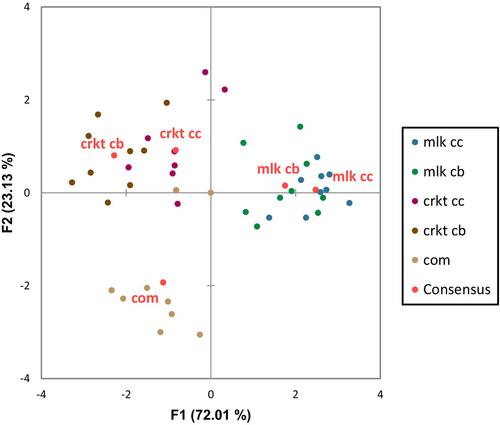
为了满足消费者对可持续和健康食品选择的需求,本研究探索了可食用昆虫和角豆粉作为可持续和营养成分的应用,开发了一种高蛋白零食,称为蛋白球。开发了四种配方,并在水分含量、水活性、颜色、质地、微生物数量和营养成分方面进行了表征。最后,利用闪蒸法确定了感官轮廓,并将开发的产品与商业产品进行了比较。测定了用蟋蟀粉和可可粉替代常规蛋白质源及其可持续替代品角豆豆对测定特性的影响。结果表明,蟋蟀粉显著降低了蛋白球内表面的亮度值(从40降低到30)。最初,纹理基本未受影响;但贮藏2周后,蟋蟀粉的硬度(从15 N降至12 N)和嚼劲值(从1.6 N降至1.0 N mm)显著降低。此外,蟋蟀粉显著增加了有氧计数(从3-4 log增加到5 log cfu g−1)。蟋蟀样品的感官空间与牛奶蛋白样品分离,主要与风味属性有关,而商业样品以干度和甜度区分。总的来说,与可可相比,角豆粉对测量参数没有影响。这项研究证明了在高蛋白零食中使用蟋蟀粉和角豆粉的适用性,而不会大大损害产品的感官特性。未来的研究可以调查消费者对产品的接受程度。
Organoleptic characteristics of high-protein snacks with novel and sustainable ingredients: Cricket flour and carob powder
To fulfill consumer trends in sustainable and healthy food choices, this study explored the application of edible insects and carob powder as sustainable and nutritious ingredients in developing a high-protein snack, known as a protein ball. Four formulations were developed and characterized in terms of moisture content, water activity, color, texture, microbial count, and nutritional profile. Finally, the sensory profile was determined using the flash profile method, and the developed product was compared to a commercial product. The effect of replacing the conventional protein source with cricket flour and cocoa with its sustainable alternative, carob, on the measured characteristics was determined. The results showed that cricket flour significantly decreased the lightness color values (from 40 to 30) on the internal surface of the protein ball. Texture remained largely unaffected initially; however, after 2 weeks of storage, cricket flour significantly decreased the hardness (from 15 to 12 N) and chewiness values (from 1.6 to 1.0 N mm). Moreover, cricket flour significantly increased the aerobic count (from 3–4 log to 5 log cfu g−1). The sensory space of the cricket samples was separated from the milk protein samples, mainly related to flavor attributes, while the commercial sample was distinguished by dryness and sweetness. In general, carob powder did not affect the measured parameters compared to cocoa. This study demonstrated the suitability of utilizing cricket flour and carob powder in a high-protein snack without substantially compromising the product's organoleptic properties. Future research could investigate the consumer acceptability of the product.
期刊介绍:
Food Science & Nutrition is the peer-reviewed journal for rapid dissemination of research in all areas of food science and nutrition. The Journal will consider submissions of quality papers describing the results of fundamental and applied research related to all aspects of human food and nutrition, as well as interdisciplinary research that spans these two fields.




 京公网安备 11010802042870号
京ICP备2023020795号-1
京公网安备 11010802042870号
京ICP备2023020795号-1

 分享
分享
 求助内容:
求助内容: 应助结果提醒方式:
 扫码关注我们
