{"title":"长期暴露于三氯蔗糖可通过SIRT1/NLRP3/IL-1β/GPx4信号通路诱导人小胶质细胞神经炎症和铁凋亡","authors":"Ceyhan Hacioglu","doi":"10.1002/fsn3.4488","DOIUrl":null,"url":null,"abstract":"<p>Microglia serve as the primary defense mechanism in the brain. Artificial sweeteners are widely used as dietary supplements, though their long-term effects remain uncertain. In this study, we investigated the effects of sucralose on microglia during prolonged exposure via the neuroinflammatory and ferroptosis pathways. Initially, human microglial clone 3 (HMC3) cells were exposed to sucralose (0–50 mM) for 24, 48, and 72 h to investigate the short-term effects. Subsequently, HMC3 cells were treated with 1 mM sucralose for 7, 14, and 21 days to examine long-term effects. We measured levels of interleukin-1β (IL-1β), NOD-like receptor protein 3 (NLRP3), 8-hydroxydeoxyguanosine (8-OHdG), Sirtuin-1 (SIRT1), glutathione peroxidase-4 (GPx4), reduced glutathione (GSH), malondialdehyde (MDA), ferrous iron (Fe<sup>2+</sup>), and caspase 3/7. Additionally, we analyzed the impact of sucralose on cell morphology, migration, and expression levels of IL-1β, NLRP3, SIRT1, and GPx4. Sucralose inhibited cell viability and proliferation in HMC3 cells in a concentration- and time-dependent manner and induced membrane and nuclear abnormalities. Moreover, sucralose significantly reduced the cell migration rate. Long-term sucralose treatment decreased Fe<sup>2+</sup>, GPx4, GSH, and SIRT1 levels in HMC3 cells while increasing IL-1β, MDA, NLRP3, 8-OHdG, and caspase 3/7 activity. Sucralose treatment also enhanced microglial activation and neuroinflammation by upregulating IL-1β and NLRP3 and downregulating SIRT1 and GPx4, thereby inducing ferroptosis and suppressing cell viability. Consequently, high concentrations or long-term sucralose treatment may induce neuroinflammation and ferroptosis by targeting the SIRT1/NLRP3/IL-1β/GPx4 pathway in HMC3 cells.</p>","PeriodicalId":12418,"journal":{"name":"Food Science & Nutrition","volume":"12 11","pages":"9094-9107"},"PeriodicalIF":5.0000,"publicationDate":"2024-09-23","publicationTypes":"Journal Article","fieldsOfStudy":null,"isOpenAccess":false,"openAccessPdf":"https://onlinelibrary.wiley.com/doi/epdf/10.1002/fsn3.4488","citationCount":"0","resultStr":"{\"title\":\"Long-term exposure of sucralose induces neuroinflammation and ferroptosis in human microglia cells via SIRT1/NLRP3/IL-1β/GPx4 signaling pathways\",\"authors\":\"Ceyhan Hacioglu\",\"doi\":\"10.1002/fsn3.4488\",\"DOIUrl\":null,\"url\":null,\"abstract\":\"<p>Microglia serve as the primary defense mechanism in the brain. Artificial sweeteners are widely used as dietary supplements, though their long-term effects remain uncertain. In this study, we investigated the effects of sucralose on microglia during prolonged exposure via the neuroinflammatory and ferroptosis pathways. Initially, human microglial clone 3 (HMC3) cells were exposed to sucralose (0–50 mM) for 24, 48, and 72 h to investigate the short-term effects. Subsequently, HMC3 cells were treated with 1 mM sucralose for 7, 14, and 21 days to examine long-term effects. We measured levels of interleukin-1β (IL-1β), NOD-like receptor protein 3 (NLRP3), 8-hydroxydeoxyguanosine (8-OHdG), Sirtuin-1 (SIRT1), glutathione peroxidase-4 (GPx4), reduced glutathione (GSH), malondialdehyde (MDA), ferrous iron (Fe<sup>2+</sup>), and caspase 3/7. Additionally, we analyzed the impact of sucralose on cell morphology, migration, and expression levels of IL-1β, NLRP3, SIRT1, and GPx4. Sucralose inhibited cell viability and proliferation in HMC3 cells in a concentration- and time-dependent manner and induced membrane and nuclear abnormalities. Moreover, sucralose significantly reduced the cell migration rate. Long-term sucralose treatment decreased Fe<sup>2+</sup>, GPx4, GSH, and SIRT1 levels in HMC3 cells while increasing IL-1β, MDA, NLRP3, 8-OHdG, and caspase 3/7 activity. Sucralose treatment also enhanced microglial activation and neuroinflammation by upregulating IL-1β and NLRP3 and downregulating SIRT1 and GPx4, thereby inducing ferroptosis and suppressing cell viability. Consequently, high concentrations or long-term sucralose treatment may induce neuroinflammation and ferroptosis by targeting the SIRT1/NLRP3/IL-1β/GPx4 pathway in HMC3 cells.</p>\",\"PeriodicalId\":12418,\"journal\":{\"name\":\"Food Science & Nutrition\",\"volume\":\"12 11\",\"pages\":\"9094-9107\"},\"PeriodicalIF\":5.0000,\"publicationDate\":\"2024-09-23\",\"publicationTypes\":\"Journal Article\",\"fieldsOfStudy\":null,\"isOpenAccess\":false,\"openAccessPdf\":\"https://onlinelibrary.wiley.com/doi/epdf/10.1002/fsn3.4488\",\"citationCount\":\"0\",\"resultStr\":null,\"platform\":\"Semanticscholar\",\"paperid\":null,\"PeriodicalName\":\"Food Science & Nutrition\",\"FirstCategoryId\":\"97\",\"ListUrlMain\":\"https://onlinelibrary.wiley.com/doi/10.1002/fsn3.4488\",\"RegionNum\":2,\"RegionCategory\":\"农林科学\",\"ArticlePicture\":[],\"TitleCN\":null,\"AbstractTextCN\":null,\"PMCID\":null,\"EPubDate\":\"\",\"PubModel\":\"\",\"JCR\":\"Q2\",\"JCRName\":\"FOOD SCIENCE & TECHNOLOGY\",\"Score\":null,\"Total\":0}","platform":"Semanticscholar","paperid":null,"PeriodicalName":"Food Science & Nutrition","FirstCategoryId":"97","ListUrlMain":"https://onlinelibrary.wiley.com/doi/10.1002/fsn3.4488","RegionNum":2,"RegionCategory":"农林科学","ArticlePicture":[],"TitleCN":null,"AbstractTextCN":null,"PMCID":null,"EPubDate":"","PubModel":"","JCR":"Q2","JCRName":"FOOD SCIENCE & TECHNOLOGY","Score":null,"Total":0}
Long-term exposure of sucralose induces neuroinflammation and ferroptosis in human microglia cells via SIRT1/NLRP3/IL-1β/GPx4 signaling pathways
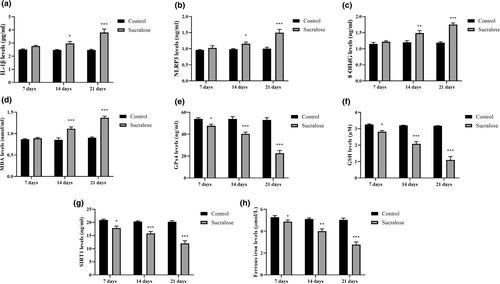
Microglia serve as the primary defense mechanism in the brain. Artificial sweeteners are widely used as dietary supplements, though their long-term effects remain uncertain. In this study, we investigated the effects of sucralose on microglia during prolonged exposure via the neuroinflammatory and ferroptosis pathways. Initially, human microglial clone 3 (HMC3) cells were exposed to sucralose (0–50 mM) for 24, 48, and 72 h to investigate the short-term effects. Subsequently, HMC3 cells were treated with 1 mM sucralose for 7, 14, and 21 days to examine long-term effects. We measured levels of interleukin-1β (IL-1β), NOD-like receptor protein 3 (NLRP3), 8-hydroxydeoxyguanosine (8-OHdG), Sirtuin-1 (SIRT1), glutathione peroxidase-4 (GPx4), reduced glutathione (GSH), malondialdehyde (MDA), ferrous iron (Fe2+), and caspase 3/7. Additionally, we analyzed the impact of sucralose on cell morphology, migration, and expression levels of IL-1β, NLRP3, SIRT1, and GPx4. Sucralose inhibited cell viability and proliferation in HMC3 cells in a concentration- and time-dependent manner and induced membrane and nuclear abnormalities. Moreover, sucralose significantly reduced the cell migration rate. Long-term sucralose treatment decreased Fe2+, GPx4, GSH, and SIRT1 levels in HMC3 cells while increasing IL-1β, MDA, NLRP3, 8-OHdG, and caspase 3/7 activity. Sucralose treatment also enhanced microglial activation and neuroinflammation by upregulating IL-1β and NLRP3 and downregulating SIRT1 and GPx4, thereby inducing ferroptosis and suppressing cell viability. Consequently, high concentrations or long-term sucralose treatment may induce neuroinflammation and ferroptosis by targeting the SIRT1/NLRP3/IL-1β/GPx4 pathway in HMC3 cells.
期刊介绍:
Food Science & Nutrition is the peer-reviewed journal for rapid dissemination of research in all areas of food science and nutrition. The Journal will consider submissions of quality papers describing the results of fundamental and applied research related to all aspects of human food and nutrition, as well as interdisciplinary research that spans these two fields.




 京公网安备 11010802042870号
京ICP备2023020795号-1
京公网安备 11010802042870号
京ICP备2023020795号-1

 分享
分享
 求助内容:
求助内容: 应助结果提醒方式:
 扫码关注我们
