{"title":"葫芦巴精液通过提高脂多糖诱导的乳酸菌丰度来缓解抑郁行为。","authors":"Wenhui Chang, Jing Guo, Yanan Yang, Linen Zou, Yu Fu, Mingxi Li, Leilei Li, Chenxi Li, Xinya Wang, Xiaohui Zhao, Chongming Wu","doi":"10.1002/fsn3.4475","DOIUrl":null,"url":null,"abstract":"<p>The rising incidence rate of depression presents a substantial threat to human well-being. <i>Semen Trigonellae</i> (ST), the dried mature seeds of <i>Trigonella foenum-graecum</i> L., has a long-standing traditional reputation for alleviating anxiety and hopelessness. However, the anti-depressant mechanism of ST remains poorly understood. This study aimed to assess ST's anti-depressant, as well as explore its potential mechanism from a gut microbial aspect. The Kunming mice were challenged by lipopolysaccharide (LPS) to induce depression-like behavior and then orally administrated with aqueous extract of ST. The behavioral test, and hippocampal and serum biochemical indicators were detected to assess anti-depressant effect of ST. We utilized full-length 16S rRNA gene sequencing to investigate how ST influences gut microbiota modulation. Administration of ST mitigated LPS-induced depression-like behaviors. ST reversed the decrease in hippocampal 5-hydroxytryptamine (5-HT) and brain-derived neurotrophic factor (BDNF) levels while reducing serum levels of tumor necrosis factor α (TNF-α), interleukin 1β (IL-1β), and interleukin 6 (IL-6). Microbial analysis revealed that administration of ST markedly shifted the gut microbiota structure, dramatically and dose-dependently increased the abundance of <i>Ligilactobacillus murinus</i> and <i>Ligilactobacillus animalis</i>. Experimentally, oral administration of live <i>L</i>. <i>murinus</i> and <i>L</i>. <i>animalis</i> to LPS-challenged mice yielded similar effects to ST in ameliorating depression, elevating 5-HT and BDNF, and reducing proinflammatory cytokines. These findings provide evidence that ST is a promising medical food for the management of depression, in which modulation of the gut microbiota, particularly enhancing the abundance of <i>Ligilactobacillus</i> plays an important role.</p>","PeriodicalId":12418,"journal":{"name":"Food Science & Nutrition","volume":"12 11","pages":"9414-9427"},"PeriodicalIF":5.0000,"publicationDate":"2024-10-10","publicationTypes":"Journal Article","fieldsOfStudy":null,"isOpenAccess":false,"openAccessPdf":"https://onlinelibrary.wiley.com/doi/epdf/10.1002/fsn3.4475","citationCount":"0","resultStr":"{\"title\":\"Semen Trigonellae alleviates LPS-induced depressive behavior via enhancing the abundance of Ligilactobacillus spp.\",\"authors\":\"Wenhui Chang, Jing Guo, Yanan Yang, Linen Zou, Yu Fu, Mingxi Li, Leilei Li, Chenxi Li, Xinya Wang, Xiaohui Zhao, Chongming Wu\",\"doi\":\"10.1002/fsn3.4475\",\"DOIUrl\":null,\"url\":null,\"abstract\":\"<p>The rising incidence rate of depression presents a substantial threat to human well-being. <i>Semen Trigonellae</i> (ST), the dried mature seeds of <i>Trigonella foenum-graecum</i> L., has a long-standing traditional reputation for alleviating anxiety and hopelessness. However, the anti-depressant mechanism of ST remains poorly understood. This study aimed to assess ST's anti-depressant, as well as explore its potential mechanism from a gut microbial aspect. The Kunming mice were challenged by lipopolysaccharide (LPS) to induce depression-like behavior and then orally administrated with aqueous extract of ST. The behavioral test, and hippocampal and serum biochemical indicators were detected to assess anti-depressant effect of ST. We utilized full-length 16S rRNA gene sequencing to investigate how ST influences gut microbiota modulation. Administration of ST mitigated LPS-induced depression-like behaviors. ST reversed the decrease in hippocampal 5-hydroxytryptamine (5-HT) and brain-derived neurotrophic factor (BDNF) levels while reducing serum levels of tumor necrosis factor α (TNF-α), interleukin 1β (IL-1β), and interleukin 6 (IL-6). Microbial analysis revealed that administration of ST markedly shifted the gut microbiota structure, dramatically and dose-dependently increased the abundance of <i>Ligilactobacillus murinus</i> and <i>Ligilactobacillus animalis</i>. Experimentally, oral administration of live <i>L</i>. <i>murinus</i> and <i>L</i>. <i>animalis</i> to LPS-challenged mice yielded similar effects to ST in ameliorating depression, elevating 5-HT and BDNF, and reducing proinflammatory cytokines. These findings provide evidence that ST is a promising medical food for the management of depression, in which modulation of the gut microbiota, particularly enhancing the abundance of <i>Ligilactobacillus</i> plays an important role.</p>\",\"PeriodicalId\":12418,\"journal\":{\"name\":\"Food Science & Nutrition\",\"volume\":\"12 11\",\"pages\":\"9414-9427\"},\"PeriodicalIF\":5.0000,\"publicationDate\":\"2024-10-10\",\"publicationTypes\":\"Journal Article\",\"fieldsOfStudy\":null,\"isOpenAccess\":false,\"openAccessPdf\":\"https://onlinelibrary.wiley.com/doi/epdf/10.1002/fsn3.4475\",\"citationCount\":\"0\",\"resultStr\":null,\"platform\":\"Semanticscholar\",\"paperid\":null,\"PeriodicalName\":\"Food Science & Nutrition\",\"FirstCategoryId\":\"97\",\"ListUrlMain\":\"https://onlinelibrary.wiley.com/doi/10.1002/fsn3.4475\",\"RegionNum\":2,\"RegionCategory\":\"农林科学\",\"ArticlePicture\":[],\"TitleCN\":null,\"AbstractTextCN\":null,\"PMCID\":null,\"EPubDate\":\"\",\"PubModel\":\"\",\"JCR\":\"Q2\",\"JCRName\":\"FOOD SCIENCE & TECHNOLOGY\",\"Score\":null,\"Total\":0}","platform":"Semanticscholar","paperid":null,"PeriodicalName":"Food Science & Nutrition","FirstCategoryId":"97","ListUrlMain":"https://onlinelibrary.wiley.com/doi/10.1002/fsn3.4475","RegionNum":2,"RegionCategory":"农林科学","ArticlePicture":[],"TitleCN":null,"AbstractTextCN":null,"PMCID":null,"EPubDate":"","PubModel":"","JCR":"Q2","JCRName":"FOOD SCIENCE & TECHNOLOGY","Score":null,"Total":0}
Semen Trigonellae alleviates LPS-induced depressive behavior via enhancing the abundance of Ligilactobacillus spp.
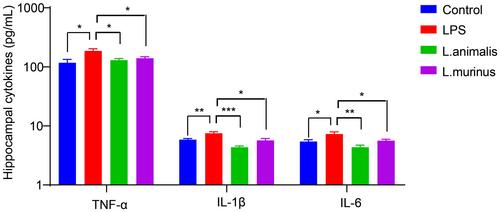
The rising incidence rate of depression presents a substantial threat to human well-being. Semen Trigonellae (ST), the dried mature seeds of Trigonella foenum-graecum L., has a long-standing traditional reputation for alleviating anxiety and hopelessness. However, the anti-depressant mechanism of ST remains poorly understood. This study aimed to assess ST's anti-depressant, as well as explore its potential mechanism from a gut microbial aspect. The Kunming mice were challenged by lipopolysaccharide (LPS) to induce depression-like behavior and then orally administrated with aqueous extract of ST. The behavioral test, and hippocampal and serum biochemical indicators were detected to assess anti-depressant effect of ST. We utilized full-length 16S rRNA gene sequencing to investigate how ST influences gut microbiota modulation. Administration of ST mitigated LPS-induced depression-like behaviors. ST reversed the decrease in hippocampal 5-hydroxytryptamine (5-HT) and brain-derived neurotrophic factor (BDNF) levels while reducing serum levels of tumor necrosis factor α (TNF-α), interleukin 1β (IL-1β), and interleukin 6 (IL-6). Microbial analysis revealed that administration of ST markedly shifted the gut microbiota structure, dramatically and dose-dependently increased the abundance of Ligilactobacillus murinus and Ligilactobacillus animalis. Experimentally, oral administration of live L. murinus and L. animalis to LPS-challenged mice yielded similar effects to ST in ameliorating depression, elevating 5-HT and BDNF, and reducing proinflammatory cytokines. These findings provide evidence that ST is a promising medical food for the management of depression, in which modulation of the gut microbiota, particularly enhancing the abundance of Ligilactobacillus plays an important role.
期刊介绍:
Food Science & Nutrition is the peer-reviewed journal for rapid dissemination of research in all areas of food science and nutrition. The Journal will consider submissions of quality papers describing the results of fundamental and applied research related to all aspects of human food and nutrition, as well as interdisciplinary research that spans these two fields.




 京公网安备 11010802042870号
京ICP备2023020795号-1
京公网安备 11010802042870号
京ICP备2023020795号-1

 分享
分享
 求助内容:
求助内容: 应助结果提醒方式:
 扫码关注我们
