{"title":"探索饮食因素与食管癌:孟德尔随机化研究的见解","authors":"Xin Liu, Wenwen Yang, Yanjiang Yang","doi":"10.1002/fsn3.4527","DOIUrl":null,"url":null,"abstract":"<p>Esophageal adenocarcinoma and diet are not well understood to be associated. We conducted Mendelian randomization analysis using 18 dietary factors as exposures (primarily including fruit consumption, vegetable consumption, alcohol consumption, meat consumption, tea intake, fish intake, etc.), with esophageal adenocarcinoma as the outcome. The IVW method was the leading method used for detecting causal links. Cochran's <i>Q</i> test was utilized to assess heterogeneity, the intercept of the MR-Egger method was used to assess the presence of horizontal pleiotropy, and the existence of outliers was identified via the MR-Presso method. This study identified that both alcohol intake frequency (OR = 1.375, <i>p</i> = 0.0216) and coffee intake (OR = 2.680, <i>p</i> = 0.0304) were linked to a heightened risk of esophageal adenocarcinoma, while raw vegetable/salad consumption (OR = 0.117, <i>p</i> = 0.0258) and dried fruit intake (OR = 0.229, <i>p</i> = 0.00235) were associated with a decreased risk of esophageal adenocarcinoma. After FDR correction, only dried fruit intake (<i>q</i> = 0.0423) remained statistically significant. However, there was no evidence linking the other 14 dietary variables to esophageal adenocarcinoma. This study observed that alcohol consumption and coffee intake increase the risk of esophageal adenocarcinoma, while the intake of dried fruits rather than fresh fruits and raw vegetable intake rather than cooked vegetable intake reduce the risk of esophageal adenocarcinoma. Other dietary factors were not associated with the risk of esophageal adenocarcinoma.</p>","PeriodicalId":12418,"journal":{"name":"Food Science & Nutrition","volume":"12 11","pages":"9600-9606"},"PeriodicalIF":3.8000,"publicationDate":"2024-10-18","publicationTypes":"Journal Article","fieldsOfStudy":null,"isOpenAccess":false,"openAccessPdf":"https://onlinelibrary.wiley.com/doi/epdf/10.1002/fsn3.4527","citationCount":"0","resultStr":"{\"title\":\"Exploring Dietary Factors and Esophageal Adenocarcinoma: Insights From Mendelian Randomization Study\",\"authors\":\"Xin Liu, Wenwen Yang, Yanjiang Yang\",\"doi\":\"10.1002/fsn3.4527\",\"DOIUrl\":null,\"url\":null,\"abstract\":\"<p>Esophageal adenocarcinoma and diet are not well understood to be associated. We conducted Mendelian randomization analysis using 18 dietary factors as exposures (primarily including fruit consumption, vegetable consumption, alcohol consumption, meat consumption, tea intake, fish intake, etc.), with esophageal adenocarcinoma as the outcome. The IVW method was the leading method used for detecting causal links. Cochran's <i>Q</i> test was utilized to assess heterogeneity, the intercept of the MR-Egger method was used to assess the presence of horizontal pleiotropy, and the existence of outliers was identified via the MR-Presso method. This study identified that both alcohol intake frequency (OR = 1.375, <i>p</i> = 0.0216) and coffee intake (OR = 2.680, <i>p</i> = 0.0304) were linked to a heightened risk of esophageal adenocarcinoma, while raw vegetable/salad consumption (OR = 0.117, <i>p</i> = 0.0258) and dried fruit intake (OR = 0.229, <i>p</i> = 0.00235) were associated with a decreased risk of esophageal adenocarcinoma. After FDR correction, only dried fruit intake (<i>q</i> = 0.0423) remained statistically significant. However, there was no evidence linking the other 14 dietary variables to esophageal adenocarcinoma. This study observed that alcohol consumption and coffee intake increase the risk of esophageal adenocarcinoma, while the intake of dried fruits rather than fresh fruits and raw vegetable intake rather than cooked vegetable intake reduce the risk of esophageal adenocarcinoma. Other dietary factors were not associated with the risk of esophageal adenocarcinoma.</p>\",\"PeriodicalId\":12418,\"journal\":{\"name\":\"Food Science & Nutrition\",\"volume\":\"12 11\",\"pages\":\"9600-9606\"},\"PeriodicalIF\":3.8000,\"publicationDate\":\"2024-10-18\",\"publicationTypes\":\"Journal Article\",\"fieldsOfStudy\":null,\"isOpenAccess\":false,\"openAccessPdf\":\"https://onlinelibrary.wiley.com/doi/epdf/10.1002/fsn3.4527\",\"citationCount\":\"0\",\"resultStr\":null,\"platform\":\"Semanticscholar\",\"paperid\":null,\"PeriodicalName\":\"Food Science & Nutrition\",\"FirstCategoryId\":\"97\",\"ListUrlMain\":\"https://onlinelibrary.wiley.com/doi/10.1002/fsn3.4527\",\"RegionNum\":2,\"RegionCategory\":\"农林科学\",\"ArticlePicture\":[],\"TitleCN\":null,\"AbstractTextCN\":null,\"PMCID\":null,\"EPubDate\":\"\",\"PubModel\":\"\",\"JCR\":\"Q2\",\"JCRName\":\"FOOD SCIENCE & TECHNOLOGY\",\"Score\":null,\"Total\":0}","platform":"Semanticscholar","paperid":null,"PeriodicalName":"Food Science & Nutrition","FirstCategoryId":"97","ListUrlMain":"https://onlinelibrary.wiley.com/doi/10.1002/fsn3.4527","RegionNum":2,"RegionCategory":"农林科学","ArticlePicture":[],"TitleCN":null,"AbstractTextCN":null,"PMCID":null,"EPubDate":"","PubModel":"","JCR":"Q2","JCRName":"FOOD SCIENCE & TECHNOLOGY","Score":null,"Total":0}
引用次数: 0
摘要
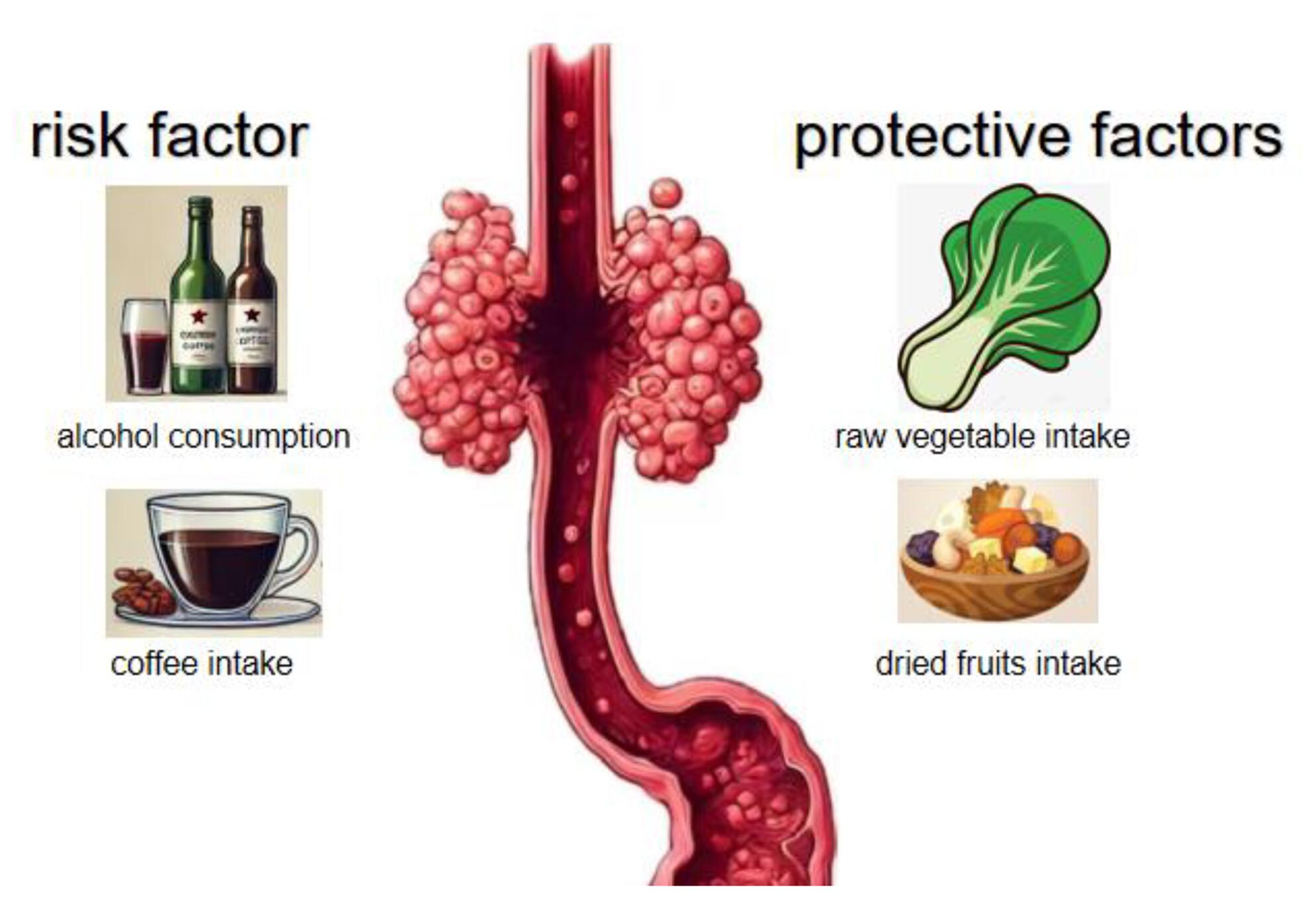
食管癌与饮食之间的关系尚不清楚。我们以18种饮食因素作为暴露(主要包括水果、蔬菜、酒精、肉类、茶、鱼等)进行孟德尔随机化分析,以食管癌为结果。IVW法是检测因果关系的主要方法。采用Cochran’s Q检验评估异质性,采用MR-Egger法的截距评估水平多效性,采用MR-Presso法确定异常值的存在。该研究发现,饮酒频率(OR = 1.375, p = 0.0216)和咖啡摄入量(OR = 2.680, p = 0.0304)与食管癌的风险增加有关,而食用生蔬菜/沙拉(OR = 0.117, p = 0.0258)和摄入干果(OR = 0.229, p = 0.00235)与食管癌的风险降低有关。经过FDR校正后,只有干果摄入量(q = 0.0423)仍然具有统计学意义。然而,没有证据表明其他14种饮食变量与食管癌有关。这项研究发现,饮酒和咖啡摄入会增加患食管癌的风险,而吃干果而不是新鲜水果和吃生蔬菜而不是煮熟的蔬菜会降低患食管癌的风险。其他饮食因素与食管癌的风险无关。
Exploring Dietary Factors and Esophageal Adenocarcinoma: Insights From Mendelian Randomization Study
Esophageal adenocarcinoma and diet are not well understood to be associated. We conducted Mendelian randomization analysis using 18 dietary factors as exposures (primarily including fruit consumption, vegetable consumption, alcohol consumption, meat consumption, tea intake, fish intake, etc.), with esophageal adenocarcinoma as the outcome. The IVW method was the leading method used for detecting causal links. Cochran's Q test was utilized to assess heterogeneity, the intercept of the MR-Egger method was used to assess the presence of horizontal pleiotropy, and the existence of outliers was identified via the MR-Presso method. This study identified that both alcohol intake frequency (OR = 1.375, p = 0.0216) and coffee intake (OR = 2.680, p = 0.0304) were linked to a heightened risk of esophageal adenocarcinoma, while raw vegetable/salad consumption (OR = 0.117, p = 0.0258) and dried fruit intake (OR = 0.229, p = 0.00235) were associated with a decreased risk of esophageal adenocarcinoma. After FDR correction, only dried fruit intake (q = 0.0423) remained statistically significant. However, there was no evidence linking the other 14 dietary variables to esophageal adenocarcinoma. This study observed that alcohol consumption and coffee intake increase the risk of esophageal adenocarcinoma, while the intake of dried fruits rather than fresh fruits and raw vegetable intake rather than cooked vegetable intake reduce the risk of esophageal adenocarcinoma. Other dietary factors were not associated with the risk of esophageal adenocarcinoma.
期刊介绍:
Food Science & Nutrition is the peer-reviewed journal for rapid dissemination of research in all areas of food science and nutrition. The Journal will consider submissions of quality papers describing the results of fundamental and applied research related to all aspects of human food and nutrition, as well as interdisciplinary research that spans these two fields.




 京公网安备 11010802042870号
京ICP备2023020795号-1
京公网安备 11010802042870号
京ICP备2023020795号-1

 分享
分享
 求助内容:
求助内容: 应助结果提醒方式:
 扫码关注我们
