{"title":"体内心血管分子成像:对精准医学和药物开发的贡献。","authors":"Jonathan R Lindner, Matteo Morello","doi":"10.1161/CIRCULATIONAHA.124.066522","DOIUrl":null,"url":null,"abstract":"<p><p>Conventional forms of noninvasive cardiovascular imaging that evaluate morphology, function, flow, and metabolism play a vital role in individual treatment decisions, often based on guidelines. Innovations in molecular imaging have enhanced our ability to spatially quantify the expression of a wider array of disease-related proteins, genes, or cell types, or the activity of specific pathogenic pathways. These techniques, which usually rely on design of targeted imaging probes, have already been used extensively in cancer medicine and have now become part of cardiovascular care in conditions such as amyloidosis and sarcoidosis. The recognition that common cardiovascular conditions are caused by a substantial diversity of pathobiologic pathways and the diversity of therapies available for use have rekindled interest in expanding the role of molecular imaging of tissue phenotype to improve precision in diagnosis and therapeutic decision-making. The intent of this article is to raise awareness and understanding of approaches to molecular or cellular imaging of phenotype with targeted probes, and their potential to promote the principles of precision medicine. Also addressed are the diverse roles of molecular imaging to improve precision and efficiency of new drug development at the stages of candidate identification, preclinical testing, and clinical trials.</p>","PeriodicalId":10331,"journal":{"name":"Circulation","volume":"150 23","pages":"1885-1897"},"PeriodicalIF":38.6000,"publicationDate":"2024-12-03","publicationTypes":"Journal Article","fieldsOfStudy":null,"isOpenAccess":false,"openAccessPdf":"https://www.ncbi.nlm.nih.gov/pmc/articles/PMC12368603/pdf/","citationCount":"0","resultStr":"{\"title\":\"In Vivo Cardiovascular Molecular Imaging: Contributions to Precision Medicine and Drug Development.\",\"authors\":\"Jonathan R Lindner, Matteo Morello\",\"doi\":\"10.1161/CIRCULATIONAHA.124.066522\",\"DOIUrl\":null,\"url\":null,\"abstract\":\"<p><p>Conventional forms of noninvasive cardiovascular imaging that evaluate morphology, function, flow, and metabolism play a vital role in individual treatment decisions, often based on guidelines. Innovations in molecular imaging have enhanced our ability to spatially quantify the expression of a wider array of disease-related proteins, genes, or cell types, or the activity of specific pathogenic pathways. These techniques, which usually rely on design of targeted imaging probes, have already been used extensively in cancer medicine and have now become part of cardiovascular care in conditions such as amyloidosis and sarcoidosis. The recognition that common cardiovascular conditions are caused by a substantial diversity of pathobiologic pathways and the diversity of therapies available for use have rekindled interest in expanding the role of molecular imaging of tissue phenotype to improve precision in diagnosis and therapeutic decision-making. The intent of this article is to raise awareness and understanding of approaches to molecular or cellular imaging of phenotype with targeted probes, and their potential to promote the principles of precision medicine. Also addressed are the diverse roles of molecular imaging to improve precision and efficiency of new drug development at the stages of candidate identification, preclinical testing, and clinical trials.</p>\",\"PeriodicalId\":10331,\"journal\":{\"name\":\"Circulation\",\"volume\":\"150 23\",\"pages\":\"1885-1897\"},\"PeriodicalIF\":38.6000,\"publicationDate\":\"2024-12-03\",\"publicationTypes\":\"Journal Article\",\"fieldsOfStudy\":null,\"isOpenAccess\":false,\"openAccessPdf\":\"https://www.ncbi.nlm.nih.gov/pmc/articles/PMC12368603/pdf/\",\"citationCount\":\"0\",\"resultStr\":null,\"platform\":\"Semanticscholar\",\"paperid\":null,\"PeriodicalName\":\"Circulation\",\"FirstCategoryId\":\"3\",\"ListUrlMain\":\"https://doi.org/10.1161/CIRCULATIONAHA.124.066522\",\"RegionNum\":1,\"RegionCategory\":\"医学\",\"ArticlePicture\":[],\"TitleCN\":null,\"AbstractTextCN\":null,\"PMCID\":null,\"EPubDate\":\"2024/12/2 0:00:00\",\"PubModel\":\"Epub\",\"JCR\":\"Q1\",\"JCRName\":\"CARDIAC & CARDIOVASCULAR SYSTEMS\",\"Score\":null,\"Total\":0}","platform":"Semanticscholar","paperid":null,"PeriodicalName":"Circulation","FirstCategoryId":"3","ListUrlMain":"https://doi.org/10.1161/CIRCULATIONAHA.124.066522","RegionNum":1,"RegionCategory":"医学","ArticlePicture":[],"TitleCN":null,"AbstractTextCN":null,"PMCID":null,"EPubDate":"2024/12/2 0:00:00","PubModel":"Epub","JCR":"Q1","JCRName":"CARDIAC & CARDIOVASCULAR SYSTEMS","Score":null,"Total":0}
In Vivo Cardiovascular Molecular Imaging: Contributions to Precision Medicine and Drug Development.
Conventional forms of noninvasive cardiovascular imaging that evaluate morphology, function, flow, and metabolism play a vital role in individual treatment decisions, often based on guidelines. Innovations in molecular imaging have enhanced our ability to spatially quantify the expression of a wider array of disease-related proteins, genes, or cell types, or the activity of specific pathogenic pathways. These techniques, which usually rely on design of targeted imaging probes, have already been used extensively in cancer medicine and have now become part of cardiovascular care in conditions such as amyloidosis and sarcoidosis. The recognition that common cardiovascular conditions are caused by a substantial diversity of pathobiologic pathways and the diversity of therapies available for use have rekindled interest in expanding the role of molecular imaging of tissue phenotype to improve precision in diagnosis and therapeutic decision-making. The intent of this article is to raise awareness and understanding of approaches to molecular or cellular imaging of phenotype with targeted probes, and their potential to promote the principles of precision medicine. Also addressed are the diverse roles of molecular imaging to improve precision and efficiency of new drug development at the stages of candidate identification, preclinical testing, and clinical trials.
期刊介绍:
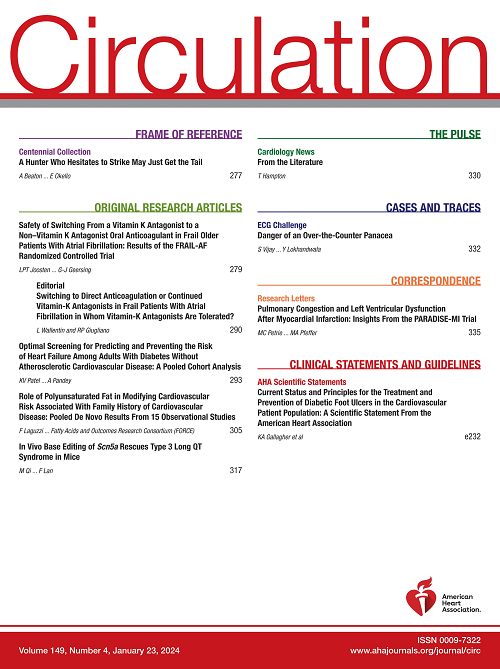
Circulation is a platform that publishes a diverse range of content related to cardiovascular health and disease. This includes original research manuscripts, review articles, and other contributions spanning observational studies, clinical trials, epidemiology, health services, outcomes studies, and advancements in basic and translational research. The journal serves as a vital resource for professionals and researchers in the field of cardiovascular health, providing a comprehensive platform for disseminating knowledge and fostering advancements in the understanding and management of cardiovascular issues.




 京公网安备 11010802042870号
京ICP备2023020795号-1
京公网安备 11010802042870号
京ICP备2023020795号-1

 分享
分享
 求助内容:
求助内容: 应助结果提醒方式:
 扫码关注我们
