Matan Friedman, Liat Mor, Rotem Shazar, Natalie Paul, Ram Kerner, Ran Keidar, Ron Sagiv, Ohad Gluck
{"title":"米非司酮联合米索前列醇治疗早期妊娠丢失与单用米索前列醇比较。","authors":"Matan Friedman, Liat Mor, Rotem Shazar, Natalie Paul, Ram Kerner, Ran Keidar, Ron Sagiv, Ohad Gluck","doi":"10.1097/AOG.0000000000005800","DOIUrl":null,"url":null,"abstract":"<p><strong>Objective: </strong>To compare the rates of treatment failure in cases of early pregnancy loss between mifepristone-misoprostol and misoprostol only.</p><p><strong>Methods: </strong>This retrospective cohort study included patients who received medical treatment for early pregnancy loss between 2016 and 2023 at a single medical center. Patients returned for a follow-up ultrasonogram after 1 week and were treated again with misoprostol if needed. Finally, they were instructed to obtain an ultrasonogram after menstruation and to return for evaluation in case retained product of conception was suspected. We defined treatment failure as needing any surgical intervention because of retained product of conception, including cases when retained product of conception was diagnosed and treated after menstruation. In May 2022, we changed our protocol for treating early pregnancy loss from misoprostol to mifepristone and misoprostol. We compared the failure rate between patients who received mifepristone-misoprostol and those treated with misoprostol only.</p><p><strong>Results: </strong>A total of 999 patients were included: 224 in the mifepristone-misoprostol group and 775 in the misoprostol-only group. The rate of treatment failure was significantly lower in the mifepristone-misoprostol group compared with the misoprostol-only group (17.8% vs 25.1%, P =.002). After multivariant analysis was performed, the use of mifepristone and misoprostol was associated with a reduction of 34% in the odds ratio for treatment failure compared with misoprostol alone (adjusted odds ratio 0.661, 95% CI, 0.44-0.97, P =.038). In addition, prior vaginal delivery was associated with a lower risk for treatment failure, and increasing gestational age (according to ultrasonogram) was correlated with a higher risk for treatment failure.</p><p><strong>Conclusion: </strong>The addition of mifepristone to misoprostol was associated with a significantly lower rate of treatment failure, including late surgical intervention for early pregnancy loss, compared with misoprostol alone.</p>","PeriodicalId":19483,"journal":{"name":"Obstetrics and gynecology","volume":" ","pages":"204-209"},"PeriodicalIF":5.1000,"publicationDate":"2025-02-01","publicationTypes":"Journal Article","fieldsOfStudy":null,"isOpenAccess":false,"openAccessPdf":"","citationCount":"0","resultStr":"{\"title\":\"Treatment of Early Pregnancy Loss With Mifepristone and Misoprostol Compared With Misoprostol Only.\",\"authors\":\"Matan Friedman, Liat Mor, Rotem Shazar, Natalie Paul, Ram Kerner, Ran Keidar, Ron Sagiv, Ohad Gluck\",\"doi\":\"10.1097/AOG.0000000000005800\",\"DOIUrl\":null,\"url\":null,\"abstract\":\"<p><strong>Objective: </strong>To compare the rates of treatment failure in cases of early pregnancy loss between mifepristone-misoprostol and misoprostol only.</p><p><strong>Methods: </strong>This retrospective cohort study included patients who received medical treatment for early pregnancy loss between 2016 and 2023 at a single medical center. Patients returned for a follow-up ultrasonogram after 1 week and were treated again with misoprostol if needed. Finally, they were instructed to obtain an ultrasonogram after menstruation and to return for evaluation in case retained product of conception was suspected. We defined treatment failure as needing any surgical intervention because of retained product of conception, including cases when retained product of conception was diagnosed and treated after menstruation. In May 2022, we changed our protocol for treating early pregnancy loss from misoprostol to mifepristone and misoprostol. We compared the failure rate between patients who received mifepristone-misoprostol and those treated with misoprostol only.</p><p><strong>Results: </strong>A total of 999 patients were included: 224 in the mifepristone-misoprostol group and 775 in the misoprostol-only group. The rate of treatment failure was significantly lower in the mifepristone-misoprostol group compared with the misoprostol-only group (17.8% vs 25.1%, P =.002). After multivariant analysis was performed, the use of mifepristone and misoprostol was associated with a reduction of 34% in the odds ratio for treatment failure compared with misoprostol alone (adjusted odds ratio 0.661, 95% CI, 0.44-0.97, P =.038). In addition, prior vaginal delivery was associated with a lower risk for treatment failure, and increasing gestational age (according to ultrasonogram) was correlated with a higher risk for treatment failure.</p><p><strong>Conclusion: </strong>The addition of mifepristone to misoprostol was associated with a significantly lower rate of treatment failure, including late surgical intervention for early pregnancy loss, compared with misoprostol alone.</p>\",\"PeriodicalId\":19483,\"journal\":{\"name\":\"Obstetrics and gynecology\",\"volume\":\" \",\"pages\":\"204-209\"},\"PeriodicalIF\":5.1000,\"publicationDate\":\"2025-02-01\",\"publicationTypes\":\"Journal Article\",\"fieldsOfStudy\":null,\"isOpenAccess\":false,\"openAccessPdf\":\"\",\"citationCount\":\"0\",\"resultStr\":null,\"platform\":\"Semanticscholar\",\"paperid\":null,\"PeriodicalName\":\"Obstetrics and gynecology\",\"FirstCategoryId\":\"3\",\"ListUrlMain\":\"https://doi.org/10.1097/AOG.0000000000005800\",\"RegionNum\":2,\"RegionCategory\":\"医学\",\"ArticlePicture\":[],\"TitleCN\":null,\"AbstractTextCN\":null,\"PMCID\":null,\"EPubDate\":\"2024/12/5 0:00:00\",\"PubModel\":\"Epub\",\"JCR\":\"Q1\",\"JCRName\":\"OBSTETRICS & GYNECOLOGY\",\"Score\":null,\"Total\":0}","platform":"Semanticscholar","paperid":null,"PeriodicalName":"Obstetrics and gynecology","FirstCategoryId":"3","ListUrlMain":"https://doi.org/10.1097/AOG.0000000000005800","RegionNum":2,"RegionCategory":"医学","ArticlePicture":[],"TitleCN":null,"AbstractTextCN":null,"PMCID":null,"EPubDate":"2024/12/5 0:00:00","PubModel":"Epub","JCR":"Q1","JCRName":"OBSTETRICS & GYNECOLOGY","Score":null,"Total":0}
引用次数: 0
摘要
目的:比较米非司酮-米索前列醇与单用米索前列醇治疗早孕流产的失败率。方法:本回顾性队列研究纳入了2016年至2023年在单一医疗中心接受早孕治疗的患者。患者1周后复查超声检查,必要时再次使用米索前列醇治疗。最后,她们被要求在月经后进行超声检查,如果怀疑保留了怀孕产物,则返回进行评估。我们将治疗失败定义为由于妊娠产物残留而需要任何手术干预,包括月经后诊断和治疗妊娠产物残留的病例。2022年5月,我们将治疗早期妊娠丢失的方案从米索前列醇改为米非司酮和米索前列醇。我们比较了接受米非司酮-米索前列醇治疗和仅接受米索前列醇治疗的患者的失败率。结果:共纳入999例患者:米非司酮-米索前列醇组224例,米索前列醇单用组775例。米非司酮-米索前列醇组治疗失败率明显低于单用米索前列醇组(17.8% vs 25.1%, P= 0.002)。在进行多变量分析后,与单独使用米索前列醇相比,使用米非司酮和米索前列醇治疗失败的优势比降低了34%(校正优势比为0.661,95% CI, 0.44-0.97, P= 0.038)。此外,先前阴道分娩与治疗失败的风险较低相关,而孕龄增加(根据超声检查)与治疗失败的风险较高相关。结论:与单用米索前列醇相比,米非司酮联合米索前列醇治疗失败率显著降低,包括早期妊娠丢失的晚期手术干预。
Treatment of Early Pregnancy Loss With Mifepristone and Misoprostol Compared With Misoprostol Only.
Objective: To compare the rates of treatment failure in cases of early pregnancy loss between mifepristone-misoprostol and misoprostol only.
Methods: This retrospective cohort study included patients who received medical treatment for early pregnancy loss between 2016 and 2023 at a single medical center. Patients returned for a follow-up ultrasonogram after 1 week and were treated again with misoprostol if needed. Finally, they were instructed to obtain an ultrasonogram after menstruation and to return for evaluation in case retained product of conception was suspected. We defined treatment failure as needing any surgical intervention because of retained product of conception, including cases when retained product of conception was diagnosed and treated after menstruation. In May 2022, we changed our protocol for treating early pregnancy loss from misoprostol to mifepristone and misoprostol. We compared the failure rate between patients who received mifepristone-misoprostol and those treated with misoprostol only.
Results: A total of 999 patients were included: 224 in the mifepristone-misoprostol group and 775 in the misoprostol-only group. The rate of treatment failure was significantly lower in the mifepristone-misoprostol group compared with the misoprostol-only group (17.8% vs 25.1%, P =.002). After multivariant analysis was performed, the use of mifepristone and misoprostol was associated with a reduction of 34% in the odds ratio for treatment failure compared with misoprostol alone (adjusted odds ratio 0.661, 95% CI, 0.44-0.97, P =.038). In addition, prior vaginal delivery was associated with a lower risk for treatment failure, and increasing gestational age (according to ultrasonogram) was correlated with a higher risk for treatment failure.
Conclusion: The addition of mifepristone to misoprostol was associated with a significantly lower rate of treatment failure, including late surgical intervention for early pregnancy loss, compared with misoprostol alone.
期刊介绍:
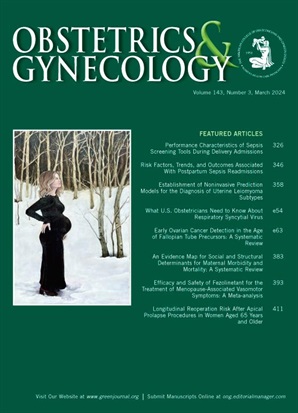
"Obstetrics & Gynecology," affectionately known as "The Green Journal," is the official publication of the American College of Obstetricians and Gynecologists (ACOG). Since its inception in 1953, the journal has been dedicated to advancing the clinical practice of obstetrics and gynecology, as well as related fields. The journal's mission is to promote excellence in these areas by publishing a diverse range of articles that cover translational and clinical topics.
"Obstetrics & Gynecology" provides a platform for the dissemination of evidence-based research, clinical guidelines, and expert opinions that are essential for the continuous improvement of women's health care. The journal's content is designed to inform and educate obstetricians, gynecologists, and other healthcare professionals, ensuring that they stay abreast of the latest developments and best practices in their field.




 京公网安备 11010802042870号
京ICP备2023020795号-1
京公网安备 11010802042870号
京ICP备2023020795号-1

 分享
分享
 求助内容:
求助内容: 应助结果提醒方式:
 扫码关注我们
