Martina Uzzo, Helmut Schumacher, Juergen Steffgen, Simone Deutschel, David Jayne, Ingeborg Bajema
{"title":"根据肾活检的特点,用抗cd40单克隆抗体治疗狼疮性肾炎的结果","authors":"Martina Uzzo, Helmut Schumacher, Juergen Steffgen, Simone Deutschel, David Jayne, Ingeborg Bajema","doi":"10.1002/art.43076","DOIUrl":null,"url":null,"abstract":"<div>\n \n <section>\n \n <h3> Objective</h3>\n \n <p>A phase 2 trial tested different doses of the anti-CD40 monoclonal antibody BI 655064 as an add-on therapy to the standard of care in patients with class III or IV lupus nephritis (LN) with active disease. A post hoc analysis showed a potential benefit of the higher tested doses (180 and 240 mg) versus a low dose (120 mg) or placebo. We investigated whether the treatment effect of BI 655064 on kidney outcomes may be modified by the presence of glomerular monocytes, a target for this drug with a well-known role in LN pathogenesis.</p>\n </section>\n \n <section>\n \n <h3> Methods</h3>\n \n <p>One hundred one renal biopsies of patients with LN enrolled in the BI 655064 trial were scored centrally. The estimated glomerular filtration rate (eGFR), spot urine protein/urine creatinine ratio (UP/UC), and complete renal response (CRR) were evaluated over 52 weeks. Patients were divided according to a “better” or “worse” performance than the average of all patients in the cohort, predicted by a mixed model for repeated measurements. Logistic regression models adjusted for potential confounders were used to assess the association between different treatment doses and outcomes according to the presence or absence of monocytes.</p>\n </section>\n \n <section>\n \n <h3> Results</h3>\n \n <p>A higher BI 655064 dose (180 or 240 mg) was associated with better outcomes of UP/UC and CRR when glomerular monocytes were present in kidney biopsy samples (odds ratio [OR] 3.66 [95% confidence interval (CI) 1.09–12.3], <i>P</i> = 0.04; OR 4.58 [95% CI 1.24–16.9], <i>P</i> = 0.02). A trend toward improved eGFR was also observed in these patients (at 52 weeks, <i>P</i> = 0.08).</p>\n </section>\n \n <section>\n \n <h3> Conclusion</h3>\n \n <p>In LN kidney biopsy samples with glomerular monocytes, high-dose BI 655064 treatment improved proteinuria at 52 weeks and resulted in a higher CRR compared to biopsy samples without glomerular monocytes. Histologic features may guide the choice of treatment for individual patients with LN.</p>\n \n <div>\n <figure>\n <div><picture>\n <source></source></picture><p></p>\n </div>\n </figure>\n </div>\n </section>\n </div>","PeriodicalId":129,"journal":{"name":"Arthritis & Rheumatology","volume":"77 6","pages":"696-704"},"PeriodicalIF":10.9000,"publicationDate":"2025-05-29","publicationTypes":"Journal Article","fieldsOfStudy":null,"isOpenAccess":false,"openAccessPdf":"https://onlinelibrary.wiley.com/doi/epdf/10.1002/art.43076","citationCount":"0","resultStr":"{\"title\":\"Outcome of Patients With Lupus Nephritis Treated With an Anti-CD40 Monoclonal Antibody According to Kidney Biopsy Features\",\"authors\":\"Martina Uzzo, Helmut Schumacher, Juergen Steffgen, Simone Deutschel, David Jayne, Ingeborg Bajema\",\"doi\":\"10.1002/art.43076\",\"DOIUrl\":null,\"url\":null,\"abstract\":\"<div>\\n \\n <section>\\n \\n <h3> Objective</h3>\\n \\n <p>A phase 2 trial tested different doses of the anti-CD40 monoclonal antibody BI 655064 as an add-on therapy to the standard of care in patients with class III or IV lupus nephritis (LN) with active disease. A post hoc analysis showed a potential benefit of the higher tested doses (180 and 240 mg) versus a low dose (120 mg) or placebo. We investigated whether the treatment effect of BI 655064 on kidney outcomes may be modified by the presence of glomerular monocytes, a target for this drug with a well-known role in LN pathogenesis.</p>\\n </section>\\n \\n <section>\\n \\n <h3> Methods</h3>\\n \\n <p>One hundred one renal biopsies of patients with LN enrolled in the BI 655064 trial were scored centrally. The estimated glomerular filtration rate (eGFR), spot urine protein/urine creatinine ratio (UP/UC), and complete renal response (CRR) were evaluated over 52 weeks. Patients were divided according to a “better” or “worse” performance than the average of all patients in the cohort, predicted by a mixed model for repeated measurements. Logistic regression models adjusted for potential confounders were used to assess the association between different treatment doses and outcomes according to the presence or absence of monocytes.</p>\\n </section>\\n \\n <section>\\n \\n <h3> Results</h3>\\n \\n <p>A higher BI 655064 dose (180 or 240 mg) was associated with better outcomes of UP/UC and CRR when glomerular monocytes were present in kidney biopsy samples (odds ratio [OR] 3.66 [95% confidence interval (CI) 1.09–12.3], <i>P</i> = 0.04; OR 4.58 [95% CI 1.24–16.9], <i>P</i> = 0.02). A trend toward improved eGFR was also observed in these patients (at 52 weeks, <i>P</i> = 0.08).</p>\\n </section>\\n \\n <section>\\n \\n <h3> Conclusion</h3>\\n \\n <p>In LN kidney biopsy samples with glomerular monocytes, high-dose BI 655064 treatment improved proteinuria at 52 weeks and resulted in a higher CRR compared to biopsy samples without glomerular monocytes. Histologic features may guide the choice of treatment for individual patients with LN.</p>\\n \\n <div>\\n <figure>\\n <div><picture>\\n <source></source></picture><p></p>\\n </div>\\n </figure>\\n </div>\\n </section>\\n </div>\",\"PeriodicalId\":129,\"journal\":{\"name\":\"Arthritis & Rheumatology\",\"volume\":\"77 6\",\"pages\":\"696-704\"},\"PeriodicalIF\":10.9000,\"publicationDate\":\"2025-05-29\",\"publicationTypes\":\"Journal Article\",\"fieldsOfStudy\":null,\"isOpenAccess\":false,\"openAccessPdf\":\"https://onlinelibrary.wiley.com/doi/epdf/10.1002/art.43076\",\"citationCount\":\"0\",\"resultStr\":null,\"platform\":\"Semanticscholar\",\"paperid\":null,\"PeriodicalName\":\"Arthritis & Rheumatology\",\"FirstCategoryId\":\"3\",\"ListUrlMain\":\"https://onlinelibrary.wiley.com/doi/10.1002/art.43076\",\"RegionNum\":1,\"RegionCategory\":\"医学\",\"ArticlePicture\":[],\"TitleCN\":null,\"AbstractTextCN\":null,\"PMCID\":null,\"EPubDate\":\"2025/1/28 0:00:00\",\"PubModel\":\"Epub\",\"JCR\":\"Q1\",\"JCRName\":\"RHEUMATOLOGY\",\"Score\":null,\"Total\":0}","platform":"Semanticscholar","paperid":null,"PeriodicalName":"Arthritis & Rheumatology","FirstCategoryId":"3","ListUrlMain":"https://onlinelibrary.wiley.com/doi/10.1002/art.43076","RegionNum":1,"RegionCategory":"医学","ArticlePicture":[],"TitleCN":null,"AbstractTextCN":null,"PMCID":null,"EPubDate":"2025/1/28 0:00:00","PubModel":"Epub","JCR":"Q1","JCRName":"RHEUMATOLOGY","Score":null,"Total":0}
Outcome of Patients With Lupus Nephritis Treated With an Anti-CD40 Monoclonal Antibody According to Kidney Biopsy Features
Objective
A phase 2 trial tested different doses of the anti-CD40 monoclonal antibody BI 655064 as an add-on therapy to the standard of care in patients with class III or IV lupus nephritis (LN) with active disease. A post hoc analysis showed a potential benefit of the higher tested doses (180 and 240 mg) versus a low dose (120 mg) or placebo. We investigated whether the treatment effect of BI 655064 on kidney outcomes may be modified by the presence of glomerular monocytes, a target for this drug with a well-known role in LN pathogenesis.
Methods
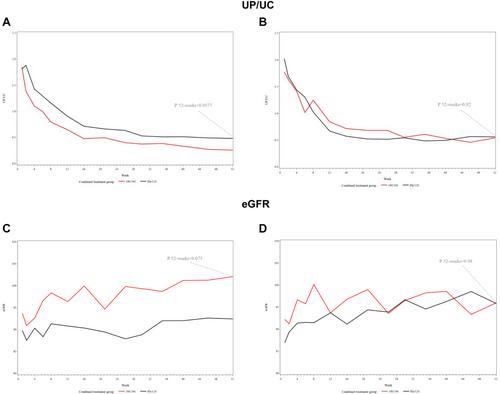
One hundred one renal biopsies of patients with LN enrolled in the BI 655064 trial were scored centrally. The estimated glomerular filtration rate (eGFR), spot urine protein/urine creatinine ratio (UP/UC), and complete renal response (CRR) were evaluated over 52 weeks. Patients were divided according to a “better” or “worse” performance than the average of all patients in the cohort, predicted by a mixed model for repeated measurements. Logistic regression models adjusted for potential confounders were used to assess the association between different treatment doses and outcomes according to the presence or absence of monocytes.
Results
A higher BI 655064 dose (180 or 240 mg) was associated with better outcomes of UP/UC and CRR when glomerular monocytes were present in kidney biopsy samples (odds ratio [OR] 3.66 [95% confidence interval (CI) 1.09–12.3], P = 0.04; OR 4.58 [95% CI 1.24–16.9], P = 0.02). A trend toward improved eGFR was also observed in these patients (at 52 weeks, P = 0.08).
Conclusion
In LN kidney biopsy samples with glomerular monocytes, high-dose BI 655064 treatment improved proteinuria at 52 weeks and resulted in a higher CRR compared to biopsy samples without glomerular monocytes. Histologic features may guide the choice of treatment for individual patients with LN.
期刊介绍:
Arthritis & Rheumatology is the official journal of the American College of Rheumatology and focuses on the natural history, pathophysiology, treatment, and outcome of rheumatic diseases. It is a peer-reviewed publication that aims to provide the highest quality basic and clinical research in this field. The journal covers a wide range of investigative areas and also includes review articles, editorials, and educational material for researchers and clinicians. Being recognized as a leading research journal in rheumatology, Arthritis & Rheumatology serves the global community of rheumatology investigators and clinicians.






 京公网安备 11010802042870号
京ICP备2023020795号-1
京公网安备 11010802042870号
京ICP备2023020795号-1

 分享
分享
 求助内容:
求助内容: 应助结果提醒方式:
 扫码关注我们
