{"title":"超越模糊:东莨菪碱在跨性别认知障碍建模中的效用和限制-叙述回顾。","authors":"Angelika Jagielska , Kinga Sałaciak , Karolina Pytka","doi":"10.1016/j.arr.2024.102635","DOIUrl":null,"url":null,"abstract":"<div><div>Scopolamine, widely regarded as the gold standard in preclinical studies of memory impairments, acts as a non-selective antagonist of central and peripheral muscarinic receptors. While its application in modeling dementia primarily involves antagonism at the M<sub>1</sub> receptor, its non-selective peripheral actions may introduce adverse effects that influence behavioral test outcomes. This review analyzes preclinical findings to consolidate knowledge on scopolamine's use and elucidate potential mechanisms responsible for its amnestic effects. We focused on recognition, spatial, and emotional memory processes, alongside executive functions such as attention, cognitive flexibility, and working memory. The cognitive effects of scopolamine are highly dose-dependent, influenced by factors such as species, age, and sex of subjects. Notably, scopolamine rapidly induces observable memory impairments across species, from fish to rodents and primates, often with deficits that can persist for days. However, the compound's broad action on muscarinic receptors and its peripheral side effects, including pupil dilation and reduced salivation, complicates result interpretation, particularly in tasks requiring visual discrimination or food intake. The review also highlights scopolamine's translational value in modeling dementia and Alzheimer’s disease, emphasizing the importance of considering individual factors and task-specific designs. Despite its widespread use, scopolamine’s limited specificity for cholinergic dysfunction and inability to fully mimic the complex pathophysiology of cognitive disorders like Alzheimer’s and Parkinson’s disease point to the need for complementary models. This review aims to guide researchers in using scopolamine for modeling cognitive impairments, ensuring attention to factors impacting experimental outcomes.</div></div>","PeriodicalId":55545,"journal":{"name":"Ageing Research Reviews","volume":"104 ","pages":"Article 102635"},"PeriodicalIF":12.4000,"publicationDate":"2025-02-01","publicationTypes":"Journal Article","fieldsOfStudy":null,"isOpenAccess":false,"openAccessPdf":"","citationCount":"0","resultStr":"{\"title\":\"Beyond the blur: Scopolamine's utility and limits in modeling cognitive disorders across sexes – Narrative review\",\"authors\":\"Angelika Jagielska , Kinga Sałaciak , Karolina Pytka\",\"doi\":\"10.1016/j.arr.2024.102635\",\"DOIUrl\":null,\"url\":null,\"abstract\":\"<div><div>Scopolamine, widely regarded as the gold standard in preclinical studies of memory impairments, acts as a non-selective antagonist of central and peripheral muscarinic receptors. While its application in modeling dementia primarily involves antagonism at the M<sub>1</sub> receptor, its non-selective peripheral actions may introduce adverse effects that influence behavioral test outcomes. This review analyzes preclinical findings to consolidate knowledge on scopolamine's use and elucidate potential mechanisms responsible for its amnestic effects. We focused on recognition, spatial, and emotional memory processes, alongside executive functions such as attention, cognitive flexibility, and working memory. The cognitive effects of scopolamine are highly dose-dependent, influenced by factors such as species, age, and sex of subjects. Notably, scopolamine rapidly induces observable memory impairments across species, from fish to rodents and primates, often with deficits that can persist for days. However, the compound's broad action on muscarinic receptors and its peripheral side effects, including pupil dilation and reduced salivation, complicates result interpretation, particularly in tasks requiring visual discrimination or food intake. The review also highlights scopolamine's translational value in modeling dementia and Alzheimer’s disease, emphasizing the importance of considering individual factors and task-specific designs. Despite its widespread use, scopolamine’s limited specificity for cholinergic dysfunction and inability to fully mimic the complex pathophysiology of cognitive disorders like Alzheimer’s and Parkinson’s disease point to the need for complementary models. This review aims to guide researchers in using scopolamine for modeling cognitive impairments, ensuring attention to factors impacting experimental outcomes.</div></div>\",\"PeriodicalId\":55545,\"journal\":{\"name\":\"Ageing Research Reviews\",\"volume\":\"104 \",\"pages\":\"Article 102635\"},\"PeriodicalIF\":12.4000,\"publicationDate\":\"2025-02-01\",\"publicationTypes\":\"Journal Article\",\"fieldsOfStudy\":null,\"isOpenAccess\":false,\"openAccessPdf\":\"\",\"citationCount\":\"0\",\"resultStr\":null,\"platform\":\"Semanticscholar\",\"paperid\":null,\"PeriodicalName\":\"Ageing Research Reviews\",\"FirstCategoryId\":\"3\",\"ListUrlMain\":\"https://www.sciencedirect.com/science/article/pii/S1568163724004537\",\"RegionNum\":1,\"RegionCategory\":\"医学\",\"ArticlePicture\":[],\"TitleCN\":null,\"AbstractTextCN\":null,\"PMCID\":null,\"EPubDate\":\"2024/12/7 0:00:00\",\"PubModel\":\"Epub\",\"JCR\":\"Q1\",\"JCRName\":\"CELL BIOLOGY\",\"Score\":null,\"Total\":0}","platform":"Semanticscholar","paperid":null,"PeriodicalName":"Ageing Research Reviews","FirstCategoryId":"3","ListUrlMain":"https://www.sciencedirect.com/science/article/pii/S1568163724004537","RegionNum":1,"RegionCategory":"医学","ArticlePicture":[],"TitleCN":null,"AbstractTextCN":null,"PMCID":null,"EPubDate":"2024/12/7 0:00:00","PubModel":"Epub","JCR":"Q1","JCRName":"CELL BIOLOGY","Score":null,"Total":0}
Beyond the blur: Scopolamine's utility and limits in modeling cognitive disorders across sexes – Narrative review
Scopolamine, widely regarded as the gold standard in preclinical studies of memory impairments, acts as a non-selective antagonist of central and peripheral muscarinic receptors. While its application in modeling dementia primarily involves antagonism at the M1 receptor, its non-selective peripheral actions may introduce adverse effects that influence behavioral test outcomes. This review analyzes preclinical findings to consolidate knowledge on scopolamine's use and elucidate potential mechanisms responsible for its amnestic effects. We focused on recognition, spatial, and emotional memory processes, alongside executive functions such as attention, cognitive flexibility, and working memory. The cognitive effects of scopolamine are highly dose-dependent, influenced by factors such as species, age, and sex of subjects. Notably, scopolamine rapidly induces observable memory impairments across species, from fish to rodents and primates, often with deficits that can persist for days. However, the compound's broad action on muscarinic receptors and its peripheral side effects, including pupil dilation and reduced salivation, complicates result interpretation, particularly in tasks requiring visual discrimination or food intake. The review also highlights scopolamine's translational value in modeling dementia and Alzheimer’s disease, emphasizing the importance of considering individual factors and task-specific designs. Despite its widespread use, scopolamine’s limited specificity for cholinergic dysfunction and inability to fully mimic the complex pathophysiology of cognitive disorders like Alzheimer’s and Parkinson’s disease point to the need for complementary models. This review aims to guide researchers in using scopolamine for modeling cognitive impairments, ensuring attention to factors impacting experimental outcomes.
期刊介绍:
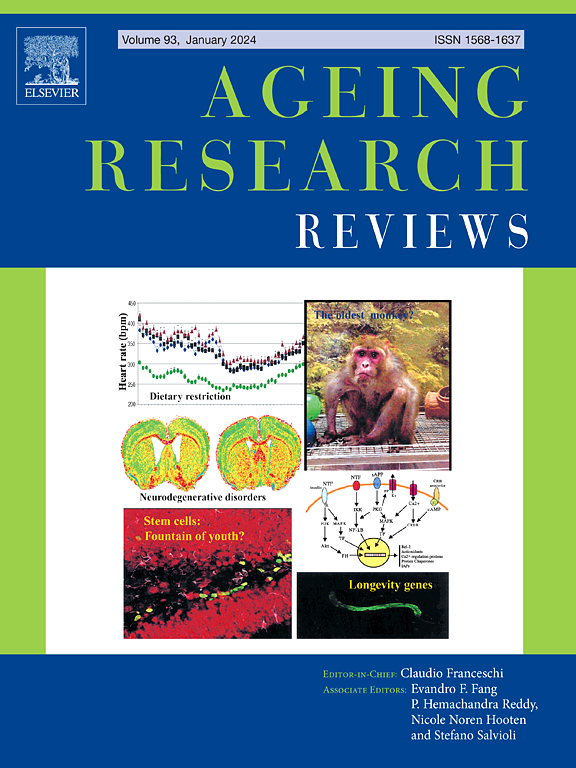
With the rise in average human life expectancy, the impact of ageing and age-related diseases on our society has become increasingly significant. Ageing research is now a focal point for numerous laboratories, encompassing leaders in genetics, molecular and cellular biology, biochemistry, and behavior. Ageing Research Reviews (ARR) serves as a cornerstone in this field, addressing emerging trends.
ARR aims to fill a substantial gap by providing critical reviews and viewpoints on evolving discoveries concerning the mechanisms of ageing and age-related diseases. The rapid progress in understanding the mechanisms controlling cellular proliferation, differentiation, and survival is unveiling new insights into the regulation of ageing. From telomerase to stem cells, and from energy to oxyradical metabolism, we are witnessing an exciting era in the multidisciplinary field of ageing research.
The journal explores the cellular and molecular foundations of interventions that extend lifespan, such as caloric restriction. It identifies the underpinnings of manipulations that extend lifespan, shedding light on novel approaches for preventing age-related diseases. ARR publishes articles on focused topics selected from the expansive field of ageing research, with a particular emphasis on the cellular and molecular mechanisms of the aging process. This includes age-related diseases like cancer, cardiovascular disease, diabetes, and neurodegenerative disorders. The journal also covers applications of basic ageing research to lifespan extension and disease prevention, offering a comprehensive platform for advancing our understanding of this critical field.



 京公网安备 11010802042870号
京ICP备2023020795号-1
京公网安备 11010802042870号
京ICP备2023020795号-1

 分享
分享
 求助内容:
求助内容: 应助结果提醒方式:
 扫码关注我们
