Shuqi Yun, Anil Chekuri, Jennifer Art, Krishnakanth Kondabolu, Susan A Slaugenhaupt, Nadja Zeltner, Benjamin P Kleinstiver, Elisabetta Morini, Christiano R R Alves
{"title":"工程crispr碱基编辑器作为家族性自主神经障碍的永久治疗。","authors":"Shuqi Yun, Anil Chekuri, Jennifer Art, Krishnakanth Kondabolu, Susan A Slaugenhaupt, Nadja Zeltner, Benjamin P Kleinstiver, Elisabetta Morini, Christiano R R Alves","doi":"10.1101/2024.11.27.625322","DOIUrl":null,"url":null,"abstract":"<p><p>Familial dysautonomia (FD) is a fatal autosomal recessive congenital neuropathy caused by a T-to-C mutation in intron 20 of the <i>Elongator acetyltransferase complex subunit 1</i> (<i>ELP1</i>) gene, which causes tissue-specific skipping of exon 20 and reduction of ELP1 protein. Here, we developed a base editor (BE) approach to precisely correct this mutation. By optimizing Cas9 variants and screening multiple gRNAs, we identified a combination that was able to promote up to 70% on-target editing in HEK293T cells harboring the <i>ELP1</i> T-to-C mutation. These editing levels were sufficient to restore exon 20 inclusion in the <i>ELP1</i> transcript. Moreover, we optimized an engineered dual intein-split system to deliver these constructs <i>in vivo</i>. Mediated by adeno-associated virus (AAV) delivery, this BE strategy effectively corrected the liver and brain <i>ELP1</i> splicing defects in a humanized FD mouse model carrying the <i>ELP1</i> T-to-C mutation and rescued the FD phenotype in iPSC-derived sympathetic neurons. Importantly, we observed minimal off-target editing demonstrating high levels of specificity with these optimized base editors. These findings establish a novel and highly precise BE-based therapeutic approach to correct the FD mutation and associated splicing defects and provide the foundation for the development of a transformative, permanent treatment for this devastating disease.</p>","PeriodicalId":519960,"journal":{"name":"bioRxiv : the preprint server for biology","volume":" ","pages":""},"PeriodicalIF":0.0000,"publicationDate":"2024-12-20","publicationTypes":"Journal Article","fieldsOfStudy":null,"isOpenAccess":false,"openAccessPdf":"https://www.ncbi.nlm.nih.gov/pmc/articles/PMC11623606/pdf/","citationCount":"0","resultStr":"{\"title\":\"Engineered CRISPR-Base Editors as a Permanent Treatment for Familial Dysautonomia.\",\"authors\":\"Shuqi Yun, Anil Chekuri, Jennifer Art, Krishnakanth Kondabolu, Susan A Slaugenhaupt, Nadja Zeltner, Benjamin P Kleinstiver, Elisabetta Morini, Christiano R R Alves\",\"doi\":\"10.1101/2024.11.27.625322\",\"DOIUrl\":null,\"url\":null,\"abstract\":\"<p><p>Familial dysautonomia (FD) is a fatal autosomal recessive congenital neuropathy caused by a T-to-C mutation in intron 20 of the <i>Elongator acetyltransferase complex subunit 1</i> (<i>ELP1</i>) gene, which causes tissue-specific skipping of exon 20 and reduction of ELP1 protein. Here, we developed a base editor (BE) approach to precisely correct this mutation. By optimizing Cas9 variants and screening multiple gRNAs, we identified a combination that was able to promote up to 70% on-target editing in HEK293T cells harboring the <i>ELP1</i> T-to-C mutation. These editing levels were sufficient to restore exon 20 inclusion in the <i>ELP1</i> transcript. Moreover, we optimized an engineered dual intein-split system to deliver these constructs <i>in vivo</i>. Mediated by adeno-associated virus (AAV) delivery, this BE strategy effectively corrected the liver and brain <i>ELP1</i> splicing defects in a humanized FD mouse model carrying the <i>ELP1</i> T-to-C mutation and rescued the FD phenotype in iPSC-derived sympathetic neurons. Importantly, we observed minimal off-target editing demonstrating high levels of specificity with these optimized base editors. These findings establish a novel and highly precise BE-based therapeutic approach to correct the FD mutation and associated splicing defects and provide the foundation for the development of a transformative, permanent treatment for this devastating disease.</p>\",\"PeriodicalId\":519960,\"journal\":{\"name\":\"bioRxiv : the preprint server for biology\",\"volume\":\" \",\"pages\":\"\"},\"PeriodicalIF\":0.0000,\"publicationDate\":\"2024-12-20\",\"publicationTypes\":\"Journal Article\",\"fieldsOfStudy\":null,\"isOpenAccess\":false,\"openAccessPdf\":\"https://www.ncbi.nlm.nih.gov/pmc/articles/PMC11623606/pdf/\",\"citationCount\":\"0\",\"resultStr\":null,\"platform\":\"Semanticscholar\",\"paperid\":null,\"PeriodicalName\":\"bioRxiv : the preprint server for biology\",\"FirstCategoryId\":\"1085\",\"ListUrlMain\":\"https://doi.org/10.1101/2024.11.27.625322\",\"RegionNum\":0,\"RegionCategory\":null,\"ArticlePicture\":[],\"TitleCN\":null,\"AbstractTextCN\":null,\"PMCID\":null,\"EPubDate\":\"\",\"PubModel\":\"\",\"JCR\":\"\",\"JCRName\":\"\",\"Score\":null,\"Total\":0}","platform":"Semanticscholar","paperid":null,"PeriodicalName":"bioRxiv : the preprint server for biology","FirstCategoryId":"1085","ListUrlMain":"https://doi.org/10.1101/2024.11.27.625322","RegionNum":0,"RegionCategory":null,"ArticlePicture":[],"TitleCN":null,"AbstractTextCN":null,"PMCID":null,"EPubDate":"","PubModel":"","JCR":"","JCRName":"","Score":null,"Total":0}
Engineered CRISPR-Base Editors as a Permanent Treatment for Familial Dysautonomia.
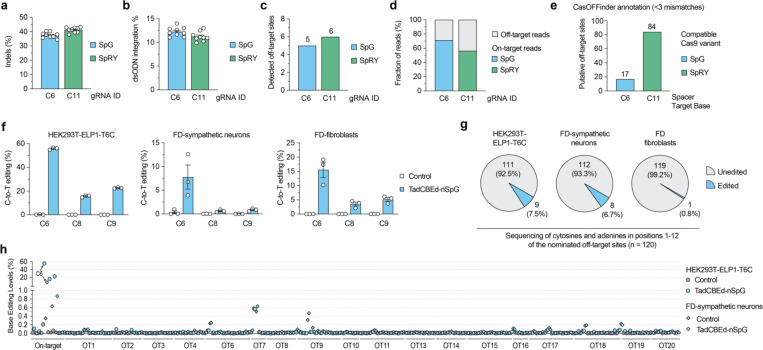
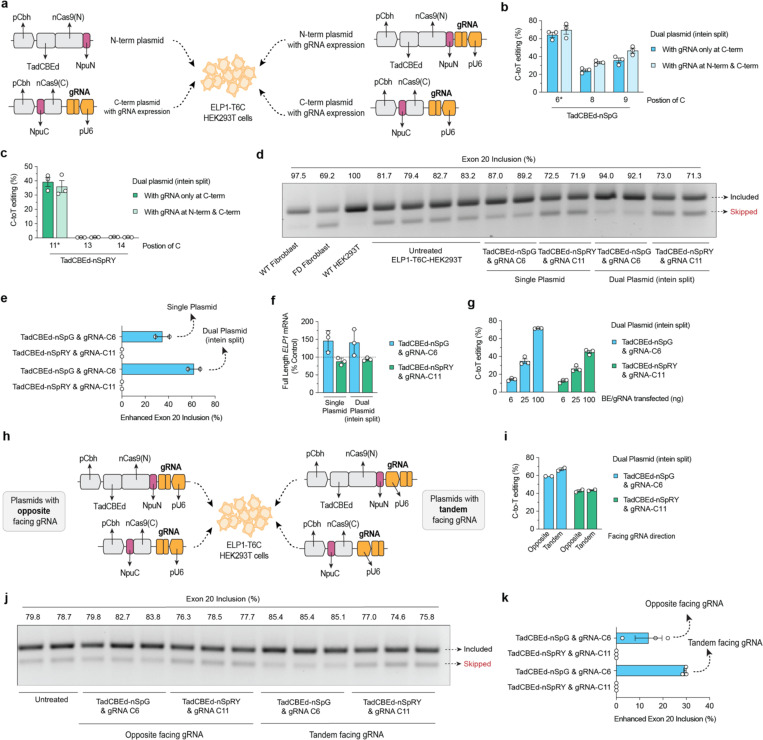
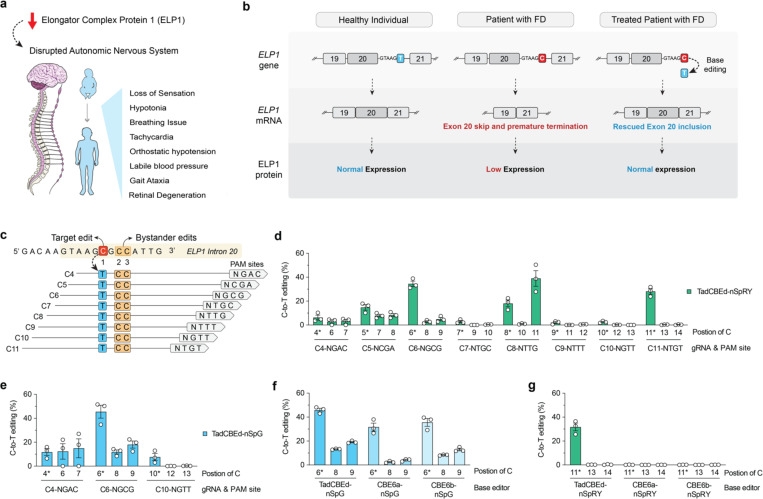
Familial dysautonomia (FD) is a fatal autosomal recessive congenital neuropathy caused by a T-to-C mutation in intron 20 of the Elongator acetyltransferase complex subunit 1 (ELP1) gene, which causes tissue-specific skipping of exon 20 and reduction of ELP1 protein. Here, we developed a base editor (BE) approach to precisely correct this mutation. By optimizing Cas9 variants and screening multiple gRNAs, we identified a combination that was able to promote up to 70% on-target editing in HEK293T cells harboring the ELP1 T-to-C mutation. These editing levels were sufficient to restore exon 20 inclusion in the ELP1 transcript. Moreover, we optimized an engineered dual intein-split system to deliver these constructs in vivo. Mediated by adeno-associated virus (AAV) delivery, this BE strategy effectively corrected the liver and brain ELP1 splicing defects in a humanized FD mouse model carrying the ELP1 T-to-C mutation and rescued the FD phenotype in iPSC-derived sympathetic neurons. Importantly, we observed minimal off-target editing demonstrating high levels of specificity with these optimized base editors. These findings establish a novel and highly precise BE-based therapeutic approach to correct the FD mutation and associated splicing defects and provide the foundation for the development of a transformative, permanent treatment for this devastating disease.



 京公网安备 11010802042870号
京ICP备2023020795号-1
京公网安备 11010802042870号
京ICP备2023020795号-1

 分享
分享

 求助内容:
求助内容: 应助结果提醒方式:
 扫码关注我们
