IF 2.4 3区 生物学Q2 MULTIDISCIPLINARY SCIENCESPeerJPub Date : 2024-12-09eCollection Date: 2024-01-01DOI:10.7717/peerj.18173
Jingying Zhu, Li Han, Pingjingwen Yang, Ziyi Feng, Shuyuan Xue
{"title":"中国新疆扩大新生儿筛查的先天性代谢异常谱分析。","authors":"Jingying Zhu, Li Han, Pingjingwen Yang, Ziyi Feng, Shuyuan Xue","doi":"10.7717/peerj.18173","DOIUrl":null,"url":null,"abstract":"<p><p>To determine the disease spectrum and genetic characteristics of inborn errors of metabolism (IEM) in Xinjiang province in the northwest of China, 41,690 newborn babies were screening by tandem mass spectrometry from November 2018 to December 2021. Of these, 57 newborn babies were referred for genetic analysis by next-generation sequencing, which was validated by Sanger sequencing. A total of 36 newborn babies and one relative were diagnosed with IEM, and the overall positive predictive value was 29.03%. The overall incidence of IEM in Xinjiang was 1:1,158 (36/41,690). The incidence of amino acidemias, organic acidemias, and fatty acid oxidation disorder were 1:1,668 (25/41,690), 1:4,632 (9/41,690), and 1:20,845 (2/41,690), respectively. Phenylketonuria and methylmalonic acidemia were the two most common inborn errors of metabolism (IEM), accounting for 83% (30/36) of all confirmed cases. Some hotspot mutations were observed for several IEMs, including <i>PAH</i> gene c.158G > A (p.Arg53His) and c.688G > A (p.Val230Ile) for hyperphenylalaninemia. Four mutation types of the <i>MMACHC</i> gene (<i>e.g</i>., c.609G > A (p.Trp203Ter), c.567dupT (p.Ile190fs)) and six mutation types of the <i>MMUT</i> gene (<i>e.g</i>., c.729_730insT (p.Asp244fs)) were found for methylmalonic acidemia. We also found 11 mutations in six genes: <i>PCCB, IVD, GCDH, MCCC1, SLC22A5</i>, and <i>ACADS</i> in this region. This study combined tandem mass spectrometry and next-generation sequencing technology for the screening and diagnosis of IEM. The study provides effective clinical guidance, and the data provide a basis for expanding newborn screening, genetic screening, and IEM gene consultation in Xinjiang, China.</p>","PeriodicalId":19799,"journal":{"name":"PeerJ","volume":"12 ","pages":"e18173"},"PeriodicalIF":2.4000,"publicationDate":"2024-12-09","publicationTypes":"Journal Article","fieldsOfStudy":null,"isOpenAccess":false,"openAccessPdf":"https://www.ncbi.nlm.nih.gov/pmc/articles/PMC11636536/pdf/","citationCount":"0","resultStr":"{\"title\":\"Spectrum analysis of inborn errors of metabolism for expanded newborn screening in Xinjiang, China.\",\"authors\":\"Jingying Zhu, Li Han, Pingjingwen Yang, Ziyi Feng, Shuyuan Xue\",\"doi\":\"10.7717/peerj.18173\",\"DOIUrl\":null,\"url\":null,\"abstract\":\"<p><p>To determine the disease spectrum and genetic characteristics of inborn errors of metabolism (IEM) in Xinjiang province in the northwest of China, 41,690 newborn babies were screening by tandem mass spectrometry from November 2018 to December 2021. Of these, 57 newborn babies were referred for genetic analysis by next-generation sequencing, which was validated by Sanger sequencing. A total of 36 newborn babies and one relative were diagnosed with IEM, and the overall positive predictive value was 29.03%. The overall incidence of IEM in Xinjiang was 1:1,158 (36/41,690). The incidence of amino acidemias, organic acidemias, and fatty acid oxidation disorder were 1:1,668 (25/41,690), 1:4,632 (9/41,690), and 1:20,845 (2/41,690), respectively. Phenylketonuria and methylmalonic acidemia were the two most common inborn errors of metabolism (IEM), accounting for 83% (30/36) of all confirmed cases. Some hotspot mutations were observed for several IEMs, including <i>PAH</i> gene c.158G > A (p.Arg53His) and c.688G > A (p.Val230Ile) for hyperphenylalaninemia. Four mutation types of the <i>MMACHC</i> gene (<i>e.g</i>., c.609G > A (p.Trp203Ter), c.567dupT (p.Ile190fs)) and six mutation types of the <i>MMUT</i> gene (<i>e.g</i>., c.729_730insT (p.Asp244fs)) were found for methylmalonic acidemia. We also found 11 mutations in six genes: <i>PCCB, IVD, GCDH, MCCC1, SLC22A5</i>, and <i>ACADS</i> in this region. This study combined tandem mass spectrometry and next-generation sequencing technology for the screening and diagnosis of IEM. The study provides effective clinical guidance, and the data provide a basis for expanding newborn screening, genetic screening, and IEM gene consultation in Xinjiang, China.</p>\",\"PeriodicalId\":19799,\"journal\":{\"name\":\"PeerJ\",\"volume\":\"12 \",\"pages\":\"e18173\"},\"PeriodicalIF\":2.4000,\"publicationDate\":\"2024-12-09\",\"publicationTypes\":\"Journal Article\",\"fieldsOfStudy\":null,\"isOpenAccess\":false,\"openAccessPdf\":\"https://www.ncbi.nlm.nih.gov/pmc/articles/PMC11636536/pdf/\",\"citationCount\":\"0\",\"resultStr\":null,\"platform\":\"Semanticscholar\",\"paperid\":null,\"PeriodicalName\":\"PeerJ\",\"FirstCategoryId\":\"99\",\"ListUrlMain\":\"https://doi.org/10.7717/peerj.18173\",\"RegionNum\":3,\"RegionCategory\":\"生物学\",\"ArticlePicture\":[],\"TitleCN\":null,\"AbstractTextCN\":null,\"PMCID\":null,\"EPubDate\":\"2024/1/1 0:00:00\",\"PubModel\":\"eCollection\",\"JCR\":\"Q2\",\"JCRName\":\"MULTIDISCIPLINARY SCIENCES\",\"Score\":null,\"Total\":0}","platform":"Semanticscholar","paperid":null,"PeriodicalName":"PeerJ","FirstCategoryId":"99","ListUrlMain":"https://doi.org/10.7717/peerj.18173","RegionNum":3,"RegionCategory":"生物学","ArticlePicture":[],"TitleCN":null,"AbstractTextCN":null,"PMCID":null,"EPubDate":"2024/1/1 0:00:00","PubModel":"eCollection","JCR":"Q2","JCRName":"MULTIDISCIPLINARY SCIENCES","Score":null,"Total":0}
引用次数: 0
摘要
为了确定新疆省先天性代谢错误(IEM)的疾病谱系和遗传特征,于2018年11月至2021年12月对41690名新生儿进行了串联质谱筛查。其中,57名新生儿通过下一代测序进行遗传分析,并通过Sanger测序进行验证。共有36名新生儿和1名亲属被诊断为IEM,总体阳性预测值为29.03%。新疆地区IEM总发病率为1:1 158(36/41,690)。氨基酸血症、有机酸血症和脂肪酸氧化症的发生率分别为1:1 668(25/ 41690)、1:4 632(9/ 41690)和1:20 845(2/ 41690)。苯丙酮尿症和甲基丙二酸血症是两种最常见的先天性代谢错误(IEM),占所有确诊病例的83%(30/36)。在一些IEMs中观察到一些热点突变,包括高苯丙氨酸血症的PAH基因c.158G > A (p.Arg53His)和c.688G > A (p.Val230Ile)。在甲基丙二酸血症中发现了4种MMACHC基因突变类型(如c.609G > A (p.Trp203Ter)、c.567dupT (p.p ile190fs))和6种MMUT基因突变类型(如c.729_730insT (p.p asp244fs))。我们还在该区域发现了6个基因的11个突变:PCCB、IVD、GCDH、MCCC1、SLC22A5和ACADS。本研究结合串联质谱法和新一代测序技术筛查和诊断IEM。本研究可为临床提供有效指导,并为新疆地区扩大新生儿筛查、遗传筛查和IEM基因咨询提供依据。
Spectrum analysis of inborn errors of metabolism for expanded newborn screening in Xinjiang, China.
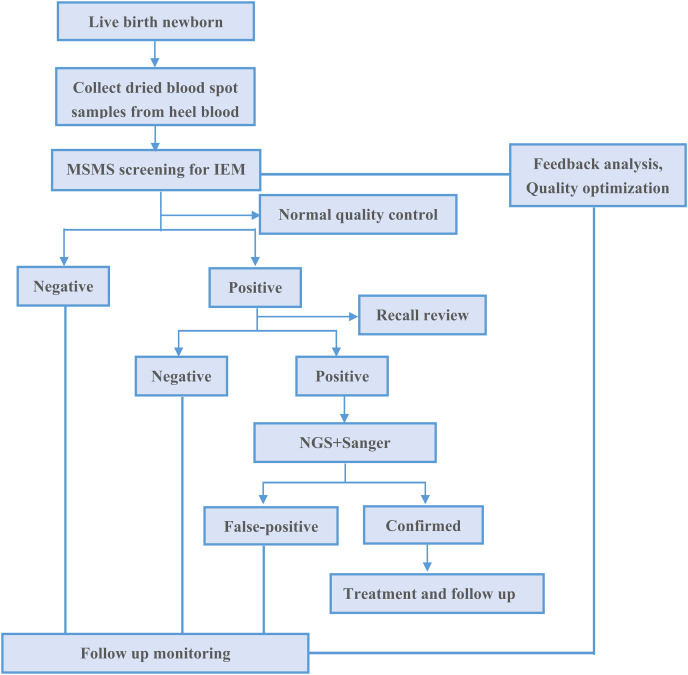
To determine the disease spectrum and genetic characteristics of inborn errors of metabolism (IEM) in Xinjiang province in the northwest of China, 41,690 newborn babies were screening by tandem mass spectrometry from November 2018 to December 2021. Of these, 57 newborn babies were referred for genetic analysis by next-generation sequencing, which was validated by Sanger sequencing. A total of 36 newborn babies and one relative were diagnosed with IEM, and the overall positive predictive value was 29.03%. The overall incidence of IEM in Xinjiang was 1:1,158 (36/41,690). The incidence of amino acidemias, organic acidemias, and fatty acid oxidation disorder were 1:1,668 (25/41,690), 1:4,632 (9/41,690), and 1:20,845 (2/41,690), respectively. Phenylketonuria and methylmalonic acidemia were the two most common inborn errors of metabolism (IEM), accounting for 83% (30/36) of all confirmed cases. Some hotspot mutations were observed for several IEMs, including PAH gene c.158G > A (p.Arg53His) and c.688G > A (p.Val230Ile) for hyperphenylalaninemia. Four mutation types of the MMACHC gene (e.g., c.609G > A (p.Trp203Ter), c.567dupT (p.Ile190fs)) and six mutation types of the MMUT gene (e.g., c.729_730insT (p.Asp244fs)) were found for methylmalonic acidemia. We also found 11 mutations in six genes: PCCB, IVD, GCDH, MCCC1, SLC22A5, and ACADS in this region. This study combined tandem mass spectrometry and next-generation sequencing technology for the screening and diagnosis of IEM. The study provides effective clinical guidance, and the data provide a basis for expanding newborn screening, genetic screening, and IEM gene consultation in Xinjiang, China.
期刊介绍:
PeerJ is an open access peer-reviewed scientific journal covering research in the biological and medical sciences. At PeerJ, authors take out a lifetime publication plan (for as little as $99) which allows them to publish articles in the journal for free, forever. PeerJ has 5 Nobel Prize Winners on the Board; they have won several industry and media awards; and they are widely recognized as being one of the most interesting recent developments in academic publishing.






 京公网安备 11010802042870号
京ICP备2023020795号-1
京公网安备 11010802042870号
京ICP备2023020795号-1

 分享
分享
 求助内容:
求助内容: 应助结果提醒方式:
 扫码关注我们
