Xiao Zheng, Jinhao Li, Qinfeng Ma, Jianping Gong, Jianbo Pan
{"title":"孟德尔随机化和生物信息学的综合分析揭示了COVID-19与膝关节骨关节炎之间的因果关系和遗传联系。","authors":"Xiao Zheng, Jinhao Li, Qinfeng Ma, Jianping Gong, Jianbo Pan","doi":"10.1186/s12920-024-02074-4","DOIUrl":null,"url":null,"abstract":"<p><strong>Background: </strong>Clinical and epidemiological analyses have found an association between coronavirus disease 2019 (COVID-19) and knee osteoarthritis (KOA). Infection with COVID-19 may increase the risk of developing KOA.</p><p><strong>Objectives: </strong>This study aimed to investigate the potential causal relationship between COVID-19 and KOA using Mendelian randomization (MR) and to explore the underlying mechanisms through a systematic bioinformatics approach.</p><p><strong>Methods: </strong>Our investigation focused on exploring the potential causal relationship between COVID-19, acute upper respiratory tract infection (URTI) and KOA utilizing a bidirectional MR approach. Additionally, we conducted differential gene expression analysis using public datasets related to these three conditions. Subsequent analyses, including transcriptional regulation analysis, immune cell infiltration analysis, single-cell analysis, and druggability evaluation, were performed to explore potential mechanisms and prioritize therapeutic targets.</p><p><strong>Results: </strong>The results indicate that COVID-19 has a one-way impact on KOA, while URTI does not play a causal role in this association. Ribosomal dysfunction may serve as an intermediate factor connecting COVID-19 with KOA. Specifically, COVID-19 has the potential to influence the metabolic processes of the extracellular matrix, potentially impacting the joint homeostasis. A specific group of genes (COL10A1, BGN, COL3A1, COMP, ACAN, THBS2, COL5A1, COL16A1, COL5A2) has been identified as a shared transcriptomic signature in response to KOA with COVID-19. Imatinib, Adiponectin, Myricetin, Tranexamic acid, and Chenodeoxycholic acid are potential drugs for the treatment of KOA patients with COVID-19.</p><p><strong>Conclusions: </strong>This study uniquely combines Mendelian randomization and bioinformatics tools to explore the possibility of a causal relationship and genetic association between COVID-19 and KOA. These findings are expected to provide novel perspectives on the underlying biological mechanisms that link COVID-19 and KOA.</p>","PeriodicalId":8915,"journal":{"name":"BMC Medical Genomics","volume":"18 1","pages":"2"},"PeriodicalIF":2.0000,"publicationDate":"2025-01-02","publicationTypes":"Journal Article","fieldsOfStudy":null,"isOpenAccess":false,"openAccessPdf":"https://www.ncbi.nlm.nih.gov/pmc/articles/PMC11697936/pdf/","citationCount":"0","resultStr":"{\"title\":\"Integrative analyses of mendelian randomization and bioinformatics reveal casual relationship and genetic links between COVID-19 and knee osteoarthritis.\",\"authors\":\"Xiao Zheng, Jinhao Li, Qinfeng Ma, Jianping Gong, Jianbo Pan\",\"doi\":\"10.1186/s12920-024-02074-4\",\"DOIUrl\":null,\"url\":null,\"abstract\":\"<p><strong>Background: </strong>Clinical and epidemiological analyses have found an association between coronavirus disease 2019 (COVID-19) and knee osteoarthritis (KOA). Infection with COVID-19 may increase the risk of developing KOA.</p><p><strong>Objectives: </strong>This study aimed to investigate the potential causal relationship between COVID-19 and KOA using Mendelian randomization (MR) and to explore the underlying mechanisms through a systematic bioinformatics approach.</p><p><strong>Methods: </strong>Our investigation focused on exploring the potential causal relationship between COVID-19, acute upper respiratory tract infection (URTI) and KOA utilizing a bidirectional MR approach. Additionally, we conducted differential gene expression analysis using public datasets related to these three conditions. Subsequent analyses, including transcriptional regulation analysis, immune cell infiltration analysis, single-cell analysis, and druggability evaluation, were performed to explore potential mechanisms and prioritize therapeutic targets.</p><p><strong>Results: </strong>The results indicate that COVID-19 has a one-way impact on KOA, while URTI does not play a causal role in this association. Ribosomal dysfunction may serve as an intermediate factor connecting COVID-19 with KOA. Specifically, COVID-19 has the potential to influence the metabolic processes of the extracellular matrix, potentially impacting the joint homeostasis. A specific group of genes (COL10A1, BGN, COL3A1, COMP, ACAN, THBS2, COL5A1, COL16A1, COL5A2) has been identified as a shared transcriptomic signature in response to KOA with COVID-19. Imatinib, Adiponectin, Myricetin, Tranexamic acid, and Chenodeoxycholic acid are potential drugs for the treatment of KOA patients with COVID-19.</p><p><strong>Conclusions: </strong>This study uniquely combines Mendelian randomization and bioinformatics tools to explore the possibility of a causal relationship and genetic association between COVID-19 and KOA. These findings are expected to provide novel perspectives on the underlying biological mechanisms that link COVID-19 and KOA.</p>\",\"PeriodicalId\":8915,\"journal\":{\"name\":\"BMC Medical Genomics\",\"volume\":\"18 1\",\"pages\":\"2\"},\"PeriodicalIF\":2.0000,\"publicationDate\":\"2025-01-02\",\"publicationTypes\":\"Journal Article\",\"fieldsOfStudy\":null,\"isOpenAccess\":false,\"openAccessPdf\":\"https://www.ncbi.nlm.nih.gov/pmc/articles/PMC11697936/pdf/\",\"citationCount\":\"0\",\"resultStr\":null,\"platform\":\"Semanticscholar\",\"paperid\":null,\"PeriodicalName\":\"BMC Medical Genomics\",\"FirstCategoryId\":\"3\",\"ListUrlMain\":\"https://doi.org/10.1186/s12920-024-02074-4\",\"RegionNum\":4,\"RegionCategory\":\"医学\",\"ArticlePicture\":[],\"TitleCN\":null,\"AbstractTextCN\":null,\"PMCID\":null,\"EPubDate\":\"\",\"PubModel\":\"\",\"JCR\":\"Q3\",\"JCRName\":\"GENETICS & HEREDITY\",\"Score\":null,\"Total\":0}","platform":"Semanticscholar","paperid":null,"PeriodicalName":"BMC Medical Genomics","FirstCategoryId":"3","ListUrlMain":"https://doi.org/10.1186/s12920-024-02074-4","RegionNum":4,"RegionCategory":"医学","ArticlePicture":[],"TitleCN":null,"AbstractTextCN":null,"PMCID":null,"EPubDate":"","PubModel":"","JCR":"Q3","JCRName":"GENETICS & HEREDITY","Score":null,"Total":0}
Integrative analyses of mendelian randomization and bioinformatics reveal casual relationship and genetic links between COVID-19 and knee osteoarthritis.
Background: Clinical and epidemiological analyses have found an association between coronavirus disease 2019 (COVID-19) and knee osteoarthritis (KOA). Infection with COVID-19 may increase the risk of developing KOA.
Objectives: This study aimed to investigate the potential causal relationship between COVID-19 and KOA using Mendelian randomization (MR) and to explore the underlying mechanisms through a systematic bioinformatics approach.
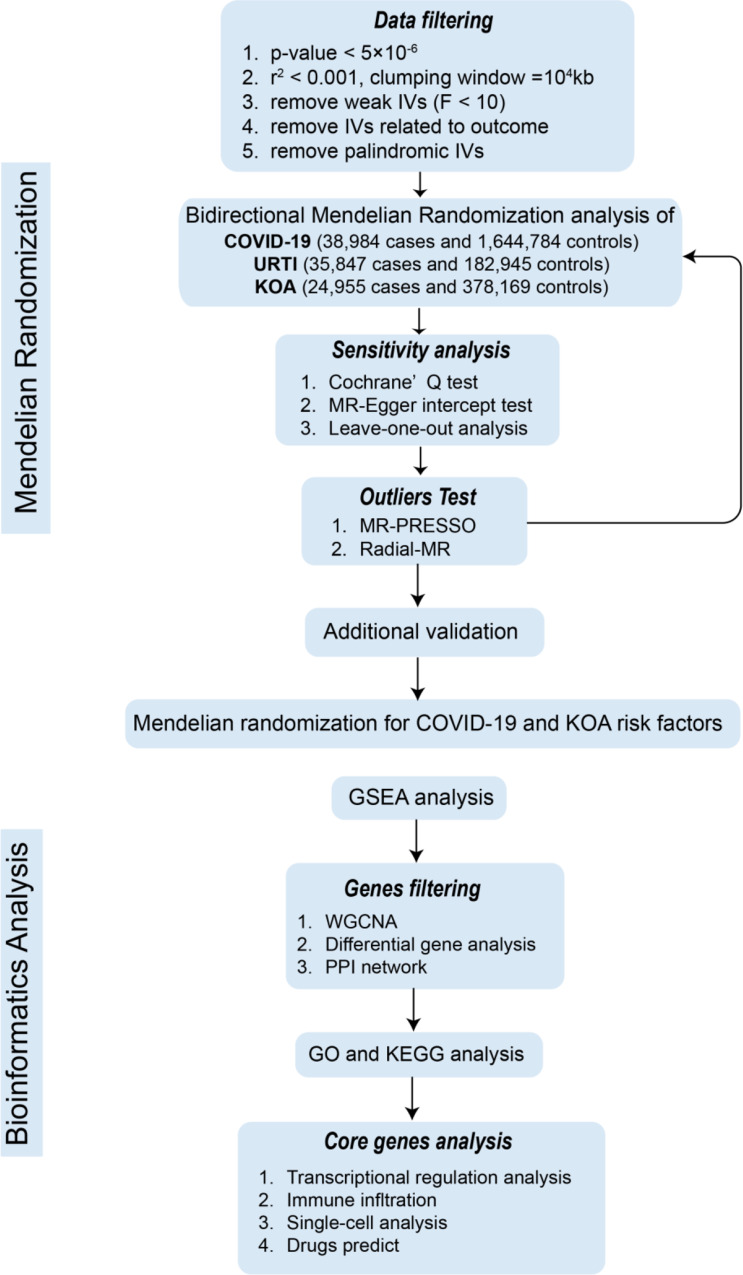
Methods: Our investigation focused on exploring the potential causal relationship between COVID-19, acute upper respiratory tract infection (URTI) and KOA utilizing a bidirectional MR approach. Additionally, we conducted differential gene expression analysis using public datasets related to these three conditions. Subsequent analyses, including transcriptional regulation analysis, immune cell infiltration analysis, single-cell analysis, and druggability evaluation, were performed to explore potential mechanisms and prioritize therapeutic targets.
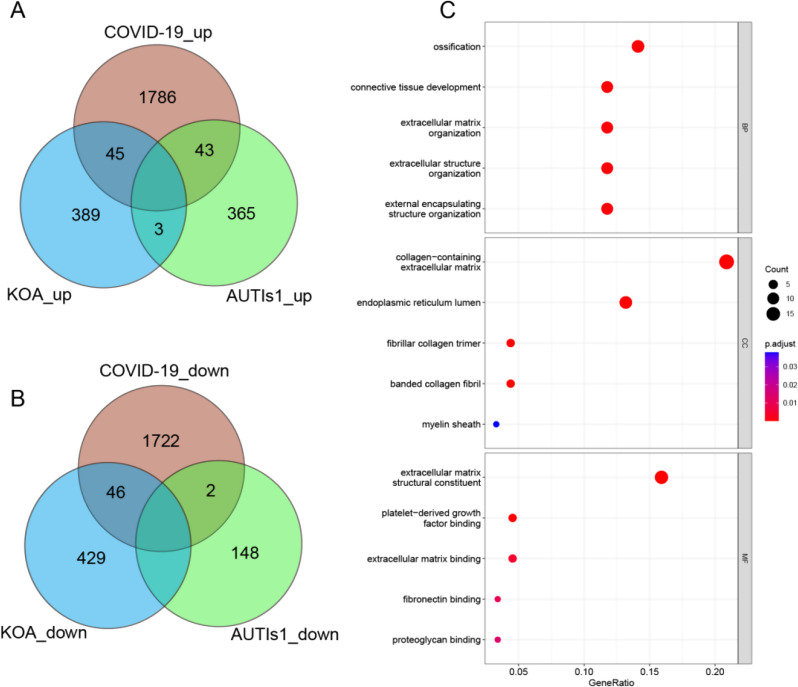
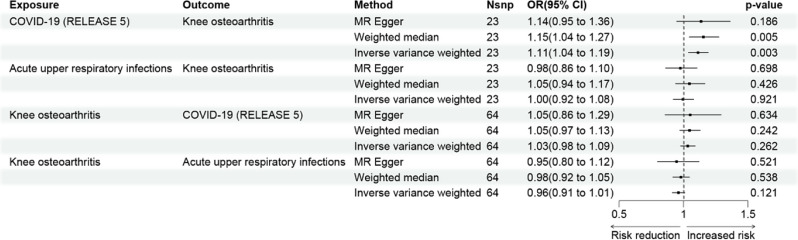
Results: The results indicate that COVID-19 has a one-way impact on KOA, while URTI does not play a causal role in this association. Ribosomal dysfunction may serve as an intermediate factor connecting COVID-19 with KOA. Specifically, COVID-19 has the potential to influence the metabolic processes of the extracellular matrix, potentially impacting the joint homeostasis. A specific group of genes (COL10A1, BGN, COL3A1, COMP, ACAN, THBS2, COL5A1, COL16A1, COL5A2) has been identified as a shared transcriptomic signature in response to KOA with COVID-19. Imatinib, Adiponectin, Myricetin, Tranexamic acid, and Chenodeoxycholic acid are potential drugs for the treatment of KOA patients with COVID-19.
Conclusions: This study uniquely combines Mendelian randomization and bioinformatics tools to explore the possibility of a causal relationship and genetic association between COVID-19 and KOA. These findings are expected to provide novel perspectives on the underlying biological mechanisms that link COVID-19 and KOA.
期刊介绍:
BMC Medical Genomics is an open access journal publishing original peer-reviewed research articles in all aspects of functional genomics, genome structure, genome-scale population genetics, epigenomics, proteomics, systems analysis, and pharmacogenomics in relation to human health and disease.




 京公网安备 11010802042870号
京ICP备2023020795号-1
京公网安备 11010802042870号
京ICP备2023020795号-1

 分享
分享
 求助内容:
求助内容: 应助结果提醒方式:
 扫码关注我们
