Alex A Francoeur, Cheng-I Liao, Jenny Chang, Caitlin R Johnson, Kiran Clair, Krishnansu S Tewari, Daniel S Kapp, John K Chan, Robert E Bristow
{"title":"美国肥胖和子宫内膜样癌的相关趋势","authors":"Alex A Francoeur, Cheng-I Liao, Jenny Chang, Caitlin R Johnson, Kiran Clair, Krishnansu S Tewari, Daniel S Kapp, John K Chan, Robert E Bristow","doi":"10.1097/AOG.0000000000005814","DOIUrl":null,"url":null,"abstract":"<p><strong>Objective: </strong>To evaluate the correlation in temporal trends in obesity and endometrioid endometrial cancer incidence in the United States using two comprehensive national databases.</p><p><strong>Methods: </strong>This is a cohort study in which data on endometrioid endometrial cancer were obtained from the U.S. Cancer Statistics from 2001 to 2018 and corrected for hysterectomy and pregnancy. Data on obesity were collected from the NHANES (National Health and Nutrition Examination Survey) database from 1988 to 2018. Average annual percentage changes (AAPCs) were used to describe trends. Pearson correlation coefficients ( r ) were calculated to examine the relationship between trends. SEER*Stat 8.3.9.2 and joinpoint regression program 5.2.0 were used for statistical analysis.</p><p><strong>Results: </strong>From U.S. Cancer Statistics data, 586,742 cases of endometrioid cancer were identified from 2001 to 2018. The average annual increase in endometrioid cancer was as follows: Hispanic 1.37% (95% CI, 1.14-1.60, P <.001), Black 1.30% (95% CI, 1.04-1.57, P <.001), and White -0.17 (95% CI, -0.91 to 0.58, P =.656). Women aged 20-29 years had a 4.48% annual increase (95% CI, 3.72-5.25, P <.001) and women aged 30-39 years had a 3.00% annual increase in rates (95% CI, 2.65-3.36, P <.001). According to the NHANES data, the prevalence of obesity in 2018 in adult women was as follows: Black 56.80%, Hispanic 44.10%, and White 40.90%. An examination of trends by age showed that women aged 20-29 years had the highest annual rise in obesity compared with other age groups (AAPC 7.36%, 95% CI, 4.0-10.8, P <.05). Strong and statistically significant correlations between endometrioid cancer and obesity trends were noted for Black ( r =0.78, P =.01) and Hispanic ( r =0.91, P <.001) women, as well as women aged 20-29 years ( r =0.72, P =.03) and 30-39 years ( r =0.88, P =.001).</p><p><strong>Conclusion: </strong>The current data demonstrate a temporal association between the increasing incidence of obesity and endometrioid endometrial cancer, and this effect disproportionately affects younger women and Black and Hispanic women.</p>","PeriodicalId":19483,"journal":{"name":"Obstetrics and gynecology","volume":" ","pages":"e107-e116"},"PeriodicalIF":5.1000,"publicationDate":"2025-03-01","publicationTypes":"Journal Article","fieldsOfStudy":null,"isOpenAccess":false,"openAccessPdf":"","citationCount":"0","resultStr":"{\"title\":\"Associated Trends in Obesity and Endometrioid Endometrial Cancer in the United States.\",\"authors\":\"Alex A Francoeur, Cheng-I Liao, Jenny Chang, Caitlin R Johnson, Kiran Clair, Krishnansu S Tewari, Daniel S Kapp, John K Chan, Robert E Bristow\",\"doi\":\"10.1097/AOG.0000000000005814\",\"DOIUrl\":null,\"url\":null,\"abstract\":\"<p><strong>Objective: </strong>To evaluate the correlation in temporal trends in obesity and endometrioid endometrial cancer incidence in the United States using two comprehensive national databases.</p><p><strong>Methods: </strong>This is a cohort study in which data on endometrioid endometrial cancer were obtained from the U.S. Cancer Statistics from 2001 to 2018 and corrected for hysterectomy and pregnancy. Data on obesity were collected from the NHANES (National Health and Nutrition Examination Survey) database from 1988 to 2018. Average annual percentage changes (AAPCs) were used to describe trends. Pearson correlation coefficients ( r ) were calculated to examine the relationship between trends. SEER*Stat 8.3.9.2 and joinpoint regression program 5.2.0 were used for statistical analysis.</p><p><strong>Results: </strong>From U.S. Cancer Statistics data, 586,742 cases of endometrioid cancer were identified from 2001 to 2018. The average annual increase in endometrioid cancer was as follows: Hispanic 1.37% (95% CI, 1.14-1.60, P <.001), Black 1.30% (95% CI, 1.04-1.57, P <.001), and White -0.17 (95% CI, -0.91 to 0.58, P =.656). Women aged 20-29 years had a 4.48% annual increase (95% CI, 3.72-5.25, P <.001) and women aged 30-39 years had a 3.00% annual increase in rates (95% CI, 2.65-3.36, P <.001). According to the NHANES data, the prevalence of obesity in 2018 in adult women was as follows: Black 56.80%, Hispanic 44.10%, and White 40.90%. An examination of trends by age showed that women aged 20-29 years had the highest annual rise in obesity compared with other age groups (AAPC 7.36%, 95% CI, 4.0-10.8, P <.05). Strong and statistically significant correlations between endometrioid cancer and obesity trends were noted for Black ( r =0.78, P =.01) and Hispanic ( r =0.91, P <.001) women, as well as women aged 20-29 years ( r =0.72, P =.03) and 30-39 years ( r =0.88, P =.001).</p><p><strong>Conclusion: </strong>The current data demonstrate a temporal association between the increasing incidence of obesity and endometrioid endometrial cancer, and this effect disproportionately affects younger women and Black and Hispanic women.</p>\",\"PeriodicalId\":19483,\"journal\":{\"name\":\"Obstetrics and gynecology\",\"volume\":\" \",\"pages\":\"e107-e116\"},\"PeriodicalIF\":5.1000,\"publicationDate\":\"2025-03-01\",\"publicationTypes\":\"Journal Article\",\"fieldsOfStudy\":null,\"isOpenAccess\":false,\"openAccessPdf\":\"\",\"citationCount\":\"0\",\"resultStr\":null,\"platform\":\"Semanticscholar\",\"paperid\":null,\"PeriodicalName\":\"Obstetrics and gynecology\",\"FirstCategoryId\":\"3\",\"ListUrlMain\":\"https://doi.org/10.1097/AOG.0000000000005814\",\"RegionNum\":2,\"RegionCategory\":\"医学\",\"ArticlePicture\":[],\"TitleCN\":null,\"AbstractTextCN\":null,\"PMCID\":null,\"EPubDate\":\"2025/1/2 0:00:00\",\"PubModel\":\"Epub\",\"JCR\":\"Q1\",\"JCRName\":\"OBSTETRICS & GYNECOLOGY\",\"Score\":null,\"Total\":0}","platform":"Semanticscholar","paperid":null,"PeriodicalName":"Obstetrics and gynecology","FirstCategoryId":"3","ListUrlMain":"https://doi.org/10.1097/AOG.0000000000005814","RegionNum":2,"RegionCategory":"医学","ArticlePicture":[],"TitleCN":null,"AbstractTextCN":null,"PMCID":null,"EPubDate":"2025/1/2 0:00:00","PubModel":"Epub","JCR":"Q1","JCRName":"OBSTETRICS & GYNECOLOGY","Score":null,"Total":0}
引用次数: 0
摘要
目的:利用两个综合的国家数据库,评估美国肥胖与子宫内膜样癌发病率的时间趋势相关性。方法:这是一项队列研究,从2001年至2018年的美国癌症统计数据中获得子宫内膜样子宫内膜癌的数据,并对子宫切除术和妊娠进行校正。1988年至2018年的肥胖数据收集自NHANES(国家健康与营养检查调查)数据库。平均年百分比变化(AAPCs)被用来描述趋势。计算Pearson相关系数(r)来检验趋势之间的关系。采用SEER*Stat 8.3.9.2和joinpoint regression program 5.2.0进行统计分析。结果:从美国癌症统计数据中,2001年至2018年共发现了586742例子宫内膜样癌。子宫内膜样癌的平均年增长率如下:西班牙裔1.37% (95% CI, 1.14-1.60, p)结论:目前的数据表明,肥胖和子宫内膜样癌发病率的增加存在时间相关性,这种影响不成比例地影响年轻女性、黑人和西班牙裔女性。
Associated Trends in Obesity and Endometrioid Endometrial Cancer in the United States.
Objective: To evaluate the correlation in temporal trends in obesity and endometrioid endometrial cancer incidence in the United States using two comprehensive national databases.
Methods: This is a cohort study in which data on endometrioid endometrial cancer were obtained from the U.S. Cancer Statistics from 2001 to 2018 and corrected for hysterectomy and pregnancy. Data on obesity were collected from the NHANES (National Health and Nutrition Examination Survey) database from 1988 to 2018. Average annual percentage changes (AAPCs) were used to describe trends. Pearson correlation coefficients ( r ) were calculated to examine the relationship between trends. SEER*Stat 8.3.9.2 and joinpoint regression program 5.2.0 were used for statistical analysis.
Results: From U.S. Cancer Statistics data, 586,742 cases of endometrioid cancer were identified from 2001 to 2018. The average annual increase in endometrioid cancer was as follows: Hispanic 1.37% (95% CI, 1.14-1.60, P <.001), Black 1.30% (95% CI, 1.04-1.57, P <.001), and White -0.17 (95% CI, -0.91 to 0.58, P =.656). Women aged 20-29 years had a 4.48% annual increase (95% CI, 3.72-5.25, P <.001) and women aged 30-39 years had a 3.00% annual increase in rates (95% CI, 2.65-3.36, P <.001). According to the NHANES data, the prevalence of obesity in 2018 in adult women was as follows: Black 56.80%, Hispanic 44.10%, and White 40.90%. An examination of trends by age showed that women aged 20-29 years had the highest annual rise in obesity compared with other age groups (AAPC 7.36%, 95% CI, 4.0-10.8, P <.05). Strong and statistically significant correlations between endometrioid cancer and obesity trends were noted for Black ( r =0.78, P =.01) and Hispanic ( r =0.91, P <.001) women, as well as women aged 20-29 years ( r =0.72, P =.03) and 30-39 years ( r =0.88, P =.001).
Conclusion: The current data demonstrate a temporal association between the increasing incidence of obesity and endometrioid endometrial cancer, and this effect disproportionately affects younger women and Black and Hispanic women.
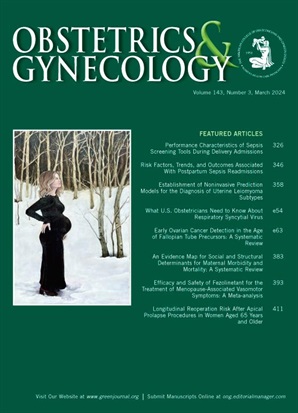
期刊介绍:
"Obstetrics & Gynecology," affectionately known as "The Green Journal," is the official publication of the American College of Obstetricians and Gynecologists (ACOG). Since its inception in 1953, the journal has been dedicated to advancing the clinical practice of obstetrics and gynecology, as well as related fields. The journal's mission is to promote excellence in these areas by publishing a diverse range of articles that cover translational and clinical topics.
"Obstetrics & Gynecology" provides a platform for the dissemination of evidence-based research, clinical guidelines, and expert opinions that are essential for the continuous improvement of women's health care. The journal's content is designed to inform and educate obstetricians, gynecologists, and other healthcare professionals, ensuring that they stay abreast of the latest developments and best practices in their field.




 京公网安备 11010802042870号
京ICP备2023020795号-1
京公网安备 11010802042870号
京ICP备2023020795号-1

 分享
分享
 求助内容:
求助内容: 应助结果提醒方式:
 扫码关注我们
