{"title":"评估来自法国健康数据系统的老年人抗胆碱能药物和镇静药物的患病率。","authors":"Teddy Novais PharmD, PhD, Antoine Garnier-Crussard MD, Elsa Reallon PharmD, Christelle Mouchoux PharmD, PhD, Frederic Gervais PharmaD","doi":"10.1111/jgs.19324","DOIUrl":null,"url":null,"abstract":"<div>\n \n \n <section>\n \n <h3> Background</h3>\n \n <p>In older people, medications with anticholinergic or sedative properties are associated with falls, frailty, and functional and cognitive impairment. These medications are often described as a subset of potentially inappropriate medications (PIMs). We examined the prevalence of anticholinergic or sedative medications to avoid in older people in France in 2023.</p>\n </section>\n \n <section>\n \n <h3> Methods</h3>\n \n <p>This cross-sectional study used anonymized data from a large electronic healthcare database, the French National Health Data System (Système National des Données de Santé, SNDS). All people aged 65 years or older from January 1, 2023, to December 31, 2023, were included in this study. Dispensations of anticholinergic and sedative medications were identified according to PIM criteria (2023 American Geriatrics Society Beers Criteria and REMEDI[e]S tool). The prevalence of anticholinergic or sedative medications was assessed for the study population and by age (65–84 and 85 or older) and living place (home and institutionalized patients) subgroups in terms of number and percentage of patients.</p>\n </section>\n \n <section>\n \n <h3> Results</h3>\n \n <p>This study included 16,938,152 patients aged 65 years or older (55% women). Among all patients, 79.8% were aged between 65 and 84 years and 20.2% were aged 85 years or older. Most patients lived at home (97.0%), and 3.0% were institutionalized. The prevalence of anticholinergic or sedative medications was 32.8% among all patients, 32.3% among 65–84 patients, and 34.8% among 85 or older patients, 32.1% among home patients, and 54.5% among institutionalized patients. The most commonly dispensed anticholinergic or sedative medications were oxazepam (5.27%), alprazolam (5.27%), zopiclone (4.85%), bromazepam (4.23%), metopimazine (2.88%), paroxetine (2.70%), nefopam (2.57%), and hydroxyzine (2.17%).</p>\n </section>\n \n <section>\n \n <h3> Conclusions</h3>\n \n <p>This study highlighted that anticholinergic and sedative medications to avoid in older people are still frequently prescribed despite the development and regular updating of PIM criteria. Future studies are needed to assess whether this has led to worsened outcomes among older adults who utilized these medications, and new initiatives should be developed to further promote deprescribing by prescribers and pharmacists.</p>\n </section>\n </div>","PeriodicalId":17240,"journal":{"name":"Journal of the American Geriatrics Society","volume":"73 5","pages":"1542-1550"},"PeriodicalIF":4.6000,"publicationDate":"2025-01-03","publicationTypes":"Journal Article","fieldsOfStudy":null,"isOpenAccess":false,"openAccessPdf":"https://onlinelibrary.wiley.com/doi/epdf/10.1111/jgs.19324","citationCount":"0","resultStr":"{\"title\":\"Assessing the prevalence of anticholinergic and sedative medications to avoid in older adults from the French Health Data System\",\"authors\":\"Teddy Novais PharmD, PhD, Antoine Garnier-Crussard MD, Elsa Reallon PharmD, Christelle Mouchoux PharmD, PhD, Frederic Gervais PharmaD\",\"doi\":\"10.1111/jgs.19324\",\"DOIUrl\":null,\"url\":null,\"abstract\":\"<div>\\n \\n \\n <section>\\n \\n <h3> Background</h3>\\n \\n <p>In older people, medications with anticholinergic or sedative properties are associated with falls, frailty, and functional and cognitive impairment. These medications are often described as a subset of potentially inappropriate medications (PIMs). We examined the prevalence of anticholinergic or sedative medications to avoid in older people in France in 2023.</p>\\n </section>\\n \\n <section>\\n \\n <h3> Methods</h3>\\n \\n <p>This cross-sectional study used anonymized data from a large electronic healthcare database, the French National Health Data System (Système National des Données de Santé, SNDS). All people aged 65 years or older from January 1, 2023, to December 31, 2023, were included in this study. Dispensations of anticholinergic and sedative medications were identified according to PIM criteria (2023 American Geriatrics Society Beers Criteria and REMEDI[e]S tool). The prevalence of anticholinergic or sedative medications was assessed for the study population and by age (65–84 and 85 or older) and living place (home and institutionalized patients) subgroups in terms of number and percentage of patients.</p>\\n </section>\\n \\n <section>\\n \\n <h3> Results</h3>\\n \\n <p>This study included 16,938,152 patients aged 65 years or older (55% women). Among all patients, 79.8% were aged between 65 and 84 years and 20.2% were aged 85 years or older. Most patients lived at home (97.0%), and 3.0% were institutionalized. The prevalence of anticholinergic or sedative medications was 32.8% among all patients, 32.3% among 65–84 patients, and 34.8% among 85 or older patients, 32.1% among home patients, and 54.5% among institutionalized patients. The most commonly dispensed anticholinergic or sedative medications were oxazepam (5.27%), alprazolam (5.27%), zopiclone (4.85%), bromazepam (4.23%), metopimazine (2.88%), paroxetine (2.70%), nefopam (2.57%), and hydroxyzine (2.17%).</p>\\n </section>\\n \\n <section>\\n \\n <h3> Conclusions</h3>\\n \\n <p>This study highlighted that anticholinergic and sedative medications to avoid in older people are still frequently prescribed despite the development and regular updating of PIM criteria. Future studies are needed to assess whether this has led to worsened outcomes among older adults who utilized these medications, and new initiatives should be developed to further promote deprescribing by prescribers and pharmacists.</p>\\n </section>\\n </div>\",\"PeriodicalId\":17240,\"journal\":{\"name\":\"Journal of the American Geriatrics Society\",\"volume\":\"73 5\",\"pages\":\"1542-1550\"},\"PeriodicalIF\":4.6000,\"publicationDate\":\"2025-01-03\",\"publicationTypes\":\"Journal Article\",\"fieldsOfStudy\":null,\"isOpenAccess\":false,\"openAccessPdf\":\"https://onlinelibrary.wiley.com/doi/epdf/10.1111/jgs.19324\",\"citationCount\":\"0\",\"resultStr\":null,\"platform\":\"Semanticscholar\",\"paperid\":null,\"PeriodicalName\":\"Journal of the American Geriatrics Society\",\"FirstCategoryId\":\"3\",\"ListUrlMain\":\"https://agsjournals.onlinelibrary.wiley.com/doi/10.1111/jgs.19324\",\"RegionNum\":2,\"RegionCategory\":\"医学\",\"ArticlePicture\":[],\"TitleCN\":null,\"AbstractTextCN\":null,\"PMCID\":null,\"EPubDate\":\"\",\"PubModel\":\"\",\"JCR\":\"Q1\",\"JCRName\":\"GERIATRICS & GERONTOLOGY\",\"Score\":null,\"Total\":0}","platform":"Semanticscholar","paperid":null,"PeriodicalName":"Journal of the American Geriatrics Society","FirstCategoryId":"3","ListUrlMain":"https://agsjournals.onlinelibrary.wiley.com/doi/10.1111/jgs.19324","RegionNum":2,"RegionCategory":"医学","ArticlePicture":[],"TitleCN":null,"AbstractTextCN":null,"PMCID":null,"EPubDate":"","PubModel":"","JCR":"Q1","JCRName":"GERIATRICS & GERONTOLOGY","Score":null,"Total":0}
Assessing the prevalence of anticholinergic and sedative medications to avoid in older adults from the French Health Data System
Background
In older people, medications with anticholinergic or sedative properties are associated with falls, frailty, and functional and cognitive impairment. These medications are often described as a subset of potentially inappropriate medications (PIMs). We examined the prevalence of anticholinergic or sedative medications to avoid in older people in France in 2023.
Methods
This cross-sectional study used anonymized data from a large electronic healthcare database, the French National Health Data System (Système National des Données de Santé, SNDS). All people aged 65 years or older from January 1, 2023, to December 31, 2023, were included in this study. Dispensations of anticholinergic and sedative medications were identified according to PIM criteria (2023 American Geriatrics Society Beers Criteria and REMEDI[e]S tool). The prevalence of anticholinergic or sedative medications was assessed for the study population and by age (65–84 and 85 or older) and living place (home and institutionalized patients) subgroups in terms of number and percentage of patients.
Results
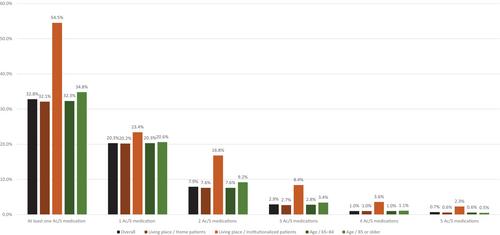
This study included 16,938,152 patients aged 65 years or older (55% women). Among all patients, 79.8% were aged between 65 and 84 years and 20.2% were aged 85 years or older. Most patients lived at home (97.0%), and 3.0% were institutionalized. The prevalence of anticholinergic or sedative medications was 32.8% among all patients, 32.3% among 65–84 patients, and 34.8% among 85 or older patients, 32.1% among home patients, and 54.5% among institutionalized patients. The most commonly dispensed anticholinergic or sedative medications were oxazepam (5.27%), alprazolam (5.27%), zopiclone (4.85%), bromazepam (4.23%), metopimazine (2.88%), paroxetine (2.70%), nefopam (2.57%), and hydroxyzine (2.17%).
Conclusions
This study highlighted that anticholinergic and sedative medications to avoid in older people are still frequently prescribed despite the development and regular updating of PIM criteria. Future studies are needed to assess whether this has led to worsened outcomes among older adults who utilized these medications, and new initiatives should be developed to further promote deprescribing by prescribers and pharmacists.
期刊介绍:
Journal of the American Geriatrics Society (JAGS) is the go-to journal for clinical aging research. We provide a diverse, interprofessional community of healthcare professionals with the latest insights on geriatrics education, clinical practice, and public policy—all supporting the high-quality, person-centered care essential to our well-being as we age. Since the publication of our first edition in 1953, JAGS has remained one of the oldest and most impactful journals dedicated exclusively to gerontology and geriatrics.






 京公网安备 11010802042870号
京ICP备2023020795号-1
京公网安备 11010802042870号
京ICP备2023020795号-1

 分享
分享
 求助内容:
求助内容: 应助结果提醒方式:
 扫码关注我们
