Wei Xia, Dapeng Jiang, Jintao Liu, Jun Cai, Zhonghua Xi, Hu Yang
{"title":"猕猴桃形复合混凝剂对水中藻类去除效果的评价:电荷密度的作用","authors":"Wei Xia, Dapeng Jiang, Jintao Liu, Jun Cai, Zhonghua Xi, Hu Yang","doi":"10.1016/j.jhazmat.2025.137188","DOIUrl":null,"url":null,"abstract":"<div><div>A series of novel cationic modified actinia-shaped composite coagulant (AMS-C), with similar tentacle length and distribution but different charge density (CD), was successfully designed and fabricated by combination of a cationic graft starch and attapulgite (ATP). AMS-C shows a high efficiency in coagulative removal of <em>Microcystis aeruginosa</em> from water over a wide pH range. The algae-harvesting efficiency of optimized AMS-C can reach to 92.27 % only within 1.0 min after settlement and its maximal harvesting efficiency is as high as 99.25 % at the optimum dosage of 1.5 mg/L. This can be attributed to its special composited structure with abundant cationic long tentacle chains. CD of AMS-C is a key structural factor. AMS-C with a relatively high CD obviously enhanced the coagulation efficiency and settling performance through the improved charge neutralization, besides, the distinct long tentacle chains of AMS-C allowed its easy accessibility and tightly contacted with the algal cells, and thus facilitated the formation of large, dense and fast regrowing algal flocs by the enhanced bridging and sweeping effects. The aforementioned effects were together contributed to the effective removal of algae. The effective interactions between microalga cells and the composite coagulants were also verified using extended Deryaguin-Landau-Verwey-Overbeek theory. Moreover, AMS-C was able to remove Microcystins-LR without destroying the cells, and still maintained a high algae-harvesting efficiency in real water bodies. Therefore, AMS-C, with the advantages of high-performance, environmentally-friendliness and low-cost, has notably promising application prospects in effective treatment of harmful algal blooms.</div></div>","PeriodicalId":361,"journal":{"name":"Journal of Hazardous Materials","volume":"487 ","pages":"Article 137188"},"PeriodicalIF":11.3000,"publicationDate":"2025-04-05","publicationTypes":"Journal Article","fieldsOfStudy":null,"isOpenAccess":false,"openAccessPdf":"","citationCount":"0","resultStr":"{\"title\":\"Evaluation of the actinia-shaped composite coagulant for removal of algae in water: Role of charge density\",\"authors\":\"Wei Xia, Dapeng Jiang, Jintao Liu, Jun Cai, Zhonghua Xi, Hu Yang\",\"doi\":\"10.1016/j.jhazmat.2025.137188\",\"DOIUrl\":null,\"url\":null,\"abstract\":\"<div><div>A series of novel cationic modified actinia-shaped composite coagulant (AMS-C), with similar tentacle length and distribution but different charge density (CD), was successfully designed and fabricated by combination of a cationic graft starch and attapulgite (ATP). AMS-C shows a high efficiency in coagulative removal of <em>Microcystis aeruginosa</em> from water over a wide pH range. The algae-harvesting efficiency of optimized AMS-C can reach to 92.27 % only within 1.0 min after settlement and its maximal harvesting efficiency is as high as 99.25 % at the optimum dosage of 1.5 mg/L. This can be attributed to its special composited structure with abundant cationic long tentacle chains. CD of AMS-C is a key structural factor. AMS-C with a relatively high CD obviously enhanced the coagulation efficiency and settling performance through the improved charge neutralization, besides, the distinct long tentacle chains of AMS-C allowed its easy accessibility and tightly contacted with the algal cells, and thus facilitated the formation of large, dense and fast regrowing algal flocs by the enhanced bridging and sweeping effects. The aforementioned effects were together contributed to the effective removal of algae. The effective interactions between microalga cells and the composite coagulants were also verified using extended Deryaguin-Landau-Verwey-Overbeek theory. Moreover, AMS-C was able to remove Microcystins-LR without destroying the cells, and still maintained a high algae-harvesting efficiency in real water bodies. Therefore, AMS-C, with the advantages of high-performance, environmentally-friendliness and low-cost, has notably promising application prospects in effective treatment of harmful algal blooms.</div></div>\",\"PeriodicalId\":361,\"journal\":{\"name\":\"Journal of Hazardous Materials\",\"volume\":\"487 \",\"pages\":\"Article 137188\"},\"PeriodicalIF\":11.3000,\"publicationDate\":\"2025-04-05\",\"publicationTypes\":\"Journal Article\",\"fieldsOfStudy\":null,\"isOpenAccess\":false,\"openAccessPdf\":\"\",\"citationCount\":\"0\",\"resultStr\":null,\"platform\":\"Semanticscholar\",\"paperid\":null,\"PeriodicalName\":\"Journal of Hazardous Materials\",\"FirstCategoryId\":\"93\",\"ListUrlMain\":\"https://www.sciencedirect.com/science/article/pii/S0304389425001001\",\"RegionNum\":1,\"RegionCategory\":\"环境科学与生态学\",\"ArticlePicture\":[],\"TitleCN\":null,\"AbstractTextCN\":null,\"PMCID\":null,\"EPubDate\":\"2025/1/10 0:00:00\",\"PubModel\":\"Epub\",\"JCR\":\"Q1\",\"JCRName\":\"ENGINEERING, ENVIRONMENTAL\",\"Score\":null,\"Total\":0}","platform":"Semanticscholar","paperid":null,"PeriodicalName":"Journal of Hazardous Materials","FirstCategoryId":"93","ListUrlMain":"https://www.sciencedirect.com/science/article/pii/S0304389425001001","RegionNum":1,"RegionCategory":"环境科学与生态学","ArticlePicture":[],"TitleCN":null,"AbstractTextCN":null,"PMCID":null,"EPubDate":"2025/1/10 0:00:00","PubModel":"Epub","JCR":"Q1","JCRName":"ENGINEERING, ENVIRONMENTAL","Score":null,"Total":0}
Evaluation of the actinia-shaped composite coagulant for removal of algae in water: Role of charge density
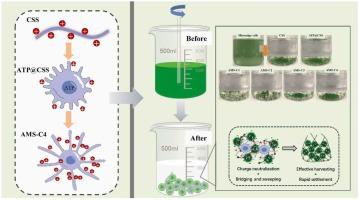
A series of novel cationic modified actinia-shaped composite coagulant (AMS-C), with similar tentacle length and distribution but different charge density (CD), was successfully designed and fabricated by combination of a cationic graft starch and attapulgite (ATP). AMS-C shows a high efficiency in coagulative removal of Microcystis aeruginosa from water over a wide pH range. The algae-harvesting efficiency of optimized AMS-C can reach to 92.27 % only within 1.0 min after settlement and its maximal harvesting efficiency is as high as 99.25 % at the optimum dosage of 1.5 mg/L. This can be attributed to its special composited structure with abundant cationic long tentacle chains. CD of AMS-C is a key structural factor. AMS-C with a relatively high CD obviously enhanced the coagulation efficiency and settling performance through the improved charge neutralization, besides, the distinct long tentacle chains of AMS-C allowed its easy accessibility and tightly contacted with the algal cells, and thus facilitated the formation of large, dense and fast regrowing algal flocs by the enhanced bridging and sweeping effects. The aforementioned effects were together contributed to the effective removal of algae. The effective interactions between microalga cells and the composite coagulants were also verified using extended Deryaguin-Landau-Verwey-Overbeek theory. Moreover, AMS-C was able to remove Microcystins-LR without destroying the cells, and still maintained a high algae-harvesting efficiency in real water bodies. Therefore, AMS-C, with the advantages of high-performance, environmentally-friendliness and low-cost, has notably promising application prospects in effective treatment of harmful algal blooms.
期刊介绍:
The Journal of Hazardous Materials serves as a global platform for promoting cutting-edge research in the field of Environmental Science and Engineering. Our publication features a wide range of articles, including full-length research papers, review articles, and perspectives, with the aim of enhancing our understanding of the dangers and risks associated with various materials concerning public health and the environment. It is important to note that the term "environmental contaminants" refers specifically to substances that pose hazardous effects through contamination, while excluding those that do not have such impacts on the environment or human health. Moreover, we emphasize the distinction between wastes and hazardous materials in order to provide further clarity on the scope of the journal. We have a keen interest in exploring specific compounds and microbial agents that have adverse effects on the environment.




 京公网安备 11010802042870号
京ICP备2023020795号-1
京公网安备 11010802042870号
京ICP备2023020795号-1

 分享
分享
 求助内容:
求助内容: 应助结果提醒方式:
 扫码关注我们
