{"title":"2022-2023年印度东部和东北部地区狐猴媒介中尼帕病毒调查","authors":"Sreelekshmy Mohandas, Dilip Patil, Basavaraj Mathapati, Vishal Rai, Anita Shete, Sujeet Belani, Abhinendra Kumar, Rima Sahay, Deepak Patil, Pragya D Yadav","doi":"10.3389/fmicb.2024.1493428","DOIUrl":null,"url":null,"abstract":"<p><strong>Introduction: </strong>India has experienced seven outbreaks of the Nipah virus (NiV) since 2001, primarily occurring in the southern and eastern regions of the country. The southern region has been the main site for these outbreaks. In contrast, the eastern region, which borders Bangladesh, has not reported any outbreaks since 2007. However, Bangladesh continues to experience nearly annual outbreaks, indicating a significant lack of surveillance in that area. To improve the country's preparedness and to gather support for enhancing public health surveillance in eastern and northeastern states near the area affected by the NiV, a cross-sectional survey was conducted to determine the prevalence of NiV in the bat species <i>Pteropus medius</i> in Bihar, West Bengal, Assam, and Meghalaya states in India, which are adjacent to Bangladesh.</p><p><strong>Methods: </strong>Throat and rectal swabs, blood samples, and organ samples were collected. Real-time quantitative reverse transcription PCR (qRT-PCR) was utilized for the detection of Nipah viral RNA, and sequencing was conducted for further confirmation. Bat IgG enzyme-linked immunosorbent assay (ELISA) was employed for antibody detection.</p><p><strong>Results: </strong>Throat and rectal swab samples of 212 <i>P. medius</i> tested for NiV using qRT- PCR were found negative, whereas organ samples of two (one each from West Bengal and Bihar) out of the 10 bats collected tested positive. The retrieved NiV genome (~91%) showed close homology to the NiV-Bangladesh genotype indicating the circulation of two geographically distinct NiV strains in India. The seroprevalence estimated by ELISA ranged from 23 to 65% in the studied states.</p><p><strong>Discussion: </strong>The serological and virological evidence obtained from the study indicates that a broader geographical area is under threat of spillover in India. It's crucial to implement a One Health approach connecting bat surveillance studies with human surveillance and risk factor studies in the region.</p>","PeriodicalId":12466,"journal":{"name":"Frontiers in Microbiology","volume":"15 ","pages":"1493428"},"PeriodicalIF":5.8000,"publicationDate":"2024-12-24","publicationTypes":"Journal Article","fieldsOfStudy":null,"isOpenAccess":false,"openAccessPdf":"https://www.ncbi.nlm.nih.gov/pmc/articles/PMC11703920/pdf/","citationCount":"0","resultStr":"{\"title\":\"Nipah virus survey in <i>Pteropus medius</i> of eastern and northeastern region of India, 2022-2023.\",\"authors\":\"Sreelekshmy Mohandas, Dilip Patil, Basavaraj Mathapati, Vishal Rai, Anita Shete, Sujeet Belani, Abhinendra Kumar, Rima Sahay, Deepak Patil, Pragya D Yadav\",\"doi\":\"10.3389/fmicb.2024.1493428\",\"DOIUrl\":null,\"url\":null,\"abstract\":\"<p><strong>Introduction: </strong>India has experienced seven outbreaks of the Nipah virus (NiV) since 2001, primarily occurring in the southern and eastern regions of the country. The southern region has been the main site for these outbreaks. In contrast, the eastern region, which borders Bangladesh, has not reported any outbreaks since 2007. However, Bangladesh continues to experience nearly annual outbreaks, indicating a significant lack of surveillance in that area. To improve the country's preparedness and to gather support for enhancing public health surveillance in eastern and northeastern states near the area affected by the NiV, a cross-sectional survey was conducted to determine the prevalence of NiV in the bat species <i>Pteropus medius</i> in Bihar, West Bengal, Assam, and Meghalaya states in India, which are adjacent to Bangladesh.</p><p><strong>Methods: </strong>Throat and rectal swabs, blood samples, and organ samples were collected. Real-time quantitative reverse transcription PCR (qRT-PCR) was utilized for the detection of Nipah viral RNA, and sequencing was conducted for further confirmation. Bat IgG enzyme-linked immunosorbent assay (ELISA) was employed for antibody detection.</p><p><strong>Results: </strong>Throat and rectal swab samples of 212 <i>P. medius</i> tested for NiV using qRT- PCR were found negative, whereas organ samples of two (one each from West Bengal and Bihar) out of the 10 bats collected tested positive. The retrieved NiV genome (~91%) showed close homology to the NiV-Bangladesh genotype indicating the circulation of two geographically distinct NiV strains in India. The seroprevalence estimated by ELISA ranged from 23 to 65% in the studied states.</p><p><strong>Discussion: </strong>The serological and virological evidence obtained from the study indicates that a broader geographical area is under threat of spillover in India. It's crucial to implement a One Health approach connecting bat surveillance studies with human surveillance and risk factor studies in the region.</p>\",\"PeriodicalId\":12466,\"journal\":{\"name\":\"Frontiers in Microbiology\",\"volume\":\"15 \",\"pages\":\"1493428\"},\"PeriodicalIF\":5.8000,\"publicationDate\":\"2024-12-24\",\"publicationTypes\":\"Journal Article\",\"fieldsOfStudy\":null,\"isOpenAccess\":false,\"openAccessPdf\":\"https://www.ncbi.nlm.nih.gov/pmc/articles/PMC11703920/pdf/\",\"citationCount\":\"0\",\"resultStr\":null,\"platform\":\"Semanticscholar\",\"paperid\":null,\"PeriodicalName\":\"Frontiers in Microbiology\",\"FirstCategoryId\":\"99\",\"ListUrlMain\":\"https://doi.org/10.3389/fmicb.2024.1493428\",\"RegionNum\":2,\"RegionCategory\":\"生物学\",\"ArticlePicture\":[],\"TitleCN\":null,\"AbstractTextCN\":null,\"PMCID\":null,\"EPubDate\":\"2024/1/1 0:00:00\",\"PubModel\":\"eCollection\",\"JCR\":\"Q2\",\"JCRName\":\"MICROBIOLOGY\",\"Score\":null,\"Total\":0}","platform":"Semanticscholar","paperid":null,"PeriodicalName":"Frontiers in Microbiology","FirstCategoryId":"99","ListUrlMain":"https://doi.org/10.3389/fmicb.2024.1493428","RegionNum":2,"RegionCategory":"生物学","ArticlePicture":[],"TitleCN":null,"AbstractTextCN":null,"PMCID":null,"EPubDate":"2024/1/1 0:00:00","PubModel":"eCollection","JCR":"Q2","JCRName":"MICROBIOLOGY","Score":null,"Total":0}
Nipah virus survey in Pteropus medius of eastern and northeastern region of India, 2022-2023.
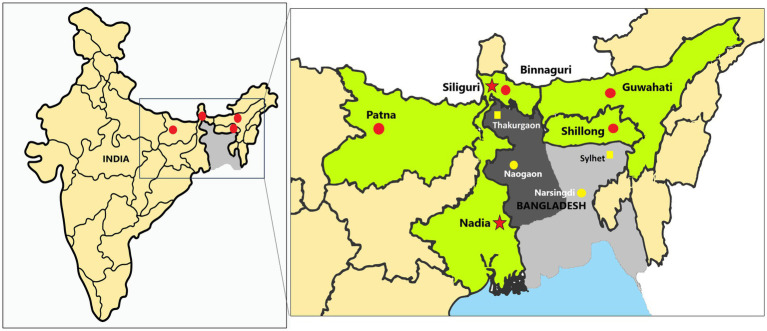
Introduction: India has experienced seven outbreaks of the Nipah virus (NiV) since 2001, primarily occurring in the southern and eastern regions of the country. The southern region has been the main site for these outbreaks. In contrast, the eastern region, which borders Bangladesh, has not reported any outbreaks since 2007. However, Bangladesh continues to experience nearly annual outbreaks, indicating a significant lack of surveillance in that area. To improve the country's preparedness and to gather support for enhancing public health surveillance in eastern and northeastern states near the area affected by the NiV, a cross-sectional survey was conducted to determine the prevalence of NiV in the bat species Pteropus medius in Bihar, West Bengal, Assam, and Meghalaya states in India, which are adjacent to Bangladesh.
Methods: Throat and rectal swabs, blood samples, and organ samples were collected. Real-time quantitative reverse transcription PCR (qRT-PCR) was utilized for the detection of Nipah viral RNA, and sequencing was conducted for further confirmation. Bat IgG enzyme-linked immunosorbent assay (ELISA) was employed for antibody detection.
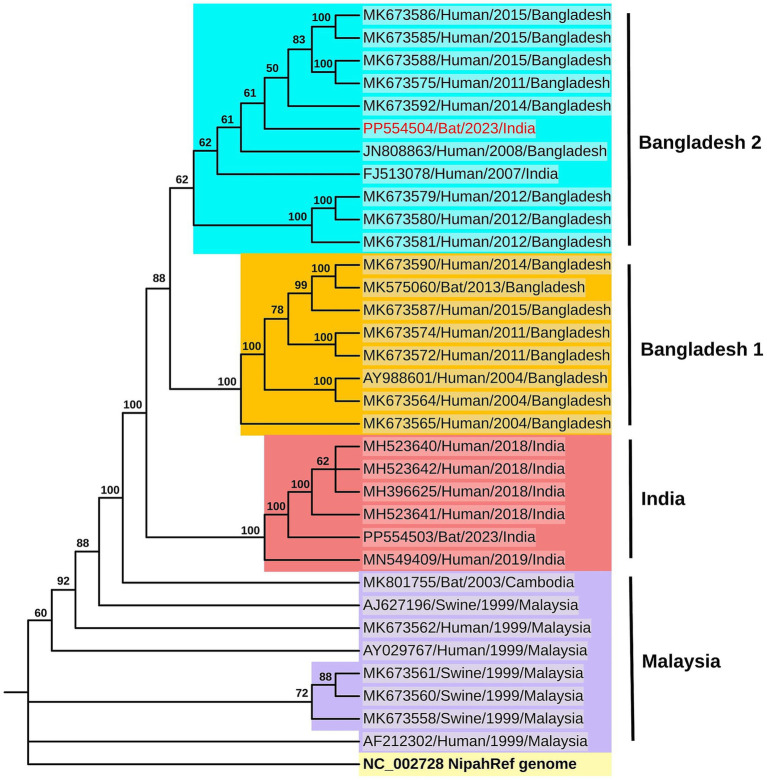
Results: Throat and rectal swab samples of 212 P. medius tested for NiV using qRT- PCR were found negative, whereas organ samples of two (one each from West Bengal and Bihar) out of the 10 bats collected tested positive. The retrieved NiV genome (~91%) showed close homology to the NiV-Bangladesh genotype indicating the circulation of two geographically distinct NiV strains in India. The seroprevalence estimated by ELISA ranged from 23 to 65% in the studied states.
Discussion: The serological and virological evidence obtained from the study indicates that a broader geographical area is under threat of spillover in India. It's crucial to implement a One Health approach connecting bat surveillance studies with human surveillance and risk factor studies in the region.
期刊介绍:
Frontiers in Microbiology is a leading journal in its field, publishing rigorously peer-reviewed research across the entire spectrum of microbiology. Field Chief Editor Martin G. Klotz at Washington State University is supported by an outstanding Editorial Board of international researchers. This multidisciplinary open-access journal is at the forefront of disseminating and communicating scientific knowledge and impactful discoveries to researchers, academics, clinicians and the public worldwide.






 京公网安备 11010802042870号
京ICP备2023020795号-1
京公网安备 11010802042870号
京ICP备2023020795号-1

 分享
分享
 求助内容:
求助内容: 应助结果提醒方式:
 扫码关注我们
