May A Al-Saleh, Hanan F Al-Harbi, L A Al-Humaid, Manal A Awad
{"title":"绿色合成纳米银和ATCBRA杀虫剂对蚕豆根系细胞遗传毒性的影响","authors":"May A Al-Saleh, Hanan F Al-Harbi, L A Al-Humaid, Manal A Awad","doi":"10.3390/nano15010077","DOIUrl":null,"url":null,"abstract":"<p><p>We aimed to synthesize silver nanoparticles (AgNPs) using <i>Elettaria cardamomum</i> (cardamom) extracts and assess the cytotoxicity and genotoxicity of the cardamom extract, <i>cardamom</i>-AgNPs, and the insecticide ATCBRA-commonly used for pest control-on the root system of <i>Vicia faba</i> (broad bean). The chemical composition of the aqueous cardamom extract was identified and quantified using GC-MS, revealing a variety of bioactive compounds also present in cardamom essential oil. These included α-terpinyl acetate (21.3-44.3%), 1,8-cineole (10.7-28.4%), and linalool (6.4-8.6%). The successful green synthesis of AgNPs was confirmed through various micro-spectroscopic techniques, including UV-Vis spectroscopy, transmission electron microscopy (TEM), and energy-dispersive spectroscopy (EDS). UV-Vis analysis showed a strong peak between 420 and 430 nm, indicating the presence of AgNPs. TEM imaging revealed that the synthesized <i>cardamom</i>-AgNPs were monodispersed, primarily spherical, and semi-uniform in shape, with minimal aggregation. EDS analysis further confirmed the composition of the nanoparticles, with <i>cardamom</i>-AgNPs comprising around 60.5% by weight. Cytotoxicity was evaluated by measuring the mitotic index (MI), and genotoxicity was assessed by observing chromosomal aberrations (CAs). The roots of <i>Vicia faba</i> were treated for 24 and 48 h with varying concentrations of ATCBRA pesticide (0.1%, 0.3%, 0.5%, and 0.7%), aqueous cardamom extract (3%, 4%, 5%, and 6%), and green-synthesized <i>cardamom</i>-AgNPs (12, 25, and 60 mg). The cytogenetic analysis of MI and CA in the meristematic root tips indicated an improvement in the evaluated parameters with the cardamom extract. However, a marked reduction in mitotic activity was observed with both ATCBRA and <i>cardamom</i>-AgNP treatments across both time points, highlighting potential cytotoxic and genotoxic effects.</p>","PeriodicalId":18966,"journal":{"name":"Nanomaterials","volume":"15 1","pages":""},"PeriodicalIF":4.3000,"publicationDate":"2025-01-06","publicationTypes":"Journal Article","fieldsOfStudy":null,"isOpenAccess":false,"openAccessPdf":"https://www.ncbi.nlm.nih.gov/pmc/articles/PMC11722682/pdf/","citationCount":"0","resultStr":"{\"title\":\"An Assessment of the Cyto-Genotoxicity Effects of Green-Synthesized Silver Nanoparticles and ATCBRA Insecticide on the Root System of <i>Vicia faba</i>.\",\"authors\":\"May A Al-Saleh, Hanan F Al-Harbi, L A Al-Humaid, Manal A Awad\",\"doi\":\"10.3390/nano15010077\",\"DOIUrl\":null,\"url\":null,\"abstract\":\"<p><p>We aimed to synthesize silver nanoparticles (AgNPs) using <i>Elettaria cardamomum</i> (cardamom) extracts and assess the cytotoxicity and genotoxicity of the cardamom extract, <i>cardamom</i>-AgNPs, and the insecticide ATCBRA-commonly used for pest control-on the root system of <i>Vicia faba</i> (broad bean). The chemical composition of the aqueous cardamom extract was identified and quantified using GC-MS, revealing a variety of bioactive compounds also present in cardamom essential oil. These included α-terpinyl acetate (21.3-44.3%), 1,8-cineole (10.7-28.4%), and linalool (6.4-8.6%). The successful green synthesis of AgNPs was confirmed through various micro-spectroscopic techniques, including UV-Vis spectroscopy, transmission electron microscopy (TEM), and energy-dispersive spectroscopy (EDS). UV-Vis analysis showed a strong peak between 420 and 430 nm, indicating the presence of AgNPs. TEM imaging revealed that the synthesized <i>cardamom</i>-AgNPs were monodispersed, primarily spherical, and semi-uniform in shape, with minimal aggregation. EDS analysis further confirmed the composition of the nanoparticles, with <i>cardamom</i>-AgNPs comprising around 60.5% by weight. Cytotoxicity was evaluated by measuring the mitotic index (MI), and genotoxicity was assessed by observing chromosomal aberrations (CAs). The roots of <i>Vicia faba</i> were treated for 24 and 48 h with varying concentrations of ATCBRA pesticide (0.1%, 0.3%, 0.5%, and 0.7%), aqueous cardamom extract (3%, 4%, 5%, and 6%), and green-synthesized <i>cardamom</i>-AgNPs (12, 25, and 60 mg). The cytogenetic analysis of MI and CA in the meristematic root tips indicated an improvement in the evaluated parameters with the cardamom extract. However, a marked reduction in mitotic activity was observed with both ATCBRA and <i>cardamom</i>-AgNP treatments across both time points, highlighting potential cytotoxic and genotoxic effects.</p>\",\"PeriodicalId\":18966,\"journal\":{\"name\":\"Nanomaterials\",\"volume\":\"15 1\",\"pages\":\"\"},\"PeriodicalIF\":4.3000,\"publicationDate\":\"2025-01-06\",\"publicationTypes\":\"Journal Article\",\"fieldsOfStudy\":null,\"isOpenAccess\":false,\"openAccessPdf\":\"https://www.ncbi.nlm.nih.gov/pmc/articles/PMC11722682/pdf/\",\"citationCount\":\"0\",\"resultStr\":null,\"platform\":\"Semanticscholar\",\"paperid\":null,\"PeriodicalName\":\"Nanomaterials\",\"FirstCategoryId\":\"88\",\"ListUrlMain\":\"https://doi.org/10.3390/nano15010077\",\"RegionNum\":3,\"RegionCategory\":\"材料科学\",\"ArticlePicture\":[],\"TitleCN\":null,\"AbstractTextCN\":null,\"PMCID\":null,\"EPubDate\":\"\",\"PubModel\":\"\",\"JCR\":\"Q2\",\"JCRName\":\"CHEMISTRY, MULTIDISCIPLINARY\",\"Score\":null,\"Total\":0}","platform":"Semanticscholar","paperid":null,"PeriodicalName":"Nanomaterials","FirstCategoryId":"88","ListUrlMain":"https://doi.org/10.3390/nano15010077","RegionNum":3,"RegionCategory":"材料科学","ArticlePicture":[],"TitleCN":null,"AbstractTextCN":null,"PMCID":null,"EPubDate":"","PubModel":"","JCR":"Q2","JCRName":"CHEMISTRY, MULTIDISCIPLINARY","Score":null,"Total":0}
An Assessment of the Cyto-Genotoxicity Effects of Green-Synthesized Silver Nanoparticles and ATCBRA Insecticide on the Root System of Vicia faba.
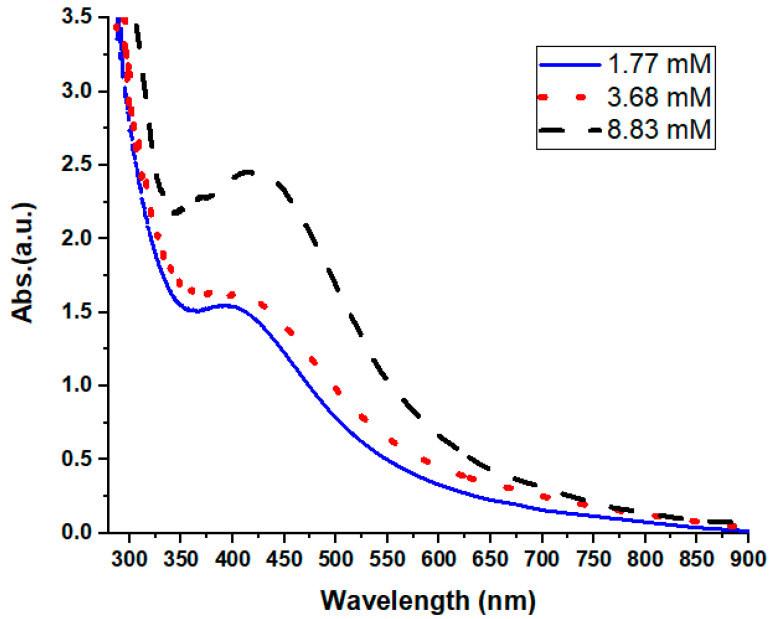
We aimed to synthesize silver nanoparticles (AgNPs) using Elettaria cardamomum (cardamom) extracts and assess the cytotoxicity and genotoxicity of the cardamom extract, cardamom-AgNPs, and the insecticide ATCBRA-commonly used for pest control-on the root system of Vicia faba (broad bean). The chemical composition of the aqueous cardamom extract was identified and quantified using GC-MS, revealing a variety of bioactive compounds also present in cardamom essential oil. These included α-terpinyl acetate (21.3-44.3%), 1,8-cineole (10.7-28.4%), and linalool (6.4-8.6%). The successful green synthesis of AgNPs was confirmed through various micro-spectroscopic techniques, including UV-Vis spectroscopy, transmission electron microscopy (TEM), and energy-dispersive spectroscopy (EDS). UV-Vis analysis showed a strong peak between 420 and 430 nm, indicating the presence of AgNPs. TEM imaging revealed that the synthesized cardamom-AgNPs were monodispersed, primarily spherical, and semi-uniform in shape, with minimal aggregation. EDS analysis further confirmed the composition of the nanoparticles, with cardamom-AgNPs comprising around 60.5% by weight. Cytotoxicity was evaluated by measuring the mitotic index (MI), and genotoxicity was assessed by observing chromosomal aberrations (CAs). The roots of Vicia faba were treated for 24 and 48 h with varying concentrations of ATCBRA pesticide (0.1%, 0.3%, 0.5%, and 0.7%), aqueous cardamom extract (3%, 4%, 5%, and 6%), and green-synthesized cardamom-AgNPs (12, 25, and 60 mg). The cytogenetic analysis of MI and CA in the meristematic root tips indicated an improvement in the evaluated parameters with the cardamom extract. However, a marked reduction in mitotic activity was observed with both ATCBRA and cardamom-AgNP treatments across both time points, highlighting potential cytotoxic and genotoxic effects.
期刊介绍:
Nanomaterials (ISSN 2076-4991) is an international and interdisciplinary scholarly open access journal. It publishes reviews, regular research papers, communications, and short notes that are relevant to any field of study that involves nanomaterials, with respect to their science and application. Thus, theoretical and experimental articles will be accepted, along with articles that deal with the synthesis and use of nanomaterials. Articles that synthesize information from multiple fields, and which place discoveries within a broader context, will be preferred. There is no restriction on the length of the papers. Our aim is to encourage scientists to publish their experimental and theoretical research in as much detail as possible. Full experimental or methodical details, or both, must be provided for research articles. Computed data or files regarding the full details of the experimental procedure, if unable to be published in a normal way, can be deposited as supplementary material. Nanomaterials is dedicated to a high scientific standard. All manuscripts undergo a rigorous reviewing process and decisions are based on the recommendations of independent reviewers.






 京公网安备 11010802042870号
京ICP备2023020795号-1
京公网安备 11010802042870号
京ICP备2023020795号-1

 分享
分享
 求助内容:
求助内容: 应助结果提醒方式:
 扫码关注我们
