{"title":"使用机器学习模型预测人类尿液中对苯二胺抗氧化剂浓度","authors":"Jianli Qu , Weili Mao , Mei Chen , Hangbiao Jin","doi":"10.1016/j.jhazmat.2025.137184","DOIUrl":null,"url":null,"abstract":"<div><div><em>p</em>-phenylenediamine antioxidants (PPDs) are extensively used in rubber manufacturing for their potent antioxidative properties, but PPDs and 2-anilino-5-[(4-methylpentan-2yl)amino]cyclohexa-2,5-diene-1,4-dione (6PPDQ) pose potential environmental and health risks. Existing biomonitoring methods for assessing human exposure to PPDs are labor-intensive, costly, and provide limited data. Thus, there is a critical need to develop predictive models for evaluating PPDs and 6PPDQ exposure levels to facilitate health risk assessments. In this study, machine learning (ML) models were developed to predict the concentration of three PPDs and 6PPDQ in human urine samples. A total of 759 participants from three cities in Zhejiang Province, China, provided urine samples, which were analyzed for PPDs and 6PPDQ concentrations using liquid chromatography-tandem mass spectrometry. Eight ML models were employed to predict PPDs and 6PPDQ concentrations based on demographic and environmental exposure factors such as age, gender, body mass index (BMI), and occupation. N-(1,3-dimethylbutyl)-N′-phenyl-p-phenylenediamine (6PPD) was the most frequently detected PPD (mean 3.03 ng/mL, range < LOD–18.65 ng/mL), followed by 6PPDQ (mean 2.76 ng/mL, range < LOD–20.85 ng/mL) and N-phenyl-N′-cyclohexyl-p-phenylenediamine (mean 2.04 ng/mL, range < LOD–10.22 ng/mL). Random forest model demonstrated the highest accuracy in predicting PPDs and 6PPDQ concentrations in human urine among the ML models evaluated. Through the application of these models, age, BMI, and occupation emerged as significant predictors of urinary PPDs and 6PPDQ concentrations. This research significantly contributes by using ML models to enhance exposure assessment accuracy and efficiency, providing a novel framework for future studies on environmental health risks related to PPDs and 6PPDQ.</div></div>","PeriodicalId":361,"journal":{"name":"Journal of Hazardous Materials","volume":"487 ","pages":"Article 137184"},"PeriodicalIF":11.3000,"publicationDate":"2025-04-05","publicationTypes":"Journal Article","fieldsOfStudy":null,"isOpenAccess":false,"openAccessPdf":"","citationCount":"0","resultStr":"{\"title\":\"Prediction of p-phenylenediamine antioxidant concentrations in human urine using machine learning models\",\"authors\":\"Jianli Qu , Weili Mao , Mei Chen , Hangbiao Jin\",\"doi\":\"10.1016/j.jhazmat.2025.137184\",\"DOIUrl\":null,\"url\":null,\"abstract\":\"<div><div><em>p</em>-phenylenediamine antioxidants (PPDs) are extensively used in rubber manufacturing for their potent antioxidative properties, but PPDs and 2-anilino-5-[(4-methylpentan-2yl)amino]cyclohexa-2,5-diene-1,4-dione (6PPDQ) pose potential environmental and health risks. Existing biomonitoring methods for assessing human exposure to PPDs are labor-intensive, costly, and provide limited data. Thus, there is a critical need to develop predictive models for evaluating PPDs and 6PPDQ exposure levels to facilitate health risk assessments. In this study, machine learning (ML) models were developed to predict the concentration of three PPDs and 6PPDQ in human urine samples. A total of 759 participants from three cities in Zhejiang Province, China, provided urine samples, which were analyzed for PPDs and 6PPDQ concentrations using liquid chromatography-tandem mass spectrometry. Eight ML models were employed to predict PPDs and 6PPDQ concentrations based on demographic and environmental exposure factors such as age, gender, body mass index (BMI), and occupation. N-(1,3-dimethylbutyl)-N′-phenyl-p-phenylenediamine (6PPD) was the most frequently detected PPD (mean 3.03 ng/mL, range < LOD–18.65 ng/mL), followed by 6PPDQ (mean 2.76 ng/mL, range < LOD–20.85 ng/mL) and N-phenyl-N′-cyclohexyl-p-phenylenediamine (mean 2.04 ng/mL, range < LOD–10.22 ng/mL). Random forest model demonstrated the highest accuracy in predicting PPDs and 6PPDQ concentrations in human urine among the ML models evaluated. Through the application of these models, age, BMI, and occupation emerged as significant predictors of urinary PPDs and 6PPDQ concentrations. This research significantly contributes by using ML models to enhance exposure assessment accuracy and efficiency, providing a novel framework for future studies on environmental health risks related to PPDs and 6PPDQ.</div></div>\",\"PeriodicalId\":361,\"journal\":{\"name\":\"Journal of Hazardous Materials\",\"volume\":\"487 \",\"pages\":\"Article 137184\"},\"PeriodicalIF\":11.3000,\"publicationDate\":\"2025-04-05\",\"publicationTypes\":\"Journal Article\",\"fieldsOfStudy\":null,\"isOpenAccess\":false,\"openAccessPdf\":\"\",\"citationCount\":\"0\",\"resultStr\":null,\"platform\":\"Semanticscholar\",\"paperid\":null,\"PeriodicalName\":\"Journal of Hazardous Materials\",\"FirstCategoryId\":\"93\",\"ListUrlMain\":\"https://www.sciencedirect.com/science/article/pii/S0304389425000962\",\"RegionNum\":1,\"RegionCategory\":\"环境科学与生态学\",\"ArticlePicture\":[],\"TitleCN\":null,\"AbstractTextCN\":null,\"PMCID\":null,\"EPubDate\":\"2025/1/10 0:00:00\",\"PubModel\":\"Epub\",\"JCR\":\"Q1\",\"JCRName\":\"ENGINEERING, ENVIRONMENTAL\",\"Score\":null,\"Total\":0}","platform":"Semanticscholar","paperid":null,"PeriodicalName":"Journal of Hazardous Materials","FirstCategoryId":"93","ListUrlMain":"https://www.sciencedirect.com/science/article/pii/S0304389425000962","RegionNum":1,"RegionCategory":"环境科学与生态学","ArticlePicture":[],"TitleCN":null,"AbstractTextCN":null,"PMCID":null,"EPubDate":"2025/1/10 0:00:00","PubModel":"Epub","JCR":"Q1","JCRName":"ENGINEERING, ENVIRONMENTAL","Score":null,"Total":0}
引用次数: 0
摘要
对苯二胺抗氧化剂(PPDs)因其强大的抗氧化性能被广泛用于橡胶生产,但PPDs和2-苯胺-5-[(4-甲基戊烷-2基)氨基]环己-2,5-二烯-1,4-二酮(6PPDQ)具有潜在的环境和健康风险。现有的用于评估人类PPDs暴露的生物监测方法是劳动密集型的,昂贵的,并且提供的数据有限。因此,迫切需要开发用于评估PPDs和6PPDQ暴露水平的预测模型,以促进健康风险评估。在这项研究中,建立了机器学习(ML)模型来预测人类尿液样本中三种PPDs和6PPDQ的浓度。来自中国浙江省三个城市的759名参与者提供了尿液样本,使用液相色谱-串联质谱法分析PPDs和6PPDQ浓度。基于年龄、性别、身体质量指数(BMI)和职业等人口统计学和环境暴露因素,采用8个ML模型预测PPDs和6PPDQ浓度。N-(1,3-二甲基丁基)-N'-苯基-对苯二胺(6PPD)是最常检出的PPD(平均3.03 ng/mL,范围<;LOD-18.65 ng/mL),其次是6PPDQ(平均2.76 ng/mL,范围<;LOD-20.85 ng/mL)和n -苯基- n '-环己基-对苯二胺(平均2.04 ng/mL,范围<;lod - 10.22 ng / mL)。随机森林模型在预测人类尿液中PPDs和6PPDQ浓度方面显示出最高的准确性。通过这些模型的应用,年龄、BMI和职业成为尿PPDs和6PPDQ浓度的重要预测因子。本研究利用ML模型提高了暴露评估的准确性和效率,为PPDs和6PPDQ相关的环境健康风险研究提供了新的框架。
Prediction of p-phenylenediamine antioxidant concentrations in human urine using machine learning models
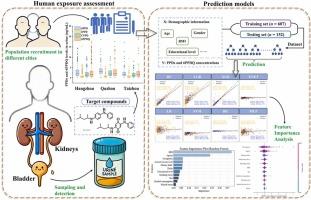
p-phenylenediamine antioxidants (PPDs) are extensively used in rubber manufacturing for their potent antioxidative properties, but PPDs and 2-anilino-5-[(4-methylpentan-2yl)amino]cyclohexa-2,5-diene-1,4-dione (6PPDQ) pose potential environmental and health risks. Existing biomonitoring methods for assessing human exposure to PPDs are labor-intensive, costly, and provide limited data. Thus, there is a critical need to develop predictive models for evaluating PPDs and 6PPDQ exposure levels to facilitate health risk assessments. In this study, machine learning (ML) models were developed to predict the concentration of three PPDs and 6PPDQ in human urine samples. A total of 759 participants from three cities in Zhejiang Province, China, provided urine samples, which were analyzed for PPDs and 6PPDQ concentrations using liquid chromatography-tandem mass spectrometry. Eight ML models were employed to predict PPDs and 6PPDQ concentrations based on demographic and environmental exposure factors such as age, gender, body mass index (BMI), and occupation. N-(1,3-dimethylbutyl)-N′-phenyl-p-phenylenediamine (6PPD) was the most frequently detected PPD (mean 3.03 ng/mL, range < LOD–18.65 ng/mL), followed by 6PPDQ (mean 2.76 ng/mL, range < LOD–20.85 ng/mL) and N-phenyl-N′-cyclohexyl-p-phenylenediamine (mean 2.04 ng/mL, range < LOD–10.22 ng/mL). Random forest model demonstrated the highest accuracy in predicting PPDs and 6PPDQ concentrations in human urine among the ML models evaluated. Through the application of these models, age, BMI, and occupation emerged as significant predictors of urinary PPDs and 6PPDQ concentrations. This research significantly contributes by using ML models to enhance exposure assessment accuracy and efficiency, providing a novel framework for future studies on environmental health risks related to PPDs and 6PPDQ.
期刊介绍:
The Journal of Hazardous Materials serves as a global platform for promoting cutting-edge research in the field of Environmental Science and Engineering. Our publication features a wide range of articles, including full-length research papers, review articles, and perspectives, with the aim of enhancing our understanding of the dangers and risks associated with various materials concerning public health and the environment. It is important to note that the term "environmental contaminants" refers specifically to substances that pose hazardous effects through contamination, while excluding those that do not have such impacts on the environment or human health. Moreover, we emphasize the distinction between wastes and hazardous materials in order to provide further clarity on the scope of the journal. We have a keen interest in exploring specific compounds and microbial agents that have adverse effects on the environment.




 京公网安备 11010802042870号
京ICP备2023020795号-1
京公网安备 11010802042870号
京ICP备2023020795号-1

 分享
分享
 求助内容:
求助内容: 应助结果提醒方式:
 扫码关注我们
