Mohamed A. Ismail , Ghanim Kadhim Abdul Sada , Abdelfattah Amari , Noureddine Elboughdiri , Abdul Amir H. Kadhum , Ibrahim Elbadawy , Abdusalom Umarov , Sanjarbek Madaminov
{"title":"设计和优化一种改进的太阳能驱动能源系统,利用先进的热回收方法在可持续城市应用中生产电力和氢气","authors":"Mohamed A. Ismail , Ghanim Kadhim Abdul Sada , Abdelfattah Amari , Noureddine Elboughdiri , Abdul Amir H. Kadhum , Ibrahim Elbadawy , Abdusalom Umarov , Sanjarbek Madaminov","doi":"10.1016/j.psep.2024.12.101","DOIUrl":null,"url":null,"abstract":"<div><div>This study proposes a novel concentrating solar power (CSP)-based energy system designed to enhance energy efficiency and sustainability for a commercial building in Riyadh, Saudi Arabia. The system integrates a heliostat field with advanced technologies, including the Kalina cycle (KC), thermoelectric generator (TEG), Rankine cycle (RC), and proton exchange membrane (PEM) electrolyzer, to simultaneously generate electricity and hydrogen. Waste heat recovery is utilized to improve energy efficiency and support heating, ventilation, and air conditioning (HVAC) systems, while the produced hydrogen is stored for use during peak demand or nighttime. A comprehensive techno-economic simulation evaluates the system's performance from energy, exergy, and economic perspectives, with sensitivity analysis identifying critical parameters. Key findings reveal that higher direct normal irradiation (DNI) significantly enhances system performance, increasing electricity generation from 2885 kW to 6310 kW and hydrogen production from 16.92 to 36.94 kg/h. Optimization of pressure ratios in the Brayton cycle and lower pinch point temperature differences further improve efficiency and cost-effectiveness. The hybrid optimization approach, combining artificial neural networks (ANNs) and a genetic algorithm (GA), reduces optimization time from 183 hours to 4 minutes, achieving an exergy efficiency of 24.42 % and a cost rate of 310.51 $/h. The system achieves annual hydrogen production of 197,706.4 kg, with peak electricity output of 4025 kW in July. This scalable and efficient energy solution reduces reliance on external energy sources, contributing to sustainable urban energy systems.</div></div>","PeriodicalId":20743,"journal":{"name":"Process Safety and Environmental Protection","volume":"195 ","pages":"Article 106720"},"PeriodicalIF":7.8000,"publicationDate":"2025-03-01","publicationTypes":"Journal Article","fieldsOfStudy":null,"isOpenAccess":false,"openAccessPdf":"","citationCount":"0","resultStr":"{\"title\":\"Design and optimization of a modified solar-driven energy system utilizing advanced heat recovery methods for electricity and hydrogen production in sustainable urban applications\",\"authors\":\"Mohamed A. Ismail , Ghanim Kadhim Abdul Sada , Abdelfattah Amari , Noureddine Elboughdiri , Abdul Amir H. Kadhum , Ibrahim Elbadawy , Abdusalom Umarov , Sanjarbek Madaminov\",\"doi\":\"10.1016/j.psep.2024.12.101\",\"DOIUrl\":null,\"url\":null,\"abstract\":\"<div><div>This study proposes a novel concentrating solar power (CSP)-based energy system designed to enhance energy efficiency and sustainability for a commercial building in Riyadh, Saudi Arabia. The system integrates a heliostat field with advanced technologies, including the Kalina cycle (KC), thermoelectric generator (TEG), Rankine cycle (RC), and proton exchange membrane (PEM) electrolyzer, to simultaneously generate electricity and hydrogen. Waste heat recovery is utilized to improve energy efficiency and support heating, ventilation, and air conditioning (HVAC) systems, while the produced hydrogen is stored for use during peak demand or nighttime. A comprehensive techno-economic simulation evaluates the system's performance from energy, exergy, and economic perspectives, with sensitivity analysis identifying critical parameters. Key findings reveal that higher direct normal irradiation (DNI) significantly enhances system performance, increasing electricity generation from 2885 kW to 6310 kW and hydrogen production from 16.92 to 36.94 kg/h. Optimization of pressure ratios in the Brayton cycle and lower pinch point temperature differences further improve efficiency and cost-effectiveness. The hybrid optimization approach, combining artificial neural networks (ANNs) and a genetic algorithm (GA), reduces optimization time from 183 hours to 4 minutes, achieving an exergy efficiency of 24.42 % and a cost rate of 310.51 $/h. The system achieves annual hydrogen production of 197,706.4 kg, with peak electricity output of 4025 kW in July. This scalable and efficient energy solution reduces reliance on external energy sources, contributing to sustainable urban energy systems.</div></div>\",\"PeriodicalId\":20743,\"journal\":{\"name\":\"Process Safety and Environmental Protection\",\"volume\":\"195 \",\"pages\":\"Article 106720\"},\"PeriodicalIF\":7.8000,\"publicationDate\":\"2025-03-01\",\"publicationTypes\":\"Journal Article\",\"fieldsOfStudy\":null,\"isOpenAccess\":false,\"openAccessPdf\":\"\",\"citationCount\":\"0\",\"resultStr\":null,\"platform\":\"Semanticscholar\",\"paperid\":null,\"PeriodicalName\":\"Process Safety and Environmental Protection\",\"FirstCategoryId\":\"93\",\"ListUrlMain\":\"https://www.sciencedirect.com/science/article/pii/S0957582024016720\",\"RegionNum\":2,\"RegionCategory\":\"环境科学与生态学\",\"ArticlePicture\":[],\"TitleCN\":null,\"AbstractTextCN\":null,\"PMCID\":null,\"EPubDate\":\"2024/12/26 0:00:00\",\"PubModel\":\"Epub\",\"JCR\":\"Q1\",\"JCRName\":\"ENGINEERING, CHEMICAL\",\"Score\":null,\"Total\":0}","platform":"Semanticscholar","paperid":null,"PeriodicalName":"Process Safety and Environmental Protection","FirstCategoryId":"93","ListUrlMain":"https://www.sciencedirect.com/science/article/pii/S0957582024016720","RegionNum":2,"RegionCategory":"环境科学与生态学","ArticlePicture":[],"TitleCN":null,"AbstractTextCN":null,"PMCID":null,"EPubDate":"2024/12/26 0:00:00","PubModel":"Epub","JCR":"Q1","JCRName":"ENGINEERING, CHEMICAL","Score":null,"Total":0}
Design and optimization of a modified solar-driven energy system utilizing advanced heat recovery methods for electricity and hydrogen production in sustainable urban applications
This study proposes a novel concentrating solar power (CSP)-based energy system designed to enhance energy efficiency and sustainability for a commercial building in Riyadh, Saudi Arabia. The system integrates a heliostat field with advanced technologies, including the Kalina cycle (KC), thermoelectric generator (TEG), Rankine cycle (RC), and proton exchange membrane (PEM) electrolyzer, to simultaneously generate electricity and hydrogen. Waste heat recovery is utilized to improve energy efficiency and support heating, ventilation, and air conditioning (HVAC) systems, while the produced hydrogen is stored for use during peak demand or nighttime. A comprehensive techno-economic simulation evaluates the system's performance from energy, exergy, and economic perspectives, with sensitivity analysis identifying critical parameters. Key findings reveal that higher direct normal irradiation (DNI) significantly enhances system performance, increasing electricity generation from 2885 kW to 6310 kW and hydrogen production from 16.92 to 36.94 kg/h. Optimization of pressure ratios in the Brayton cycle and lower pinch point temperature differences further improve efficiency and cost-effectiveness. The hybrid optimization approach, combining artificial neural networks (ANNs) and a genetic algorithm (GA), reduces optimization time from 183 hours to 4 minutes, achieving an exergy efficiency of 24.42 % and a cost rate of 310.51 $/h. The system achieves annual hydrogen production of 197,706.4 kg, with peak electricity output of 4025 kW in July. This scalable and efficient energy solution reduces reliance on external energy sources, contributing to sustainable urban energy systems.
期刊介绍:
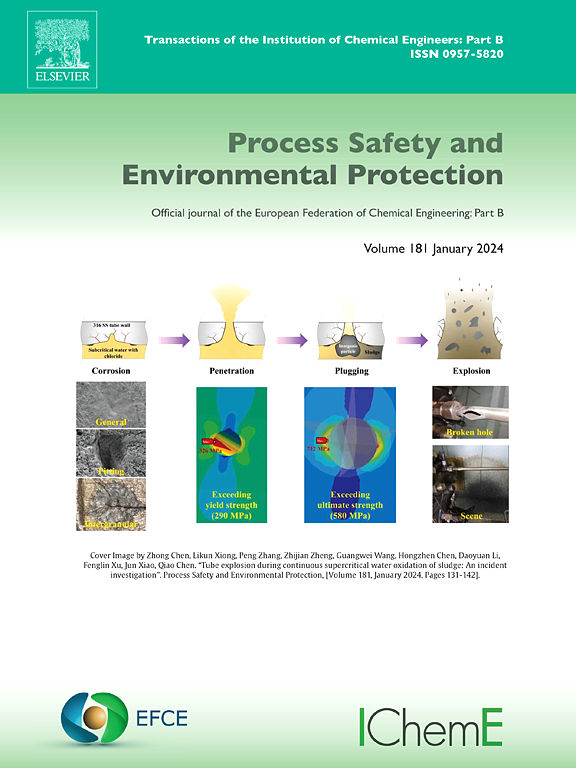
The Process Safety and Environmental Protection (PSEP) journal is a leading international publication that focuses on the publication of high-quality, original research papers in the field of engineering, specifically those related to the safety of industrial processes and environmental protection. The journal encourages submissions that present new developments in safety and environmental aspects, particularly those that show how research findings can be applied in process engineering design and practice.
PSEP is particularly interested in research that brings fresh perspectives to established engineering principles, identifies unsolved problems, or suggests directions for future research. The journal also values contributions that push the boundaries of traditional engineering and welcomes multidisciplinary papers.
PSEP's articles are abstracted and indexed by a range of databases and services, which helps to ensure that the journal's research is accessible and recognized in the academic and professional communities. These databases include ANTE, Chemical Abstracts, Chemical Hazards in Industry, Current Contents, Elsevier Engineering Information database, Pascal Francis, Web of Science, Scopus, Engineering Information Database EnCompass LIT (Elsevier), and INSPEC. This wide coverage facilitates the dissemination of the journal's content to a global audience interested in process safety and environmental engineering.




 京公网安备 11010802042870号
京ICP备2023020795号-1
京公网安备 11010802042870号
京ICP备2023020795号-1

 分享
分享
 求助内容:
求助内容: 应助结果提醒方式:
 扫码关注我们
