Bozena J Katic, Aspasia Katragkou, Jessica L Alvitres, Manisha Gurumurthy, Charles Li, Joseph V Schwab, Uzma N Hasan, Sunanda Gaur, Alan S Weller, Mary C Kennedy, Cecilia DiPentima, Claudia Rohan, Benjamin Richlin, Dorothy Chu, Isaura Otero, Akhil Patel, Pauline Thomas, Stephen M Friedman
{"title":"美国儿童大队列中严重急性呼吸综合征冠状病毒2抗体患病率及相关危险因素","authors":"Bozena J Katic, Aspasia Katragkou, Jessica L Alvitres, Manisha Gurumurthy, Charles Li, Joseph V Schwab, Uzma N Hasan, Sunanda Gaur, Alan S Weller, Mary C Kennedy, Cecilia DiPentima, Claudia Rohan, Benjamin Richlin, Dorothy Chu, Isaura Otero, Akhil Patel, Pauline Thomas, Stephen M Friedman","doi":"10.1093/ofid/ofae680","DOIUrl":null,"url":null,"abstract":"<p><strong>Background: </strong>Household transmission of severe acute respiratory syndrome coronavirus 2 (SARS-CoV-2) may play a key role in times of increased infection, particularly among children. We aimed to determine the prevalence of SARS-CoV-2 antibodies and identify risk factors associated with SARS-CoV-2 antibody positivity in children.</p><p><strong>Methods: </strong>Unvaccinated children aged 18 months to 11 years between August 2022 and June 2023 underwent oral fluid testing for SARS-CoV-2 antibodies. Caregivers completed electronic surveys at 4 major healthcare practices in Northern and Central New Jersey. Information was collected on demographics, household size, vaccination status, and prior SARS-CoV-2-related illness. Multivariable logistic regression determined individual and household-level factors associated with SARS-CoV-2 antibody positivity.</p><p><strong>Results: </strong>A total of 870 children provided tests and corresponding surveys. Children were predominantly Hispanic (37%) or non-Hispanic Black (30%), and on average 5.7 years old. Overall SARS-CoV-2 antibody positivity was 68%. Risk factors for SARS-CoV-2 positivity include Hispanic or non-Hispanic Black race/ethnicity (adjusted odds ratios [aOR], 2.29 and 1.95 vs. White race/ethnicity; <i>P < .01</i>) and later enrollment in the study period. Children from households with ≥1 vaccinated adult were 52% less likely to be antibody positive than those from households with no vaccinated adults (aOR: 0.38, [95% confidence interval 0.2 to 0.69]).</p><p><strong>Conclusions: </strong>There is high burden of SARS-CoV-2 infection among children over time. Adult vaccination appears to be a protective factor in helping to mitigate coronavirus disease 2019 (COVID-19) infection among children. Increased vaccination of adults in the community can help inform COVID-19 prevention strategies for minors in the household.</p>","PeriodicalId":19517,"journal":{"name":"Open Forum Infectious Diseases","volume":"12 1","pages":"ofae680"},"PeriodicalIF":3.8000,"publicationDate":"2025-01-10","publicationTypes":"Journal Article","fieldsOfStudy":null,"isOpenAccess":false,"openAccessPdf":"https://www.ncbi.nlm.nih.gov/pmc/articles/PMC11718515/pdf/","citationCount":"0","resultStr":"{\"title\":\"Severe Acute Respiratory Syndrome Coronavirus 2 Antibody Prevalence and Associated Risk Factors in a Large Cohort of US Children.\",\"authors\":\"Bozena J Katic, Aspasia Katragkou, Jessica L Alvitres, Manisha Gurumurthy, Charles Li, Joseph V Schwab, Uzma N Hasan, Sunanda Gaur, Alan S Weller, Mary C Kennedy, Cecilia DiPentima, Claudia Rohan, Benjamin Richlin, Dorothy Chu, Isaura Otero, Akhil Patel, Pauline Thomas, Stephen M Friedman\",\"doi\":\"10.1093/ofid/ofae680\",\"DOIUrl\":null,\"url\":null,\"abstract\":\"<p><strong>Background: </strong>Household transmission of severe acute respiratory syndrome coronavirus 2 (SARS-CoV-2) may play a key role in times of increased infection, particularly among children. We aimed to determine the prevalence of SARS-CoV-2 antibodies and identify risk factors associated with SARS-CoV-2 antibody positivity in children.</p><p><strong>Methods: </strong>Unvaccinated children aged 18 months to 11 years between August 2022 and June 2023 underwent oral fluid testing for SARS-CoV-2 antibodies. Caregivers completed electronic surveys at 4 major healthcare practices in Northern and Central New Jersey. Information was collected on demographics, household size, vaccination status, and prior SARS-CoV-2-related illness. Multivariable logistic regression determined individual and household-level factors associated with SARS-CoV-2 antibody positivity.</p><p><strong>Results: </strong>A total of 870 children provided tests and corresponding surveys. Children were predominantly Hispanic (37%) or non-Hispanic Black (30%), and on average 5.7 years old. Overall SARS-CoV-2 antibody positivity was 68%. Risk factors for SARS-CoV-2 positivity include Hispanic or non-Hispanic Black race/ethnicity (adjusted odds ratios [aOR], 2.29 and 1.95 vs. White race/ethnicity; <i>P < .01</i>) and later enrollment in the study period. Children from households with ≥1 vaccinated adult were 52% less likely to be antibody positive than those from households with no vaccinated adults (aOR: 0.38, [95% confidence interval 0.2 to 0.69]).</p><p><strong>Conclusions: </strong>There is high burden of SARS-CoV-2 infection among children over time. Adult vaccination appears to be a protective factor in helping to mitigate coronavirus disease 2019 (COVID-19) infection among children. Increased vaccination of adults in the community can help inform COVID-19 prevention strategies for minors in the household.</p>\",\"PeriodicalId\":19517,\"journal\":{\"name\":\"Open Forum Infectious Diseases\",\"volume\":\"12 1\",\"pages\":\"ofae680\"},\"PeriodicalIF\":3.8000,\"publicationDate\":\"2025-01-10\",\"publicationTypes\":\"Journal Article\",\"fieldsOfStudy\":null,\"isOpenAccess\":false,\"openAccessPdf\":\"https://www.ncbi.nlm.nih.gov/pmc/articles/PMC11718515/pdf/\",\"citationCount\":\"0\",\"resultStr\":null,\"platform\":\"Semanticscholar\",\"paperid\":null,\"PeriodicalName\":\"Open Forum Infectious Diseases\",\"FirstCategoryId\":\"3\",\"ListUrlMain\":\"https://doi.org/10.1093/ofid/ofae680\",\"RegionNum\":4,\"RegionCategory\":\"医学\",\"ArticlePicture\":[],\"TitleCN\":null,\"AbstractTextCN\":null,\"PMCID\":null,\"EPubDate\":\"2025/1/1 0:00:00\",\"PubModel\":\"eCollection\",\"JCR\":\"Q2\",\"JCRName\":\"IMMUNOLOGY\",\"Score\":null,\"Total\":0}","platform":"Semanticscholar","paperid":null,"PeriodicalName":"Open Forum Infectious Diseases","FirstCategoryId":"3","ListUrlMain":"https://doi.org/10.1093/ofid/ofae680","RegionNum":4,"RegionCategory":"医学","ArticlePicture":[],"TitleCN":null,"AbstractTextCN":null,"PMCID":null,"EPubDate":"2025/1/1 0:00:00","PubModel":"eCollection","JCR":"Q2","JCRName":"IMMUNOLOGY","Score":null,"Total":0}
Severe Acute Respiratory Syndrome Coronavirus 2 Antibody Prevalence and Associated Risk Factors in a Large Cohort of US Children.
Background: Household transmission of severe acute respiratory syndrome coronavirus 2 (SARS-CoV-2) may play a key role in times of increased infection, particularly among children. We aimed to determine the prevalence of SARS-CoV-2 antibodies and identify risk factors associated with SARS-CoV-2 antibody positivity in children.
Methods: Unvaccinated children aged 18 months to 11 years between August 2022 and June 2023 underwent oral fluid testing for SARS-CoV-2 antibodies. Caregivers completed electronic surveys at 4 major healthcare practices in Northern and Central New Jersey. Information was collected on demographics, household size, vaccination status, and prior SARS-CoV-2-related illness. Multivariable logistic regression determined individual and household-level factors associated with SARS-CoV-2 antibody positivity.
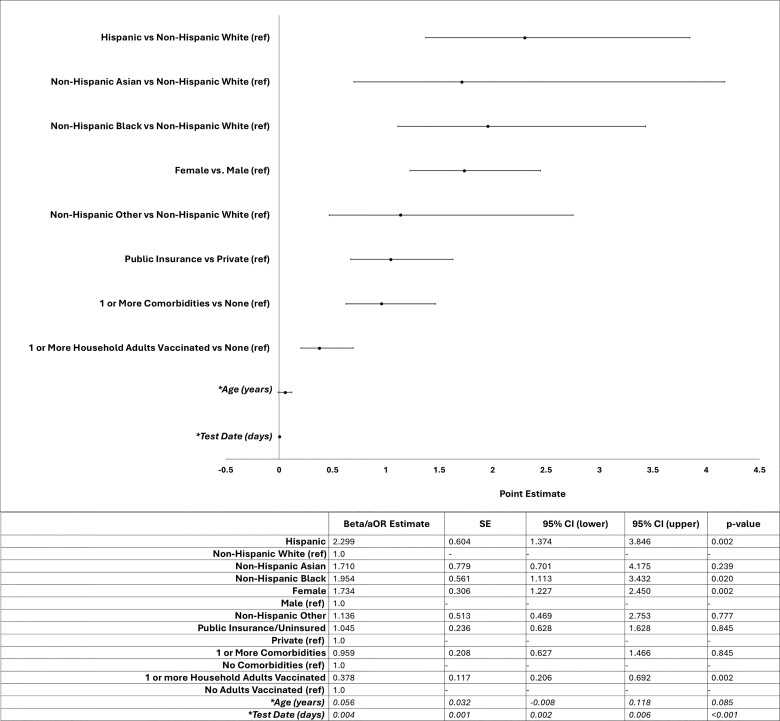
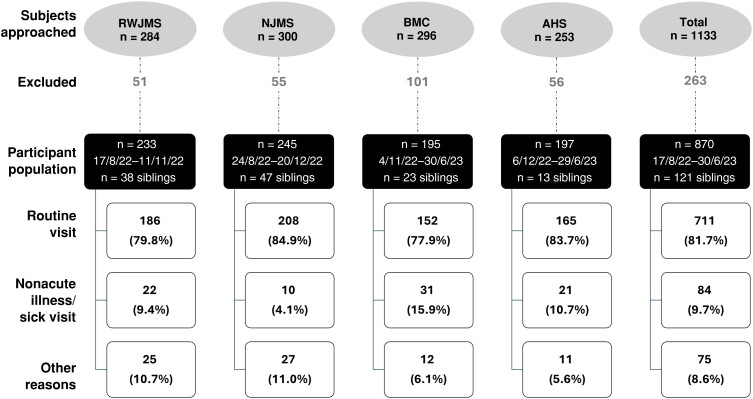
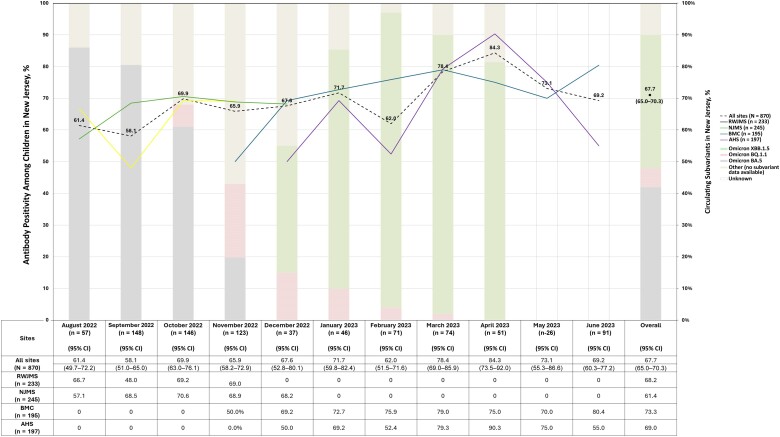
Results: A total of 870 children provided tests and corresponding surveys. Children were predominantly Hispanic (37%) or non-Hispanic Black (30%), and on average 5.7 years old. Overall SARS-CoV-2 antibody positivity was 68%. Risk factors for SARS-CoV-2 positivity include Hispanic or non-Hispanic Black race/ethnicity (adjusted odds ratios [aOR], 2.29 and 1.95 vs. White race/ethnicity; P < .01) and later enrollment in the study period. Children from households with ≥1 vaccinated adult were 52% less likely to be antibody positive than those from households with no vaccinated adults (aOR: 0.38, [95% confidence interval 0.2 to 0.69]).
Conclusions: There is high burden of SARS-CoV-2 infection among children over time. Adult vaccination appears to be a protective factor in helping to mitigate coronavirus disease 2019 (COVID-19) infection among children. Increased vaccination of adults in the community can help inform COVID-19 prevention strategies for minors in the household.
期刊介绍:
Open Forum Infectious Diseases provides a global forum for the publication of clinical, translational, and basic research findings in a fully open access, online journal environment. The journal reflects the broad diversity of the field of infectious diseases, and focuses on the intersection of biomedical science and clinical practice, with a particular emphasis on knowledge that holds the potential to improve patient care in populations around the world. Fully peer-reviewed, OFID supports the international community of infectious diseases experts by providing a venue for articles that further the understanding of all aspects of infectious diseases.





 京公网安备 11010802042870号
京ICP备2023020795号-1
京公网安备 11010802042870号
京ICP备2023020795号-1

 分享
分享
 求助内容:
求助内容: 应助结果提醒方式:
 扫码关注我们
