Javed Iqbal, Chunli Su, Hasnain Abbas, Jiaqi Jiang, Zhantao Han, Muhammad Yousuf Jat Baloch, Xianjun Xie
{"title":"南四湖流域硝酸盐浓度预测及土地利用类型对地下水的影响","authors":"Javed Iqbal, Chunli Su, Hasnain Abbas, Jiaqi Jiang, Zhantao Han, Muhammad Yousuf Jat Baloch, Xianjun Xie","doi":"10.1016/j.jhazmat.2025.137185","DOIUrl":null,"url":null,"abstract":"Groundwater faces a pervasive threat from anthropogenic nitrate contamination worldwide, particularly in regions characterized by intensive agricultural practices. This study examines groundwater quality in the Nansi Lake Basin (NSLB), emphasizing nitrate (NO<sub>3</sub><sup>-</sup>-N) contamination. Utilizing 422 groundwater samples, it investigates hydrochemical dynamics and the impact of land use on groundwater composition. Key methods include hydrogeochemical analysis, PCA, and the Duncan comparison method. The innovative aspect lies in using Multilayer Perceptron Artificial Neural Networks (MLP-ANNs) to predict NO<sub>3</sub><sup>-</sup>-N contamination. The results showed that NO<sub>3</sub><sup>-</sup>-N levels ranged from 0.004 to 177.72<!-- --> <!-- -->mg/L, with approximately 43.6% of the samples exceeding the safe drinking water limit of 10<!-- --> <!-- -->mg/L (WHO 2022). Substantial spatial variability in the concentrations of major ions within aquifers, with NO<sub>3</sub><sup>-</sup>-N exhibiting the most significant fluctuations. The factors responsible for the hydrochemical composition of groundwater include recharge sources, water-rock interaction, prevailing groundwater environment, land use patterns, and related anthropogenic activities. Notably, land use types, primarily farmland and rural areas, exhibited a strong association with NO<sub>3</sub><sup>-</sup>-N. The MLP-ANNs achieved high prediction accuracy for NO<sub>3</sub><sup>-</sup>-N, with an AUC of 0.85. The MLP-ANN model identified heightened susceptibility to nitrate contamination in the central and southeastern regions, characterized by dense shallow wells (<60<!-- --> <!-- -->m). Key factors include nitrogen-based fertilizer overuse, agricultural runoff, domestic wastewater discharge, and septic system leakage. The vulnerability is exacerbated by highly permeable loose rock pore water systems underlying intensively cultivated agricultural lands. This study elucidates the complex interrelation between natural processes and anthropogenic activities that influence groundwater quality, providing valuable perspectives that could guide the formulation of policies and practices aimed at promoting sustainable groundwater utilization and environmental conservation.","PeriodicalId":361,"journal":{"name":"Journal of Hazardous Materials","volume":"28 1","pages":""},"PeriodicalIF":11.3000,"publicationDate":"2025-01-13","publicationTypes":"Journal Article","fieldsOfStudy":null,"isOpenAccess":false,"openAccessPdf":"","citationCount":"0","resultStr":"{\"title\":\"Prediction of Nitrate Concentration and the Impact of Land Use Types on Groundwater in the Nansi Lake Basin\",\"authors\":\"Javed Iqbal, Chunli Su, Hasnain Abbas, Jiaqi Jiang, Zhantao Han, Muhammad Yousuf Jat Baloch, Xianjun Xie\",\"doi\":\"10.1016/j.jhazmat.2025.137185\",\"DOIUrl\":null,\"url\":null,\"abstract\":\"Groundwater faces a pervasive threat from anthropogenic nitrate contamination worldwide, particularly in regions characterized by intensive agricultural practices. This study examines groundwater quality in the Nansi Lake Basin (NSLB), emphasizing nitrate (NO<sub>3</sub><sup>-</sup>-N) contamination. Utilizing 422 groundwater samples, it investigates hydrochemical dynamics and the impact of land use on groundwater composition. Key methods include hydrogeochemical analysis, PCA, and the Duncan comparison method. The innovative aspect lies in using Multilayer Perceptron Artificial Neural Networks (MLP-ANNs) to predict NO<sub>3</sub><sup>-</sup>-N contamination. The results showed that NO<sub>3</sub><sup>-</sup>-N levels ranged from 0.004 to 177.72<!-- --> <!-- -->mg/L, with approximately 43.6% of the samples exceeding the safe drinking water limit of 10<!-- --> <!-- -->mg/L (WHO 2022). Substantial spatial variability in the concentrations of major ions within aquifers, with NO<sub>3</sub><sup>-</sup>-N exhibiting the most significant fluctuations. The factors responsible for the hydrochemical composition of groundwater include recharge sources, water-rock interaction, prevailing groundwater environment, land use patterns, and related anthropogenic activities. Notably, land use types, primarily farmland and rural areas, exhibited a strong association with NO<sub>3</sub><sup>-</sup>-N. The MLP-ANNs achieved high prediction accuracy for NO<sub>3</sub><sup>-</sup>-N, with an AUC of 0.85. The MLP-ANN model identified heightened susceptibility to nitrate contamination in the central and southeastern regions, characterized by dense shallow wells (<60<!-- --> <!-- -->m). Key factors include nitrogen-based fertilizer overuse, agricultural runoff, domestic wastewater discharge, and septic system leakage. The vulnerability is exacerbated by highly permeable loose rock pore water systems underlying intensively cultivated agricultural lands. This study elucidates the complex interrelation between natural processes and anthropogenic activities that influence groundwater quality, providing valuable perspectives that could guide the formulation of policies and practices aimed at promoting sustainable groundwater utilization and environmental conservation.\",\"PeriodicalId\":361,\"journal\":{\"name\":\"Journal of Hazardous Materials\",\"volume\":\"28 1\",\"pages\":\"\"},\"PeriodicalIF\":11.3000,\"publicationDate\":\"2025-01-13\",\"publicationTypes\":\"Journal Article\",\"fieldsOfStudy\":null,\"isOpenAccess\":false,\"openAccessPdf\":\"\",\"citationCount\":\"0\",\"resultStr\":null,\"platform\":\"Semanticscholar\",\"paperid\":null,\"PeriodicalName\":\"Journal of Hazardous Materials\",\"FirstCategoryId\":\"93\",\"ListUrlMain\":\"https://doi.org/10.1016/j.jhazmat.2025.137185\",\"RegionNum\":1,\"RegionCategory\":\"环境科学与生态学\",\"ArticlePicture\":[],\"TitleCN\":null,\"AbstractTextCN\":null,\"PMCID\":null,\"EPubDate\":\"\",\"PubModel\":\"\",\"JCR\":\"Q1\",\"JCRName\":\"ENGINEERING, ENVIRONMENTAL\",\"Score\":null,\"Total\":0}","platform":"Semanticscholar","paperid":null,"PeriodicalName":"Journal of Hazardous Materials","FirstCategoryId":"93","ListUrlMain":"https://doi.org/10.1016/j.jhazmat.2025.137185","RegionNum":1,"RegionCategory":"环境科学与生态学","ArticlePicture":[],"TitleCN":null,"AbstractTextCN":null,"PMCID":null,"EPubDate":"","PubModel":"","JCR":"Q1","JCRName":"ENGINEERING, ENVIRONMENTAL","Score":null,"Total":0}
Prediction of Nitrate Concentration and the Impact of Land Use Types on Groundwater in the Nansi Lake Basin
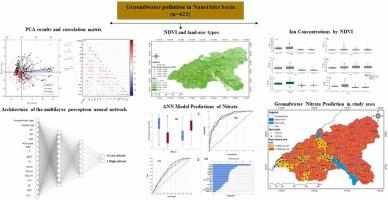
Groundwater faces a pervasive threat from anthropogenic nitrate contamination worldwide, particularly in regions characterized by intensive agricultural practices. This study examines groundwater quality in the Nansi Lake Basin (NSLB), emphasizing nitrate (NO3--N) contamination. Utilizing 422 groundwater samples, it investigates hydrochemical dynamics and the impact of land use on groundwater composition. Key methods include hydrogeochemical analysis, PCA, and the Duncan comparison method. The innovative aspect lies in using Multilayer Perceptron Artificial Neural Networks (MLP-ANNs) to predict NO3--N contamination. The results showed that NO3--N levels ranged from 0.004 to 177.72 mg/L, with approximately 43.6% of the samples exceeding the safe drinking water limit of 10 mg/L (WHO 2022). Substantial spatial variability in the concentrations of major ions within aquifers, with NO3--N exhibiting the most significant fluctuations. The factors responsible for the hydrochemical composition of groundwater include recharge sources, water-rock interaction, prevailing groundwater environment, land use patterns, and related anthropogenic activities. Notably, land use types, primarily farmland and rural areas, exhibited a strong association with NO3--N. The MLP-ANNs achieved high prediction accuracy for NO3--N, with an AUC of 0.85. The MLP-ANN model identified heightened susceptibility to nitrate contamination in the central and southeastern regions, characterized by dense shallow wells (<60 m). Key factors include nitrogen-based fertilizer overuse, agricultural runoff, domestic wastewater discharge, and septic system leakage. The vulnerability is exacerbated by highly permeable loose rock pore water systems underlying intensively cultivated agricultural lands. This study elucidates the complex interrelation between natural processes and anthropogenic activities that influence groundwater quality, providing valuable perspectives that could guide the formulation of policies and practices aimed at promoting sustainable groundwater utilization and environmental conservation.
期刊介绍:
The Journal of Hazardous Materials serves as a global platform for promoting cutting-edge research in the field of Environmental Science and Engineering. Our publication features a wide range of articles, including full-length research papers, review articles, and perspectives, with the aim of enhancing our understanding of the dangers and risks associated with various materials concerning public health and the environment. It is important to note that the term "environmental contaminants" refers specifically to substances that pose hazardous effects through contamination, while excluding those that do not have such impacts on the environment or human health. Moreover, we emphasize the distinction between wastes and hazardous materials in order to provide further clarity on the scope of the journal. We have a keen interest in exploring specific compounds and microbial agents that have adverse effects on the environment.




 京公网安备 11010802042870号
京ICP备2023020795号-1
京公网安备 11010802042870号
京ICP备2023020795号-1

 分享
分享
 求助内容:
求助内容: 应助结果提醒方式:
 扫码关注我们
