Qiumei Liu , Zhouling Xie , Siyu Tang , Qingquan Xie , Xunyang He , Dejun Li
{"title":"合成微生物群落通过组装真菌群落提高堆肥过程中木质纤维素的降解","authors":"Qiumei Liu , Zhouling Xie , Siyu Tang , Qingquan Xie , Xunyang He , Dejun Li","doi":"10.1016/j.biortech.2025.132068","DOIUrl":null,"url":null,"abstract":"<div><div>Inoculating synthetic microbial community (SynCom) has been proposed as an eco-friendly approach for lignocellulose degradation in composting to enhance organic fertilizer quality. However, the mechanisms responsible for SynCom-regulated lignocellulose degradation during composting remain unclear. Here the SynCom inoculation decreased cellulose and hemicellulose contents by 26.2% and 14.3%, respectively, at the mature phase, while increasing endoglucanase, exoglucanase, and β-glucosidase activities significantly. SynCom inoculation increased the abundance of <em>Cephaliophoras</em> and <em>Thermomyces</em> at the mesophilic phase, <em>Sordariomycetes</em> at the thermophilic phase, and <em>Thermomyces</em>, <em>Acremonium</em>, <em>Aspergillus</em>, and <em>Sordariomycetes</em> at the mature phase, as well as increased the abundance of numerous Operational Taxonomic Units (OTUs), with OTU10 (<em>Hydropisphaera</em>) being responsible for lignocellulose degradation. The altered fungal community stimulated functions of the wood saprotroph, undefined saprotroph, and litter saprotroph were responsible for lignocellulose degradation via changing microbial community. The results suggest that SynCom inoculation effectively stimulate lignocellulose degradation, so that benefits quality improvement of organic fertilizer.</div></div>","PeriodicalId":258,"journal":{"name":"Bioresource Technology","volume":"419 ","pages":"Article 132068"},"PeriodicalIF":9.0000,"publicationDate":"2025-03-01","publicationTypes":"Journal Article","fieldsOfStudy":null,"isOpenAccess":false,"openAccessPdf":"","citationCount":"0","resultStr":"{\"title\":\"Synthetic microbial community enhances lignocellulose degradation during composting by assembling fungal communities\",\"authors\":\"Qiumei Liu , Zhouling Xie , Siyu Tang , Qingquan Xie , Xunyang He , Dejun Li\",\"doi\":\"10.1016/j.biortech.2025.132068\",\"DOIUrl\":null,\"url\":null,\"abstract\":\"<div><div>Inoculating synthetic microbial community (SynCom) has been proposed as an eco-friendly approach for lignocellulose degradation in composting to enhance organic fertilizer quality. However, the mechanisms responsible for SynCom-regulated lignocellulose degradation during composting remain unclear. Here the SynCom inoculation decreased cellulose and hemicellulose contents by 26.2% and 14.3%, respectively, at the mature phase, while increasing endoglucanase, exoglucanase, and β-glucosidase activities significantly. SynCom inoculation increased the abundance of <em>Cephaliophoras</em> and <em>Thermomyces</em> at the mesophilic phase, <em>Sordariomycetes</em> at the thermophilic phase, and <em>Thermomyces</em>, <em>Acremonium</em>, <em>Aspergillus</em>, and <em>Sordariomycetes</em> at the mature phase, as well as increased the abundance of numerous Operational Taxonomic Units (OTUs), with OTU10 (<em>Hydropisphaera</em>) being responsible for lignocellulose degradation. The altered fungal community stimulated functions of the wood saprotroph, undefined saprotroph, and litter saprotroph were responsible for lignocellulose degradation via changing microbial community. The results suggest that SynCom inoculation effectively stimulate lignocellulose degradation, so that benefits quality improvement of organic fertilizer.</div></div>\",\"PeriodicalId\":258,\"journal\":{\"name\":\"Bioresource Technology\",\"volume\":\"419 \",\"pages\":\"Article 132068\"},\"PeriodicalIF\":9.0000,\"publicationDate\":\"2025-03-01\",\"publicationTypes\":\"Journal Article\",\"fieldsOfStudy\":null,\"isOpenAccess\":false,\"openAccessPdf\":\"\",\"citationCount\":\"0\",\"resultStr\":null,\"platform\":\"Semanticscholar\",\"paperid\":null,\"PeriodicalName\":\"Bioresource Technology\",\"FirstCategoryId\":\"5\",\"ListUrlMain\":\"https://www.sciencedirect.com/science/article/pii/S0960852425000343\",\"RegionNum\":1,\"RegionCategory\":\"环境科学与生态学\",\"ArticlePicture\":[],\"TitleCN\":null,\"AbstractTextCN\":null,\"PMCID\":null,\"EPubDate\":\"2025/1/13 0:00:00\",\"PubModel\":\"Epub\",\"JCR\":\"Q1\",\"JCRName\":\"AGRICULTURAL ENGINEERING\",\"Score\":null,\"Total\":0}","platform":"Semanticscholar","paperid":null,"PeriodicalName":"Bioresource Technology","FirstCategoryId":"5","ListUrlMain":"https://www.sciencedirect.com/science/article/pii/S0960852425000343","RegionNum":1,"RegionCategory":"环境科学与生态学","ArticlePicture":[],"TitleCN":null,"AbstractTextCN":null,"PMCID":null,"EPubDate":"2025/1/13 0:00:00","PubModel":"Epub","JCR":"Q1","JCRName":"AGRICULTURAL ENGINEERING","Score":null,"Total":0}
Synthetic microbial community enhances lignocellulose degradation during composting by assembling fungal communities
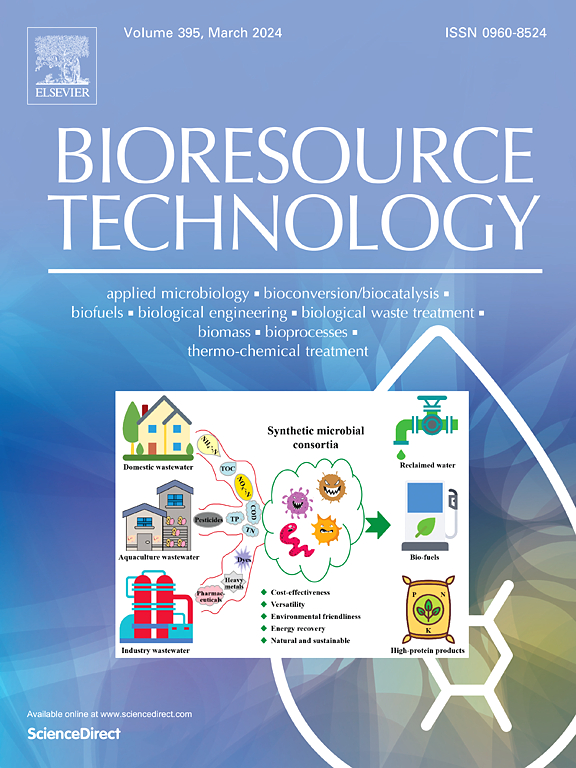
Inoculating synthetic microbial community (SynCom) has been proposed as an eco-friendly approach for lignocellulose degradation in composting to enhance organic fertilizer quality. However, the mechanisms responsible for SynCom-regulated lignocellulose degradation during composting remain unclear. Here the SynCom inoculation decreased cellulose and hemicellulose contents by 26.2% and 14.3%, respectively, at the mature phase, while increasing endoglucanase, exoglucanase, and β-glucosidase activities significantly. SynCom inoculation increased the abundance of Cephaliophoras and Thermomyces at the mesophilic phase, Sordariomycetes at the thermophilic phase, and Thermomyces, Acremonium, Aspergillus, and Sordariomycetes at the mature phase, as well as increased the abundance of numerous Operational Taxonomic Units (OTUs), with OTU10 (Hydropisphaera) being responsible for lignocellulose degradation. The altered fungal community stimulated functions of the wood saprotroph, undefined saprotroph, and litter saprotroph were responsible for lignocellulose degradation via changing microbial community. The results suggest that SynCom inoculation effectively stimulate lignocellulose degradation, so that benefits quality improvement of organic fertilizer.
期刊介绍:
Bioresource Technology publishes original articles, review articles, case studies, and short communications covering the fundamentals, applications, and management of bioresource technology. The journal seeks to advance and disseminate knowledge across various areas related to biomass, biological waste treatment, bioenergy, biotransformations, bioresource systems analysis, and associated conversion or production technologies.
Topics include:
• Biofuels: liquid and gaseous biofuels production, modeling and economics
• Bioprocesses and bioproducts: biocatalysis and fermentations
• Biomass and feedstocks utilization: bioconversion of agro-industrial residues
• Environmental protection: biological waste treatment
• Thermochemical conversion of biomass: combustion, pyrolysis, gasification, catalysis.





 京公网安备 11010802042870号
京ICP备2023020795号-1
京公网安备 11010802042870号
京ICP备2023020795号-1

 分享
分享
 求助内容:
求助内容: 应助结果提醒方式:
 扫码关注我们
