Jan-Simon Behnke, Naomi Zink, Carl J. M. Schoelzel, Inga Beimdick, Leonhard Hagen Urner, Virginia Wycisk
{"title":"结合离子基团与二氯甲基偶联提供离子/非离子杂化洗涤剂的新途径。","authors":"Jan-Simon Behnke, Naomi Zink, Carl J. M. Schoelzel, Inga Beimdick, Leonhard Hagen Urner, Virginia Wycisk","doi":"10.1002/cplu.202400753","DOIUrl":null,"url":null,"abstract":"<p>Strategies for combining ionic and non-ionic functional groups are important for altering detergent properties and exploring new chemical spaces within the detergentome. Previous synthesis protocols for ionic/non-ionic hybrid detergents require asymmetric detergent precursors with independently addressable hydroxyl groups that can be decorated with charged groups. However, preparation of ionic/non-ionic headgroups can be tedious in terms of required synthesis steps and resource consumption. To address this challenge, here we explore if we can fuse ionic and non-ionic groups directly with methallyl dichloride in the first step of detergent synthesis. While this delivers a simplified synthesis strategy for ionic/non-ionic headgroups, we find functional groups for which the modification of asymmetric detergent precursors is still the only viable option to obtain related ionic/non-ionic hybrid detergents. Because previously established debenzylation conditions limit overall yields for asymmetric detergent precursors, here we explore optimization strategies, including silyl protecting groups, ozonolysis-hydrolysis, and hydrogenolysis. In summary, we establish a new synthesis route to ionic/non-ionic hybrid detergents, deliver an optimized debenzylation protocol and obtain building blocks for bridged detergent architectures. Our findings facilitate the modular synthesis of hybrid detergents and expand the chemical space of detergents.</p>","PeriodicalId":148,"journal":{"name":"ChemPlusChem","volume":"90 5","pages":""},"PeriodicalIF":2.8000,"publicationDate":"2025-01-23","publicationTypes":"Journal Article","fieldsOfStudy":null,"isOpenAccess":false,"openAccessPdf":"https://onlinelibrary.wiley.com/doi/epdf/10.1002/cplu.202400753","citationCount":"0","resultStr":"{\"title\":\"Combining Ionic Groups with Methallyl Dichloride Coupling Delivers New Pathways to Ionic/Non-Ionic Hybrid Detergents\",\"authors\":\"Jan-Simon Behnke, Naomi Zink, Carl J. M. Schoelzel, Inga Beimdick, Leonhard Hagen Urner, Virginia Wycisk\",\"doi\":\"10.1002/cplu.202400753\",\"DOIUrl\":null,\"url\":null,\"abstract\":\"<p>Strategies for combining ionic and non-ionic functional groups are important for altering detergent properties and exploring new chemical spaces within the detergentome. Previous synthesis protocols for ionic/non-ionic hybrid detergents require asymmetric detergent precursors with independently addressable hydroxyl groups that can be decorated with charged groups. However, preparation of ionic/non-ionic headgroups can be tedious in terms of required synthesis steps and resource consumption. To address this challenge, here we explore if we can fuse ionic and non-ionic groups directly with methallyl dichloride in the first step of detergent synthesis. While this delivers a simplified synthesis strategy for ionic/non-ionic headgroups, we find functional groups for which the modification of asymmetric detergent precursors is still the only viable option to obtain related ionic/non-ionic hybrid detergents. Because previously established debenzylation conditions limit overall yields for asymmetric detergent precursors, here we explore optimization strategies, including silyl protecting groups, ozonolysis-hydrolysis, and hydrogenolysis. In summary, we establish a new synthesis route to ionic/non-ionic hybrid detergents, deliver an optimized debenzylation protocol and obtain building blocks for bridged detergent architectures. Our findings facilitate the modular synthesis of hybrid detergents and expand the chemical space of detergents.</p>\",\"PeriodicalId\":148,\"journal\":{\"name\":\"ChemPlusChem\",\"volume\":\"90 5\",\"pages\":\"\"},\"PeriodicalIF\":2.8000,\"publicationDate\":\"2025-01-23\",\"publicationTypes\":\"Journal Article\",\"fieldsOfStudy\":null,\"isOpenAccess\":false,\"openAccessPdf\":\"https://onlinelibrary.wiley.com/doi/epdf/10.1002/cplu.202400753\",\"citationCount\":\"0\",\"resultStr\":null,\"platform\":\"Semanticscholar\",\"paperid\":null,\"PeriodicalName\":\"ChemPlusChem\",\"FirstCategoryId\":\"92\",\"ListUrlMain\":\"https://chemistry-europe.onlinelibrary.wiley.com/doi/10.1002/cplu.202400753\",\"RegionNum\":4,\"RegionCategory\":\"化学\",\"ArticlePicture\":[],\"TitleCN\":null,\"AbstractTextCN\":null,\"PMCID\":null,\"EPubDate\":\"\",\"PubModel\":\"\",\"JCR\":\"Q2\",\"JCRName\":\"CHEMISTRY, MULTIDISCIPLINARY\",\"Score\":null,\"Total\":0}","platform":"Semanticscholar","paperid":null,"PeriodicalName":"ChemPlusChem","FirstCategoryId":"92","ListUrlMain":"https://chemistry-europe.onlinelibrary.wiley.com/doi/10.1002/cplu.202400753","RegionNum":4,"RegionCategory":"化学","ArticlePicture":[],"TitleCN":null,"AbstractTextCN":null,"PMCID":null,"EPubDate":"","PubModel":"","JCR":"Q2","JCRName":"CHEMISTRY, MULTIDISCIPLINARY","Score":null,"Total":0}
Combining Ionic Groups with Methallyl Dichloride Coupling Delivers New Pathways to Ionic/Non-Ionic Hybrid Detergents
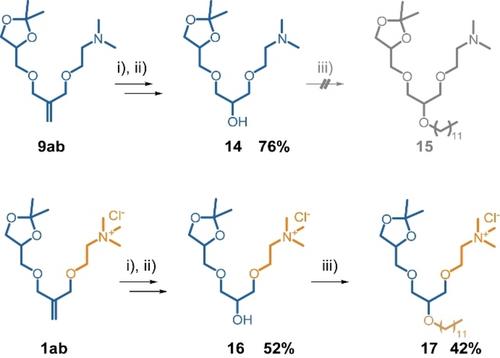
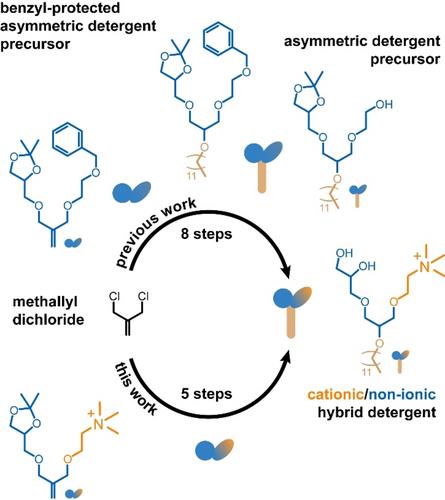
Strategies for combining ionic and non-ionic functional groups are important for altering detergent properties and exploring new chemical spaces within the detergentome. Previous synthesis protocols for ionic/non-ionic hybrid detergents require asymmetric detergent precursors with independently addressable hydroxyl groups that can be decorated with charged groups. However, preparation of ionic/non-ionic headgroups can be tedious in terms of required synthesis steps and resource consumption. To address this challenge, here we explore if we can fuse ionic and non-ionic groups directly with methallyl dichloride in the first step of detergent synthesis. While this delivers a simplified synthesis strategy for ionic/non-ionic headgroups, we find functional groups for which the modification of asymmetric detergent precursors is still the only viable option to obtain related ionic/non-ionic hybrid detergents. Because previously established debenzylation conditions limit overall yields for asymmetric detergent precursors, here we explore optimization strategies, including silyl protecting groups, ozonolysis-hydrolysis, and hydrogenolysis. In summary, we establish a new synthesis route to ionic/non-ionic hybrid detergents, deliver an optimized debenzylation protocol and obtain building blocks for bridged detergent architectures. Our findings facilitate the modular synthesis of hybrid detergents and expand the chemical space of detergents.
期刊介绍:
ChemPlusChem is a peer-reviewed, general chemistry journal that brings readers the very best in multidisciplinary research centering on chemistry. It is published on behalf of Chemistry Europe, an association of 16 European chemical societies.
Fully comprehensive in its scope, ChemPlusChem publishes articles covering new results from at least two different aspects (subfields) of chemistry or one of chemistry and one of another scientific discipline (one chemistry topic plus another one, hence the title ChemPlusChem). All suitable submissions undergo balanced peer review by experts in the field to ensure the highest quality, originality, relevance, significance, and validity.






 京公网安备 11010802042870号
京ICP备2023020795号-1
京公网安备 11010802042870号
京ICP备2023020795号-1

 分享
分享
 求助内容:
求助内容: 应助结果提醒方式:
 扫码关注我们
