Mostafa Hossam El Din Moawad, Talal Salem, Anas Alaaeldin, Youssef Elaraby, Peter D Awad, Amr Ahmed Khalifa, Ahmed El Naggar, Khaled Ashraf Mohamed, Mohamed Elhalal, Mostafa Badr, Ramy Abdelnaby
{"title":"静脉溶栓的安全性和有效性:93057例轻微脑卒中患者的系统回顾和荟萃分析","authors":"Mostafa Hossam El Din Moawad, Talal Salem, Anas Alaaeldin, Youssef Elaraby, Peter D Awad, Amr Ahmed Khalifa, Ahmed El Naggar, Khaled Ashraf Mohamed, Mohamed Elhalal, Mostafa Badr, Ramy Abdelnaby","doi":"10.1186/s12883-024-04000-8","DOIUrl":null,"url":null,"abstract":"<p><strong>Background: </strong>The definition of minor ischemic stroke (MIS) is a topic of debate, however, the most accepted definition is a stroke with National Institutes of Health Stroke Scale (NIHSS) ≤ 5. Intravenous thrombolysis (IVT) is a crucial treatment option for acute ischemic stroke (AIS) including: alteplase, recombinant human tissue-type plasminogen activator (r-tPA), and the recently approved tenecteplase. However, there is a debate regarding its safety and efficacy. Therefore, our objective was to determine the safety and efficacy of IVT in treating minor stroke patients (NIHSS ≤ 5).</p><p><strong>Methods: </strong>Using the search strategy assigned which was based on three keywords: \"mild\" or \"minor\", \"stroke\", and \"intravenous thrombolysis\", we searched for eligible articles on PubMed, Web of Science, Embase, and Scopus from inception till 10th January 2024. We conducted this meta-analysis using the random effect model to account for the heterogeneity among the studies. For the dichotomous variables, we calculated the odds ratio (OR) from the event and total of these variables. While for the continuous variables, we calculated the mean difference (MD) of these variables. Pooling of OR for the occurrence of events was also conducted.</p><p><strong>Results: </strong>A total of 21 articles with 93,057 patients with MIS were included. The mean age of the participants ranged from 62.3 to 79.6. Most of the included patients had comorbidities such as hypertension, diabetes, previous stroke, smoking, atrial fibrillation, and hyperlipidemia. Of these, 10,850 received IVT while 82,207 did not. The use of IVT was statistically significant associated with 90-day modified Rankin score (mRs) 0-1 when compared with control with OR of 1.67 (95%CI: 1.46, 1.91, p < 0.00001) and was statistically significantly associated with improvement of NIHSS on discharge with OR of 2.19 (95%CI: 1.56, 3.08, p < 0.00001). In terms of safety outcomes, IVT has proven a safe profile, as there was no significant difference in intracranial hemorrhage (ICH) and mortality rates between the IVT and control groups with OR of 1.75 (95CI: 0.95, 3.23, p = 0.07) and 0.93 (95%CI: 0.77, 1.11, p = 0.41), respectively.</p><p><strong>Conclusion: </strong>Although some studies have not found any benefits of IVT in MIS patients, a substantial body of literature strongly endorses IVT as an effective and safe treatment for MIS. IVT has been shown to improve the mRs and NIHSS scores at the 90-day mark without an increased risk of ICH or mortality.</p>","PeriodicalId":9170,"journal":{"name":"BMC Neurology","volume":"25 1","pages":"33"},"PeriodicalIF":2.2000,"publicationDate":"2025-01-22","publicationTypes":"Journal Article","fieldsOfStudy":null,"isOpenAccess":false,"openAccessPdf":"https://www.ncbi.nlm.nih.gov/pmc/articles/PMC11752810/pdf/","citationCount":"0","resultStr":"{\"title\":\"Safety and efficacy of intravenous thrombolysis: a systematic review and meta-analysis of 93,057 minor stroke patients.\",\"authors\":\"Mostafa Hossam El Din Moawad, Talal Salem, Anas Alaaeldin, Youssef Elaraby, Peter D Awad, Amr Ahmed Khalifa, Ahmed El Naggar, Khaled Ashraf Mohamed, Mohamed Elhalal, Mostafa Badr, Ramy Abdelnaby\",\"doi\":\"10.1186/s12883-024-04000-8\",\"DOIUrl\":null,\"url\":null,\"abstract\":\"<p><strong>Background: </strong>The definition of minor ischemic stroke (MIS) is a topic of debate, however, the most accepted definition is a stroke with National Institutes of Health Stroke Scale (NIHSS) ≤ 5. Intravenous thrombolysis (IVT) is a crucial treatment option for acute ischemic stroke (AIS) including: alteplase, recombinant human tissue-type plasminogen activator (r-tPA), and the recently approved tenecteplase. However, there is a debate regarding its safety and efficacy. Therefore, our objective was to determine the safety and efficacy of IVT in treating minor stroke patients (NIHSS ≤ 5).</p><p><strong>Methods: </strong>Using the search strategy assigned which was based on three keywords: \\\"mild\\\" or \\\"minor\\\", \\\"stroke\\\", and \\\"intravenous thrombolysis\\\", we searched for eligible articles on PubMed, Web of Science, Embase, and Scopus from inception till 10th January 2024. We conducted this meta-analysis using the random effect model to account for the heterogeneity among the studies. For the dichotomous variables, we calculated the odds ratio (OR) from the event and total of these variables. While for the continuous variables, we calculated the mean difference (MD) of these variables. Pooling of OR for the occurrence of events was also conducted.</p><p><strong>Results: </strong>A total of 21 articles with 93,057 patients with MIS were included. The mean age of the participants ranged from 62.3 to 79.6. Most of the included patients had comorbidities such as hypertension, diabetes, previous stroke, smoking, atrial fibrillation, and hyperlipidemia. Of these, 10,850 received IVT while 82,207 did not. The use of IVT was statistically significant associated with 90-day modified Rankin score (mRs) 0-1 when compared with control with OR of 1.67 (95%CI: 1.46, 1.91, p < 0.00001) and was statistically significantly associated with improvement of NIHSS on discharge with OR of 2.19 (95%CI: 1.56, 3.08, p < 0.00001). In terms of safety outcomes, IVT has proven a safe profile, as there was no significant difference in intracranial hemorrhage (ICH) and mortality rates between the IVT and control groups with OR of 1.75 (95CI: 0.95, 3.23, p = 0.07) and 0.93 (95%CI: 0.77, 1.11, p = 0.41), respectively.</p><p><strong>Conclusion: </strong>Although some studies have not found any benefits of IVT in MIS patients, a substantial body of literature strongly endorses IVT as an effective and safe treatment for MIS. IVT has been shown to improve the mRs and NIHSS scores at the 90-day mark without an increased risk of ICH or mortality.</p>\",\"PeriodicalId\":9170,\"journal\":{\"name\":\"BMC Neurology\",\"volume\":\"25 1\",\"pages\":\"33\"},\"PeriodicalIF\":2.2000,\"publicationDate\":\"2025-01-22\",\"publicationTypes\":\"Journal Article\",\"fieldsOfStudy\":null,\"isOpenAccess\":false,\"openAccessPdf\":\"https://www.ncbi.nlm.nih.gov/pmc/articles/PMC11752810/pdf/\",\"citationCount\":\"0\",\"resultStr\":null,\"platform\":\"Semanticscholar\",\"paperid\":null,\"PeriodicalName\":\"BMC Neurology\",\"FirstCategoryId\":\"3\",\"ListUrlMain\":\"https://doi.org/10.1186/s12883-024-04000-8\",\"RegionNum\":3,\"RegionCategory\":\"医学\",\"ArticlePicture\":[],\"TitleCN\":null,\"AbstractTextCN\":null,\"PMCID\":null,\"EPubDate\":\"\",\"PubModel\":\"\",\"JCR\":\"Q3\",\"JCRName\":\"CLINICAL NEUROLOGY\",\"Score\":null,\"Total\":0}","platform":"Semanticscholar","paperid":null,"PeriodicalName":"BMC Neurology","FirstCategoryId":"3","ListUrlMain":"https://doi.org/10.1186/s12883-024-04000-8","RegionNum":3,"RegionCategory":"医学","ArticlePicture":[],"TitleCN":null,"AbstractTextCN":null,"PMCID":null,"EPubDate":"","PubModel":"","JCR":"Q3","JCRName":"CLINICAL NEUROLOGY","Score":null,"Total":0}
引用次数: 0
摘要
背景:关于轻度缺血性卒中(MIS)的定义一直存在争议,然而,最被接受的定义是美国国立卫生研究院卒中量表(NIHSS)≤5的卒中。静脉溶栓(IVT)是急性缺血性卒中(AIS)的重要治疗选择,包括:阿替普酶、重组人组织型纤溶酶原激活剂(r-tPA)和最近批准的替奈普酶。然而,关于其安全性和有效性存在争议。因此,我们的目的是确定IVT治疗轻度脑卒中患者(NIHSS≤5)的安全性和有效性。方法:采用基于“轻度”或“轻微”、“中风”和“静脉溶栓”三个关键词的检索策略,检索PubMed、Web of Science、Embase和Scopus自成立至2024年1月10日的符合条件的文章。我们使用随机效应模型进行meta分析,以解释研究之间的异质性。对于二分类变量,我们从事件和这些变量的总数中计算了比值比(OR)。而对于连续变量,我们计算这些变量的均值差(MD)。还对事件发生的OR进行了汇总。结果:共纳入21篇文献,93057例MIS患者。参与者的平均年龄从62.3岁到79.6岁不等。大多数纳入的患者有合并症,如高血压、糖尿病、既往卒中、吸烟、房颤和高脂血症。其中10850人接受了静脉注射,82207人没有。与对照组相比,IVT的使用与90天改良Rankin评分(mRs) 0-1有统计学意义,OR为1.67 (95%CI: 1.46, 1.91, p)。结论:尽管一些研究没有发现IVT对MIS患者有任何益处,但大量文献强烈支持IVT作为MIS有效和安全的治疗方法。IVT已被证明可以改善90天的mRs和NIHSS评分,而不会增加脑出血或死亡率的风险。
Safety and efficacy of intravenous thrombolysis: a systematic review and meta-analysis of 93,057 minor stroke patients.
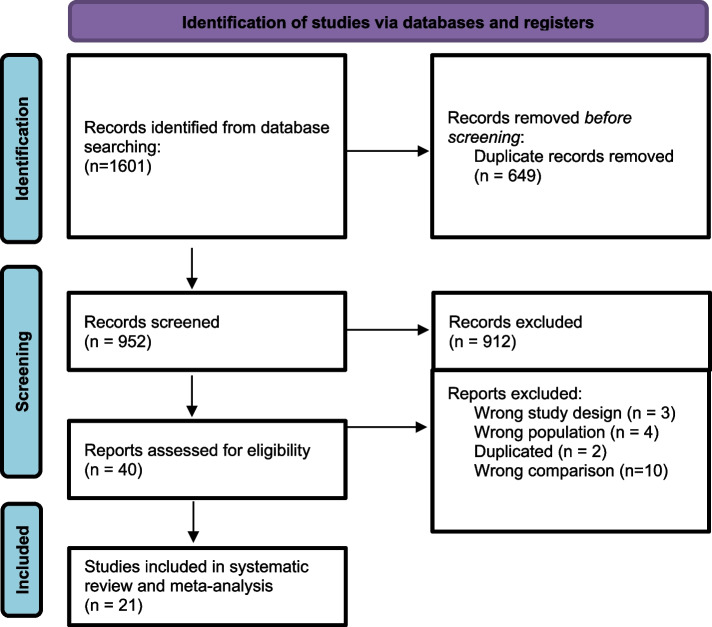
Background: The definition of minor ischemic stroke (MIS) is a topic of debate, however, the most accepted definition is a stroke with National Institutes of Health Stroke Scale (NIHSS) ≤ 5. Intravenous thrombolysis (IVT) is a crucial treatment option for acute ischemic stroke (AIS) including: alteplase, recombinant human tissue-type plasminogen activator (r-tPA), and the recently approved tenecteplase. However, there is a debate regarding its safety and efficacy. Therefore, our objective was to determine the safety and efficacy of IVT in treating minor stroke patients (NIHSS ≤ 5).
Methods: Using the search strategy assigned which was based on three keywords: "mild" or "minor", "stroke", and "intravenous thrombolysis", we searched for eligible articles on PubMed, Web of Science, Embase, and Scopus from inception till 10th January 2024. We conducted this meta-analysis using the random effect model to account for the heterogeneity among the studies. For the dichotomous variables, we calculated the odds ratio (OR) from the event and total of these variables. While for the continuous variables, we calculated the mean difference (MD) of these variables. Pooling of OR for the occurrence of events was also conducted.
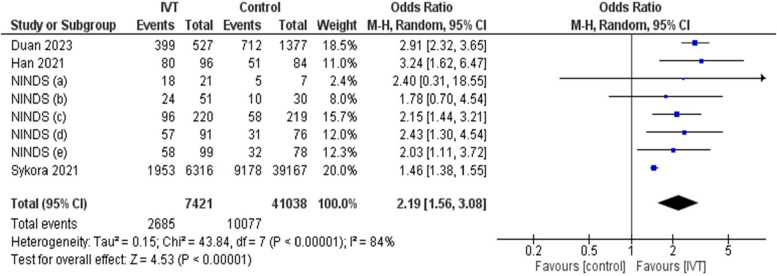
Results: A total of 21 articles with 93,057 patients with MIS were included. The mean age of the participants ranged from 62.3 to 79.6. Most of the included patients had comorbidities such as hypertension, diabetes, previous stroke, smoking, atrial fibrillation, and hyperlipidemia. Of these, 10,850 received IVT while 82,207 did not. The use of IVT was statistically significant associated with 90-day modified Rankin score (mRs) 0-1 when compared with control with OR of 1.67 (95%CI: 1.46, 1.91, p < 0.00001) and was statistically significantly associated with improvement of NIHSS on discharge with OR of 2.19 (95%CI: 1.56, 3.08, p < 0.00001). In terms of safety outcomes, IVT has proven a safe profile, as there was no significant difference in intracranial hemorrhage (ICH) and mortality rates between the IVT and control groups with OR of 1.75 (95CI: 0.95, 3.23, p = 0.07) and 0.93 (95%CI: 0.77, 1.11, p = 0.41), respectively.
Conclusion: Although some studies have not found any benefits of IVT in MIS patients, a substantial body of literature strongly endorses IVT as an effective and safe treatment for MIS. IVT has been shown to improve the mRs and NIHSS scores at the 90-day mark without an increased risk of ICH or mortality.
期刊介绍:
BMC Neurology is an open access, peer-reviewed journal that considers articles on all aspects of the prevention, diagnosis and management of neurological disorders, as well as related molecular genetics, pathophysiology, and epidemiology.





 京公网安备 11010802042870号
京ICP备2023020795号-1
京公网安备 11010802042870号
京ICP备2023020795号-1

 分享
分享
 求助内容:
求助内容: 应助结果提醒方式:
 扫码关注我们
