{"title":"废水中磷的生物和化学吸附和沉淀的新机遇。","authors":"Chris Pratt , Ana Soares","doi":"10.1016/j.copbio.2025.103261","DOIUrl":null,"url":null,"abstract":"<div><div>Biologically mediated adsorption and precipitation of phosphorus (P) from waste streams can restrict environmental P discharges. Here, we appraise progress in this field over the past decade. The research discipline has grown considerably in recent years. Industry ‘wastes’, including steel slags, continue to show promise as adsorbents with exceptionally high P retention capacities (>500 mg P g<sup>−1</sup>). Hydrotalcite, a nanomineral, offers prospects as a P removal technology with imbedded climate change mitigation capacity. Biomineral struvite formation, driven by microbial processes, offers an exciting P removal and recovery approach that can be applied to diverse wastewater types due to its feedstock-independent mechanisms, emerging immobilisation techniques and adaptability to mixed cultures. All of these factors facilitate efficient nutrient recycling and scalable application to the wastewater industry. Adsorbed and precipitated P can be applied to cropland to offset dependence on conventional fertiliser inputs. Therefore, in addition to water treatment, these biologically mediated processes also offer opportunities to support food production. Moreover, as many of the input materials covered in this review are industry byproducts and common organic materials, the removal of P from waste streams by adsorption and precipitation offers strong circularity potential that aligns with the UN’s Sustainable Development Goals. We call for future work to focus on long-term full-scale trials involving community, government and industry partners.</div></div>","PeriodicalId":10833,"journal":{"name":"Current opinion in biotechnology","volume":"92 ","pages":"Article 103261"},"PeriodicalIF":7.0000,"publicationDate":"2025-04-01","publicationTypes":"Journal Article","fieldsOfStudy":null,"isOpenAccess":false,"openAccessPdf":"","citationCount":"0","resultStr":"{\"title\":\"New opportunities for biologically and chemically mediated adsorption and precipitation of phosphorus from wastewater\",\"authors\":\"Chris Pratt , Ana Soares\",\"doi\":\"10.1016/j.copbio.2025.103261\",\"DOIUrl\":null,\"url\":null,\"abstract\":\"<div><div>Biologically mediated adsorption and precipitation of phosphorus (P) from waste streams can restrict environmental P discharges. Here, we appraise progress in this field over the past decade. The research discipline has grown considerably in recent years. Industry ‘wastes’, including steel slags, continue to show promise as adsorbents with exceptionally high P retention capacities (>500 mg P g<sup>−1</sup>). Hydrotalcite, a nanomineral, offers prospects as a P removal technology with imbedded climate change mitigation capacity. Biomineral struvite formation, driven by microbial processes, offers an exciting P removal and recovery approach that can be applied to diverse wastewater types due to its feedstock-independent mechanisms, emerging immobilisation techniques and adaptability to mixed cultures. All of these factors facilitate efficient nutrient recycling and scalable application to the wastewater industry. Adsorbed and precipitated P can be applied to cropland to offset dependence on conventional fertiliser inputs. Therefore, in addition to water treatment, these biologically mediated processes also offer opportunities to support food production. Moreover, as many of the input materials covered in this review are industry byproducts and common organic materials, the removal of P from waste streams by adsorption and precipitation offers strong circularity potential that aligns with the UN’s Sustainable Development Goals. We call for future work to focus on long-term full-scale trials involving community, government and industry partners.</div></div>\",\"PeriodicalId\":10833,\"journal\":{\"name\":\"Current opinion in biotechnology\",\"volume\":\"92 \",\"pages\":\"Article 103261\"},\"PeriodicalIF\":7.0000,\"publicationDate\":\"2025-04-01\",\"publicationTypes\":\"Journal Article\",\"fieldsOfStudy\":null,\"isOpenAccess\":false,\"openAccessPdf\":\"\",\"citationCount\":\"0\",\"resultStr\":null,\"platform\":\"Semanticscholar\",\"paperid\":null,\"PeriodicalName\":\"Current opinion in biotechnology\",\"FirstCategoryId\":\"5\",\"ListUrlMain\":\"https://www.sciencedirect.com/science/article/pii/S0958166925000059\",\"RegionNum\":2,\"RegionCategory\":\"工程技术\",\"ArticlePicture\":[],\"TitleCN\":null,\"AbstractTextCN\":null,\"PMCID\":null,\"EPubDate\":\"2025/1/22 0:00:00\",\"PubModel\":\"Epub\",\"JCR\":\"Q1\",\"JCRName\":\"BIOCHEMICAL RESEARCH METHODS\",\"Score\":null,\"Total\":0}","platform":"Semanticscholar","paperid":null,"PeriodicalName":"Current opinion in biotechnology","FirstCategoryId":"5","ListUrlMain":"https://www.sciencedirect.com/science/article/pii/S0958166925000059","RegionNum":2,"RegionCategory":"工程技术","ArticlePicture":[],"TitleCN":null,"AbstractTextCN":null,"PMCID":null,"EPubDate":"2025/1/22 0:00:00","PubModel":"Epub","JCR":"Q1","JCRName":"BIOCHEMICAL RESEARCH METHODS","Score":null,"Total":0}
引用次数: 0
摘要
废物流中磷的生物吸附和沉淀可以限制环境磷的排放。在此,我们评价过去十年来在这一领域取得的进展。这一研究学科近年来有了长足的发展。工业“废物”,包括钢渣,继续显示出作为吸附剂的希望,具有极高的磷保留能力(bbb500mg P -1)。水滑石是一种纳米矿物,作为一种具有内在减缓气候变化能力的除磷技术,具有广阔的前景。由微生物过程驱动的生物矿物鸟粪石形成提供了一种令人兴奋的P去除和回收方法,由于其不依赖于原料的机制,新兴的固定技术和混合培养的适应性,可以应用于各种废水类型。所有这些因素都有助于有效的养分回收和废水工业的可扩展应用。吸附和沉淀的磷可以施用于农田,以抵消对传统肥料投入的依赖。因此,除了水处理之外,这些生物介导的过程也为支持粮食生产提供了机会。此外,由于本综述中涉及的许多投入材料都是工业副产品和常见有机材料,因此通过吸附和沉淀从废物流中去除磷具有很强的循环潜力,这与联合国的可持续发展目标一致。我们呼吁未来的工作重点是涉及社区、政府和行业合作伙伴的长期全面试验。
New opportunities for biologically and chemically mediated adsorption and precipitation of phosphorus from wastewater
Biologically mediated adsorption and precipitation of phosphorus (P) from waste streams can restrict environmental P discharges. Here, we appraise progress in this field over the past decade. The research discipline has grown considerably in recent years. Industry ‘wastes’, including steel slags, continue to show promise as adsorbents with exceptionally high P retention capacities (>500 mg P g−1). Hydrotalcite, a nanomineral, offers prospects as a P removal technology with imbedded climate change mitigation capacity. Biomineral struvite formation, driven by microbial processes, offers an exciting P removal and recovery approach that can be applied to diverse wastewater types due to its feedstock-independent mechanisms, emerging immobilisation techniques and adaptability to mixed cultures. All of these factors facilitate efficient nutrient recycling and scalable application to the wastewater industry. Adsorbed and precipitated P can be applied to cropland to offset dependence on conventional fertiliser inputs. Therefore, in addition to water treatment, these biologically mediated processes also offer opportunities to support food production. Moreover, as many of the input materials covered in this review are industry byproducts and common organic materials, the removal of P from waste streams by adsorption and precipitation offers strong circularity potential that aligns with the UN’s Sustainable Development Goals. We call for future work to focus on long-term full-scale trials involving community, government and industry partners.
期刊介绍:
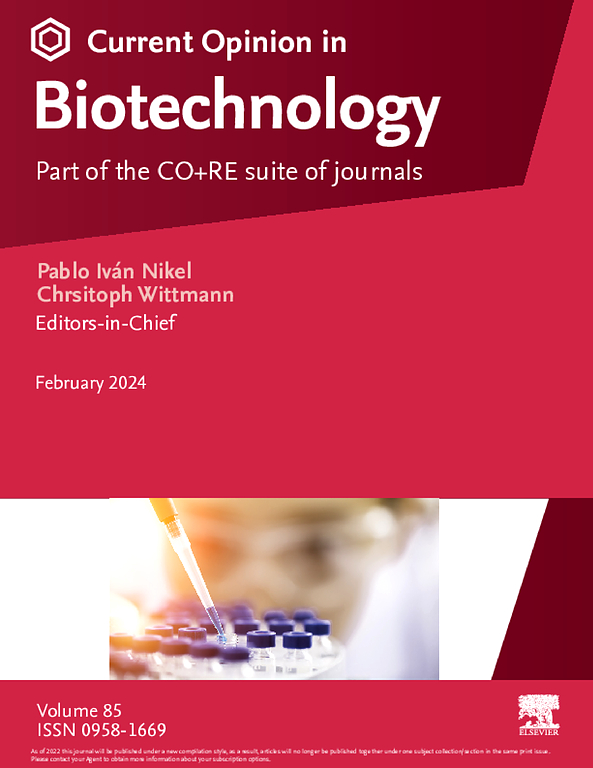
Current Opinion in Biotechnology (COBIOT) is renowned for publishing authoritative, comprehensive, and systematic reviews. By offering clear and readable syntheses of current advances in biotechnology, COBIOT assists specialists in staying updated on the latest developments in the field. Expert authors annotate the most noteworthy papers from the vast array of information available today, providing readers with valuable insights and saving them time.
As part of the Current Opinion and Research (CO+RE) suite of journals, COBIOT is accompanied by the open-access primary research journal, Current Research in Biotechnology (CRBIOT). Leveraging the editorial excellence, high impact, and global reach of the Current Opinion legacy, CO+RE journals ensure they are widely read resources integral to scientists' workflows.
COBIOT is organized into themed sections, each reviewed once a year. These themes cover various areas of biotechnology, including analytical biotechnology, plant biotechnology, food biotechnology, energy biotechnology, environmental biotechnology, systems biology, nanobiotechnology, tissue, cell, and pathway engineering, chemical biotechnology, and pharmaceutical biotechnology.




 京公网安备 11010802042870号
京ICP备2023020795号-1
京公网安备 11010802042870号
京ICP备2023020795号-1

 分享
分享
 求助内容:
求助内容: 应助结果提醒方式:
 扫码关注我们
