Julia G Halilova, Samuel Fynes-Clinton, Caitlin M Terao, Donna Rose Addis, R Shayna Rosenbaum
{"title":"延迟折扣预测COVID-19疫苗加强者的意愿。","authors":"Julia G Halilova, Samuel Fynes-Clinton, Caitlin M Terao, Donna Rose Addis, R Shayna Rosenbaum","doi":"10.1186/s41235-024-00609-y","DOIUrl":null,"url":null,"abstract":"<p><p>Developing ways to predict and encourage vaccine booster uptake are necessary for durable immunity responses. In a multi-nation sample, recruited in June-August 2021, we assessed delay discounting (one's tendency to choose smaller immediate rewards over larger future rewards), COVID-19 vaccination status, demographics, and distress level. Participants who reported being vaccinated were invited back one year later (n = 2547) to report their willingness to receive a booster dose, along with reasons for their decision. After controlling for demographic variables and distress level, a greater tendency to discount future rewards was associated with reduced willingness to receive a booster dose. Thematic coding revealed that the most common reason for booster willingness was protection against COVID-19, and for unwillingness was non-necessity. The results identify delay discounting as a behavioral predictor of booster willingness that may be used to inform tailored approaches to increase booster uptake (e.g., trust in science vs. vaccine mandates).</p>","PeriodicalId":46827,"journal":{"name":"Cognitive Research-Principles and Implications","volume":"10 1","pages":"1"},"PeriodicalIF":3.6000,"publicationDate":"2025-01-23","publicationTypes":"Journal Article","fieldsOfStudy":null,"isOpenAccess":false,"openAccessPdf":"https://www.ncbi.nlm.nih.gov/pmc/articles/PMC11757841/pdf/","citationCount":"0","resultStr":"{\"title\":\"Delay discounting predicts COVID-19 vaccine booster willingness.\",\"authors\":\"Julia G Halilova, Samuel Fynes-Clinton, Caitlin M Terao, Donna Rose Addis, R Shayna Rosenbaum\",\"doi\":\"10.1186/s41235-024-00609-y\",\"DOIUrl\":null,\"url\":null,\"abstract\":\"<p><p>Developing ways to predict and encourage vaccine booster uptake are necessary for durable immunity responses. In a multi-nation sample, recruited in June-August 2021, we assessed delay discounting (one's tendency to choose smaller immediate rewards over larger future rewards), COVID-19 vaccination status, demographics, and distress level. Participants who reported being vaccinated were invited back one year later (n = 2547) to report their willingness to receive a booster dose, along with reasons for their decision. After controlling for demographic variables and distress level, a greater tendency to discount future rewards was associated with reduced willingness to receive a booster dose. Thematic coding revealed that the most common reason for booster willingness was protection against COVID-19, and for unwillingness was non-necessity. The results identify delay discounting as a behavioral predictor of booster willingness that may be used to inform tailored approaches to increase booster uptake (e.g., trust in science vs. vaccine mandates).</p>\",\"PeriodicalId\":46827,\"journal\":{\"name\":\"Cognitive Research-Principles and Implications\",\"volume\":\"10 1\",\"pages\":\"1\"},\"PeriodicalIF\":3.6000,\"publicationDate\":\"2025-01-23\",\"publicationTypes\":\"Journal Article\",\"fieldsOfStudy\":null,\"isOpenAccess\":false,\"openAccessPdf\":\"https://www.ncbi.nlm.nih.gov/pmc/articles/PMC11757841/pdf/\",\"citationCount\":\"0\",\"resultStr\":null,\"platform\":\"Semanticscholar\",\"paperid\":null,\"PeriodicalName\":\"Cognitive Research-Principles and Implications\",\"FirstCategoryId\":\"102\",\"ListUrlMain\":\"https://doi.org/10.1186/s41235-024-00609-y\",\"RegionNum\":2,\"RegionCategory\":\"心理学\",\"ArticlePicture\":[],\"TitleCN\":null,\"AbstractTextCN\":null,\"PMCID\":null,\"EPubDate\":\"\",\"PubModel\":\"\",\"JCR\":\"Q1\",\"JCRName\":\"PSYCHOLOGY, EXPERIMENTAL\",\"Score\":null,\"Total\":0}","platform":"Semanticscholar","paperid":null,"PeriodicalName":"Cognitive Research-Principles and Implications","FirstCategoryId":"102","ListUrlMain":"https://doi.org/10.1186/s41235-024-00609-y","RegionNum":2,"RegionCategory":"心理学","ArticlePicture":[],"TitleCN":null,"AbstractTextCN":null,"PMCID":null,"EPubDate":"","PubModel":"","JCR":"Q1","JCRName":"PSYCHOLOGY, EXPERIMENTAL","Score":null,"Total":0}
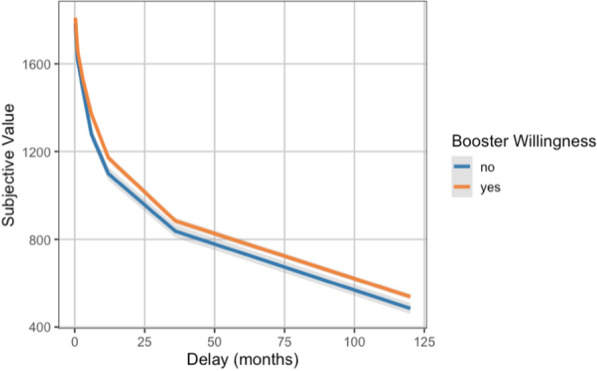
Developing ways to predict and encourage vaccine booster uptake are necessary for durable immunity responses. In a multi-nation sample, recruited in June-August 2021, we assessed delay discounting (one's tendency to choose smaller immediate rewards over larger future rewards), COVID-19 vaccination status, demographics, and distress level. Participants who reported being vaccinated were invited back one year later (n = 2547) to report their willingness to receive a booster dose, along with reasons for their decision. After controlling for demographic variables and distress level, a greater tendency to discount future rewards was associated with reduced willingness to receive a booster dose. Thematic coding revealed that the most common reason for booster willingness was protection against COVID-19, and for unwillingness was non-necessity. The results identify delay discounting as a behavioral predictor of booster willingness that may be used to inform tailored approaches to increase booster uptake (e.g., trust in science vs. vaccine mandates).




 京公网安备 11010802042870号
京ICP备2023020795号-1
京公网安备 11010802042870号
京ICP备2023020795号-1

 分享
分享
 求助内容:
求助内容: 应助结果提醒方式:
 扫码关注我们
