Adrian Lubecki , Jakub Szczurowski , Katarzyna Zarębska
{"title":"基于Beta-DQR方法的生命周期评估中的不确定性管理:电动交通自行车生产案例研究","authors":"Adrian Lubecki , Jakub Szczurowski , Katarzyna Zarębska","doi":"10.1016/j.jclepro.2025.144857","DOIUrl":null,"url":null,"abstract":"<div><div>LCA is challenged by uncertainties in both input data and LCA methodology, which must be addressed for reliable comparisons. This study introduces a novel Beta-DQR method, designed to robustly manage LCA uncertainties. The Beta-DQR method integrates the strenghts of the beta distribution and Data Quality Rating. The method starts with a contribution analysis to identify the most influential background data. It then calculates the quality of background data using a DQR rating system. The DQR values are transformed into beta distribution parameters, which are then used in Monte Carlo simulations. By conducting simulation runs, the method generates probabilistic results that account for data quality and variability using discrenibility analysis. An example of a comparative case study of bicycle and electric bicycle production was chosen to validate the Beta-DQR method. The case study topic was justified by the results of conducted social survey. The deterministic analysis indicated that the electric bicycle had a 13.51% higher carbon footprint than the standard bicycle. The Beta-DQR method revealed that the difference was not statistically significant when uncertainties were considered. This method also reduced the number of datasets requiring quality assessment from 22 to 5 for the standard bicycle and from 24 to 7 for the electric bicycle, thereby saving time while maintaining high reliability. The Beta-DQR method provides a better understanding of the LCA results, supporting environmental decision-making. It enhances LCA results reliability, offers a practical, time-efficient approach, and advances uncertainty management, particularly in comparative LCA of any complex systems.</div></div>","PeriodicalId":349,"journal":{"name":"Journal of Cleaner Production","volume":"492 ","pages":"Article 144857"},"PeriodicalIF":10.0000,"publicationDate":"2025-02-10","publicationTypes":"Journal Article","fieldsOfStudy":null,"isOpenAccess":false,"openAccessPdf":"","citationCount":"0","resultStr":"{\"title\":\"Uncertainty management in life cycle assessment using the Beta-DQR method: e-mobility case study on bicycles production\",\"authors\":\"Adrian Lubecki , Jakub Szczurowski , Katarzyna Zarębska\",\"doi\":\"10.1016/j.jclepro.2025.144857\",\"DOIUrl\":null,\"url\":null,\"abstract\":\"<div><div>LCA is challenged by uncertainties in both input data and LCA methodology, which must be addressed for reliable comparisons. This study introduces a novel Beta-DQR method, designed to robustly manage LCA uncertainties. The Beta-DQR method integrates the strenghts of the beta distribution and Data Quality Rating. The method starts with a contribution analysis to identify the most influential background data. It then calculates the quality of background data using a DQR rating system. The DQR values are transformed into beta distribution parameters, which are then used in Monte Carlo simulations. By conducting simulation runs, the method generates probabilistic results that account for data quality and variability using discrenibility analysis. An example of a comparative case study of bicycle and electric bicycle production was chosen to validate the Beta-DQR method. The case study topic was justified by the results of conducted social survey. The deterministic analysis indicated that the electric bicycle had a 13.51% higher carbon footprint than the standard bicycle. The Beta-DQR method revealed that the difference was not statistically significant when uncertainties were considered. This method also reduced the number of datasets requiring quality assessment from 22 to 5 for the standard bicycle and from 24 to 7 for the electric bicycle, thereby saving time while maintaining high reliability. The Beta-DQR method provides a better understanding of the LCA results, supporting environmental decision-making. It enhances LCA results reliability, offers a practical, time-efficient approach, and advances uncertainty management, particularly in comparative LCA of any complex systems.</div></div>\",\"PeriodicalId\":349,\"journal\":{\"name\":\"Journal of Cleaner Production\",\"volume\":\"492 \",\"pages\":\"Article 144857\"},\"PeriodicalIF\":10.0000,\"publicationDate\":\"2025-02-10\",\"publicationTypes\":\"Journal Article\",\"fieldsOfStudy\":null,\"isOpenAccess\":false,\"openAccessPdf\":\"\",\"citationCount\":\"0\",\"resultStr\":null,\"platform\":\"Semanticscholar\",\"paperid\":null,\"PeriodicalName\":\"Journal of Cleaner Production\",\"FirstCategoryId\":\"93\",\"ListUrlMain\":\"https://www.sciencedirect.com/science/article/pii/S0959652625002070\",\"RegionNum\":1,\"RegionCategory\":\"环境科学与生态学\",\"ArticlePicture\":[],\"TitleCN\":null,\"AbstractTextCN\":null,\"PMCID\":null,\"EPubDate\":\"2025/1/23 0:00:00\",\"PubModel\":\"Epub\",\"JCR\":\"Q1\",\"JCRName\":\"ENGINEERING, ENVIRONMENTAL\",\"Score\":null,\"Total\":0}","platform":"Semanticscholar","paperid":null,"PeriodicalName":"Journal of Cleaner Production","FirstCategoryId":"93","ListUrlMain":"https://www.sciencedirect.com/science/article/pii/S0959652625002070","RegionNum":1,"RegionCategory":"环境科学与生态学","ArticlePicture":[],"TitleCN":null,"AbstractTextCN":null,"PMCID":null,"EPubDate":"2025/1/23 0:00:00","PubModel":"Epub","JCR":"Q1","JCRName":"ENGINEERING, ENVIRONMENTAL","Score":null,"Total":0}
Uncertainty management in life cycle assessment using the Beta-DQR method: e-mobility case study on bicycles production
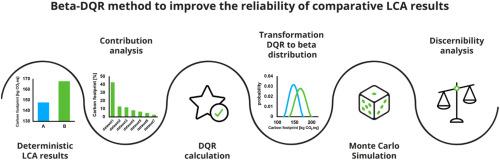
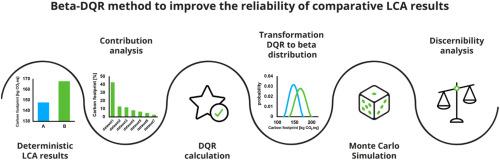
LCA is challenged by uncertainties in both input data and LCA methodology, which must be addressed for reliable comparisons. This study introduces a novel Beta-DQR method, designed to robustly manage LCA uncertainties. The Beta-DQR method integrates the strenghts of the beta distribution and Data Quality Rating. The method starts with a contribution analysis to identify the most influential background data. It then calculates the quality of background data using a DQR rating system. The DQR values are transformed into beta distribution parameters, which are then used in Monte Carlo simulations. By conducting simulation runs, the method generates probabilistic results that account for data quality and variability using discrenibility analysis. An example of a comparative case study of bicycle and electric bicycle production was chosen to validate the Beta-DQR method. The case study topic was justified by the results of conducted social survey. The deterministic analysis indicated that the electric bicycle had a 13.51% higher carbon footprint than the standard bicycle. The Beta-DQR method revealed that the difference was not statistically significant when uncertainties were considered. This method also reduced the number of datasets requiring quality assessment from 22 to 5 for the standard bicycle and from 24 to 7 for the electric bicycle, thereby saving time while maintaining high reliability. The Beta-DQR method provides a better understanding of the LCA results, supporting environmental decision-making. It enhances LCA results reliability, offers a practical, time-efficient approach, and advances uncertainty management, particularly in comparative LCA of any complex systems.
期刊介绍:
The Journal of Cleaner Production is an international, transdisciplinary journal that addresses and discusses theoretical and practical Cleaner Production, Environmental, and Sustainability issues. It aims to help societies become more sustainable by focusing on the concept of 'Cleaner Production', which aims at preventing waste production and increasing efficiencies in energy, water, resources, and human capital use. The journal serves as a platform for corporations, governments, education institutions, regions, and societies to engage in discussions and research related to Cleaner Production, environmental, and sustainability practices.




 京公网安备 11010802042870号
京ICP备2023020795号-1
京公网安备 11010802042870号
京ICP备2023020795号-1

 分享
分享
 求助内容:
求助内容: 应助结果提醒方式:
 扫码关注我们
