Yingjie Li, Meng Wang, Qian Li, Lei Zhang, Bo Sun, Yubo Qin, Yuhan Yuan, Cuilan Li, Jinjing Zhang, Hang Liu
{"title":"生物可降解膜滴灌比塑料膜滴灌更有利于降低耐药基因的多样性和丰度","authors":"Yingjie Li, Meng Wang, Qian Li, Lei Zhang, Bo Sun, Yubo Qin, Yuhan Yuan, Cuilan Li, Jinjing Zhang, Hang Liu","doi":"10.1007/s11104-025-07212-0","DOIUrl":null,"url":null,"abstract":"<h3 data-test=\"abstract-sub-heading\">Background and aims</h3><p>Mulching drip fertigation can effectively increases crop yields. However, with the insufficient recycling rate of mulch films and the continuous accumulation of film residues in the soil, mulch film residues and antibiotic resistance genes (ARGs) coexist in farmland. The impact of biodegradable mulch films on the reduction of soil ARGs remains uncertain.</p><h3 data-test=\"abstract-sub-heading\">Methods</h3><p>This study employed high-throughput sequencing and high-throughput quantitative PCR (HT-qPCR) to examine the effects of three drip fertigation systems (drip fertigation without film (DI), drip fertigation with biodegradable film (DF), and drip fertigation with plastic film (PF) on bacteria and ARGs in farmland soils.</p><h3 data-test=\"abstract-sub-heading\">Results</h3><p>The results indicated that compared with DI, mulched drip irrigation significantly reduced bacterial abundance and diversity (DI > DF > PF) but increased the abundance of ARGs and mobile genetic elements (MGEs) (PF > DF > DI). The ARG network structure in PF was more complex compared to DI and DF, whereas in DF, the ARG network structure was more stable compared to DI and PF. The abundance of MGEs directly influenced the abundance of ARGs, and the MGEs abundance was directly affected by the bacterial Shannon index, which also indirectly affected ARG abundance. Special attention was given to the impact of drip irrigation with different mulch films on ARG dissemination, emphasizing that biodegradable mulch films effectively reduce ecological risks compared to traditional plastic films.</p><h3 data-test=\"abstract-sub-heading\">Conclusions</h3><p>In summary, although DF showed higher bacterial diversity than PF, it also reduced both the diversity and abundance of ARGs, thereby further decreasing soil ARG levels. This study provides new perspectives and scientific evidence for understanding the environmental dissemination mechanisms of ARGs and offers actionable recommendations for sustainable agricultural management, such as reducing mulch residue pollution and optimizing drip fertigation practices.</p><h3 data-test=\"abstract-sub-heading\">Graphical Abstract</h3>\n","PeriodicalId":20223,"journal":{"name":"Plant and Soil","volume":"109 1","pages":""},"PeriodicalIF":4.1000,"publicationDate":"2025-01-24","publicationTypes":"Journal Article","fieldsOfStudy":null,"isOpenAccess":false,"openAccessPdf":"","citationCount":"0","resultStr":"{\"title\":\"Biodegradable film drip fertigation is more conducive to reducing the diversity and abundance of antibiotic resistance genes than plastic film drip fertigation\",\"authors\":\"Yingjie Li, Meng Wang, Qian Li, Lei Zhang, Bo Sun, Yubo Qin, Yuhan Yuan, Cuilan Li, Jinjing Zhang, Hang Liu\",\"doi\":\"10.1007/s11104-025-07212-0\",\"DOIUrl\":null,\"url\":null,\"abstract\":\"<h3 data-test=\\\"abstract-sub-heading\\\">Background and aims</h3><p>Mulching drip fertigation can effectively increases crop yields. However, with the insufficient recycling rate of mulch films and the continuous accumulation of film residues in the soil, mulch film residues and antibiotic resistance genes (ARGs) coexist in farmland. The impact of biodegradable mulch films on the reduction of soil ARGs remains uncertain.</p><h3 data-test=\\\"abstract-sub-heading\\\">Methods</h3><p>This study employed high-throughput sequencing and high-throughput quantitative PCR (HT-qPCR) to examine the effects of three drip fertigation systems (drip fertigation without film (DI), drip fertigation with biodegradable film (DF), and drip fertigation with plastic film (PF) on bacteria and ARGs in farmland soils.</p><h3 data-test=\\\"abstract-sub-heading\\\">Results</h3><p>The results indicated that compared with DI, mulched drip irrigation significantly reduced bacterial abundance and diversity (DI > DF > PF) but increased the abundance of ARGs and mobile genetic elements (MGEs) (PF > DF > DI). The ARG network structure in PF was more complex compared to DI and DF, whereas in DF, the ARG network structure was more stable compared to DI and PF. The abundance of MGEs directly influenced the abundance of ARGs, and the MGEs abundance was directly affected by the bacterial Shannon index, which also indirectly affected ARG abundance. Special attention was given to the impact of drip irrigation with different mulch films on ARG dissemination, emphasizing that biodegradable mulch films effectively reduce ecological risks compared to traditional plastic films.</p><h3 data-test=\\\"abstract-sub-heading\\\">Conclusions</h3><p>In summary, although DF showed higher bacterial diversity than PF, it also reduced both the diversity and abundance of ARGs, thereby further decreasing soil ARG levels. This study provides new perspectives and scientific evidence for understanding the environmental dissemination mechanisms of ARGs and offers actionable recommendations for sustainable agricultural management, such as reducing mulch residue pollution and optimizing drip fertigation practices.</p><h3 data-test=\\\"abstract-sub-heading\\\">Graphical Abstract</h3>\\n\",\"PeriodicalId\":20223,\"journal\":{\"name\":\"Plant and Soil\",\"volume\":\"109 1\",\"pages\":\"\"},\"PeriodicalIF\":4.1000,\"publicationDate\":\"2025-01-24\",\"publicationTypes\":\"Journal Article\",\"fieldsOfStudy\":null,\"isOpenAccess\":false,\"openAccessPdf\":\"\",\"citationCount\":\"0\",\"resultStr\":null,\"platform\":\"Semanticscholar\",\"paperid\":null,\"PeriodicalName\":\"Plant and Soil\",\"FirstCategoryId\":\"97\",\"ListUrlMain\":\"https://doi.org/10.1007/s11104-025-07212-0\",\"RegionNum\":2,\"RegionCategory\":\"农林科学\",\"ArticlePicture\":[],\"TitleCN\":null,\"AbstractTextCN\":null,\"PMCID\":null,\"EPubDate\":\"\",\"PubModel\":\"\",\"JCR\":\"Q1\",\"JCRName\":\"AGRONOMY\",\"Score\":null,\"Total\":0}","platform":"Semanticscholar","paperid":null,"PeriodicalName":"Plant and Soil","FirstCategoryId":"97","ListUrlMain":"https://doi.org/10.1007/s11104-025-07212-0","RegionNum":2,"RegionCategory":"农林科学","ArticlePicture":[],"TitleCN":null,"AbstractTextCN":null,"PMCID":null,"EPubDate":"","PubModel":"","JCR":"Q1","JCRName":"AGRONOMY","Score":null,"Total":0}
Biodegradable film drip fertigation is more conducive to reducing the diversity and abundance of antibiotic resistance genes than plastic film drip fertigation
Background and aims
Mulching drip fertigation can effectively increases crop yields. However, with the insufficient recycling rate of mulch films and the continuous accumulation of film residues in the soil, mulch film residues and antibiotic resistance genes (ARGs) coexist in farmland. The impact of biodegradable mulch films on the reduction of soil ARGs remains uncertain.
Methods
This study employed high-throughput sequencing and high-throughput quantitative PCR (HT-qPCR) to examine the effects of three drip fertigation systems (drip fertigation without film (DI), drip fertigation with biodegradable film (DF), and drip fertigation with plastic film (PF) on bacteria and ARGs in farmland soils.
Results
The results indicated that compared with DI, mulched drip irrigation significantly reduced bacterial abundance and diversity (DI > DF > PF) but increased the abundance of ARGs and mobile genetic elements (MGEs) (PF > DF > DI). The ARG network structure in PF was more complex compared to DI and DF, whereas in DF, the ARG network structure was more stable compared to DI and PF. The abundance of MGEs directly influenced the abundance of ARGs, and the MGEs abundance was directly affected by the bacterial Shannon index, which also indirectly affected ARG abundance. Special attention was given to the impact of drip irrigation with different mulch films on ARG dissemination, emphasizing that biodegradable mulch films effectively reduce ecological risks compared to traditional plastic films.
Conclusions
In summary, although DF showed higher bacterial diversity than PF, it also reduced both the diversity and abundance of ARGs, thereby further decreasing soil ARG levels. This study provides new perspectives and scientific evidence for understanding the environmental dissemination mechanisms of ARGs and offers actionable recommendations for sustainable agricultural management, such as reducing mulch residue pollution and optimizing drip fertigation practices.
期刊介绍:
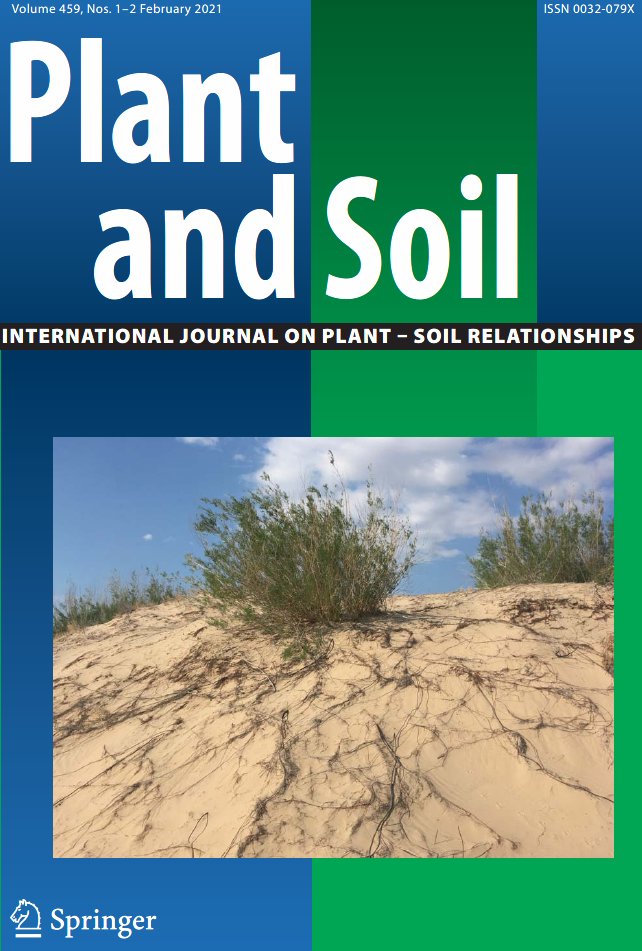
Plant and Soil publishes original papers and review articles exploring the interface of plant biology and soil sciences, and that enhance our mechanistic understanding of plant-soil interactions. We focus on the interface of plant biology and soil sciences, and seek those manuscripts with a strong mechanistic component which develop and test hypotheses aimed at understanding underlying mechanisms of plant-soil interactions. Manuscripts can include both fundamental and applied aspects of mineral nutrition, plant water relations, symbiotic and pathogenic plant-microbe interactions, root anatomy and morphology, soil biology, ecology, agrochemistry and agrophysics, as long as they are hypothesis-driven and enhance our mechanistic understanding. Articles including a major molecular or modelling component also fall within the scope of the journal. All contributions appear in the English language, with consistent spelling, using either American or British English.




 京公网安备 11010802042870号
京ICP备2023020795号-1
京公网安备 11010802042870号
京ICP备2023020795号-1

 分享
分享
 求助内容:
求助内容: 应助结果提醒方式:
 扫码关注我们
