{"title":"基于ml的牙齿色度评估预防不同临床光照下的异色。","authors":"Abdullah Ammar Karcioglu, Esra Efitli, Emrah Simsek, Alper Ozdogan, Furkan Karatas, Tuba Senocak","doi":"10.1007/s10103-025-04297-y","DOIUrl":null,"url":null,"abstract":"<p><p>The aesthetic understanding has found its place in dental clinics and prosthetic dental treatment. Determining the appropriate prosthetic tooth color between the clinician, patient and technician is a difficult process due to metamerism. Metamerism, known as the different perception of the color of an object under different light sources, is caused by the lighting differences between the laboratory and the dental clinic. The traditional trial-error color determination method, coupled with the high cost of instrumental color value determination, has prompted the need for alternative technologies. The integration of AI technologies into dental practices aims to minimize errors in tooth shade assessment, reduce equipment usage, eliminate the impact of clinic lighting on color detection, and decrease costs for patients, dentists, and laboratories. In this study, a machine learning (ML) based approach that can correctly detect tooth shade even under different clinical lights has been developed. A dataset consisting of 580 dental images taken under four different clinical lights and with five repetitions was created using the Vita color shade guide. Experimental studies were performed using the HSV color space, 6 different ML algorithms and color histograms. As a result, 97.93% accuracy rate was achieved by using cross-validation (cv = 5) in the classification of 29 color values independent of clinical lights. It has been shown that the tooth colors can be determined with high accuracy using ML algorithms and metamerism can be prevented.</p>","PeriodicalId":17978,"journal":{"name":"Lasers in Medical Science","volume":"40 1","pages":"39"},"PeriodicalIF":2.4000,"publicationDate":"2025-01-24","publicationTypes":"Journal Article","fieldsOfStudy":null,"isOpenAccess":false,"openAccessPdf":"https://www.ncbi.nlm.nih.gov/pmc/articles/PMC11757855/pdf/","citationCount":"0","resultStr":"{\"title\":\"ML-based tooth shade assessment to prevent metamerism in different clinic lights.\",\"authors\":\"Abdullah Ammar Karcioglu, Esra Efitli, Emrah Simsek, Alper Ozdogan, Furkan Karatas, Tuba Senocak\",\"doi\":\"10.1007/s10103-025-04297-y\",\"DOIUrl\":null,\"url\":null,\"abstract\":\"<p><p>The aesthetic understanding has found its place in dental clinics and prosthetic dental treatment. Determining the appropriate prosthetic tooth color between the clinician, patient and technician is a difficult process due to metamerism. Metamerism, known as the different perception of the color of an object under different light sources, is caused by the lighting differences between the laboratory and the dental clinic. The traditional trial-error color determination method, coupled with the high cost of instrumental color value determination, has prompted the need for alternative technologies. The integration of AI technologies into dental practices aims to minimize errors in tooth shade assessment, reduce equipment usage, eliminate the impact of clinic lighting on color detection, and decrease costs for patients, dentists, and laboratories. In this study, a machine learning (ML) based approach that can correctly detect tooth shade even under different clinical lights has been developed. A dataset consisting of 580 dental images taken under four different clinical lights and with five repetitions was created using the Vita color shade guide. Experimental studies were performed using the HSV color space, 6 different ML algorithms and color histograms. As a result, 97.93% accuracy rate was achieved by using cross-validation (cv = 5) in the classification of 29 color values independent of clinical lights. It has been shown that the tooth colors can be determined with high accuracy using ML algorithms and metamerism can be prevented.</p>\",\"PeriodicalId\":17978,\"journal\":{\"name\":\"Lasers in Medical Science\",\"volume\":\"40 1\",\"pages\":\"39\"},\"PeriodicalIF\":2.4000,\"publicationDate\":\"2025-01-24\",\"publicationTypes\":\"Journal Article\",\"fieldsOfStudy\":null,\"isOpenAccess\":false,\"openAccessPdf\":\"https://www.ncbi.nlm.nih.gov/pmc/articles/PMC11757855/pdf/\",\"citationCount\":\"0\",\"resultStr\":null,\"platform\":\"Semanticscholar\",\"paperid\":null,\"PeriodicalName\":\"Lasers in Medical Science\",\"FirstCategoryId\":\"5\",\"ListUrlMain\":\"https://doi.org/10.1007/s10103-025-04297-y\",\"RegionNum\":4,\"RegionCategory\":\"医学\",\"ArticlePicture\":[],\"TitleCN\":null,\"AbstractTextCN\":null,\"PMCID\":null,\"EPubDate\":\"\",\"PubModel\":\"\",\"JCR\":\"Q3\",\"JCRName\":\"ENGINEERING, BIOMEDICAL\",\"Score\":null,\"Total\":0}","platform":"Semanticscholar","paperid":null,"PeriodicalName":"Lasers in Medical Science","FirstCategoryId":"5","ListUrlMain":"https://doi.org/10.1007/s10103-025-04297-y","RegionNum":4,"RegionCategory":"医学","ArticlePicture":[],"TitleCN":null,"AbstractTextCN":null,"PMCID":null,"EPubDate":"","PubModel":"","JCR":"Q3","JCRName":"ENGINEERING, BIOMEDICAL","Score":null,"Total":0}
ML-based tooth shade assessment to prevent metamerism in different clinic lights.
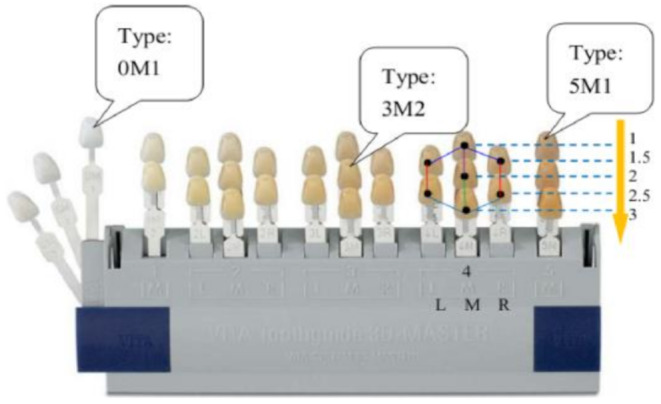
The aesthetic understanding has found its place in dental clinics and prosthetic dental treatment. Determining the appropriate prosthetic tooth color between the clinician, patient and technician is a difficult process due to metamerism. Metamerism, known as the different perception of the color of an object under different light sources, is caused by the lighting differences between the laboratory and the dental clinic. The traditional trial-error color determination method, coupled with the high cost of instrumental color value determination, has prompted the need for alternative technologies. The integration of AI technologies into dental practices aims to minimize errors in tooth shade assessment, reduce equipment usage, eliminate the impact of clinic lighting on color detection, and decrease costs for patients, dentists, and laboratories. In this study, a machine learning (ML) based approach that can correctly detect tooth shade even under different clinical lights has been developed. A dataset consisting of 580 dental images taken under four different clinical lights and with five repetitions was created using the Vita color shade guide. Experimental studies were performed using the HSV color space, 6 different ML algorithms and color histograms. As a result, 97.93% accuracy rate was achieved by using cross-validation (cv = 5) in the classification of 29 color values independent of clinical lights. It has been shown that the tooth colors can be determined with high accuracy using ML algorithms and metamerism can be prevented.
期刊介绍:
Lasers in Medical Science (LIMS) has established itself as the leading international journal in the rapidly expanding field of medical and dental applications of lasers and light. It provides a forum for the publication of papers on the technical, experimental, and clinical aspects of the use of medical lasers, including lasers in surgery, endoscopy, angioplasty, hyperthermia of tumors, and photodynamic therapy. In addition to medical laser applications, LIMS presents high-quality manuscripts on a wide range of dental topics, including aesthetic dentistry, endodontics, orthodontics, and prosthodontics.
The journal publishes articles on the medical and dental applications of novel laser technologies, light delivery systems, sensors to monitor laser effects, basic laser-tissue interactions, and the modeling of laser-tissue interactions. Beyond laser applications, LIMS features articles relating to the use of non-laser light-tissue interactions.






 京公网安备 11010802042870号
京ICP备2023020795号-1
京公网安备 11010802042870号
京ICP备2023020795号-1

 分享
分享
 求助内容:
求助内容: 应助结果提醒方式:
 扫码关注我们
