{"title":"心理资本与运动员职业倦怠的关系:应对策略的中介关系和感知压力的调节关系。","authors":"Xiaomei Yu, Suxuan Xing, Yang Yang","doi":"10.1186/s40359-025-02379-8","DOIUrl":null,"url":null,"abstract":"<p><strong>Background: </strong>Athlete burnout represents a critical concern in sports psychology, significantly affecting athletes' well-being and performance. This study examined the relationships among psychological capital, coping strategies, perceived stress, and athlete burnout.</p><p><strong>Methods: </strong>A cross-sectional survey was conducted among 344 athletes, and data were analyzed using SPSS Statistics 25.0 and PROCESS Macro v4.1 for hierarchical stepwise regression and moderated mediation analysis. Control variables included age, gender, sport type, and competitive experience.</p><p><strong>Results: </strong>The results revealed that psychological capital negatively associated with burnout both directly ( <math><mi>β</mi></math> = -0.539, p < 0.01) and indirectly (a*b = -0.803, p < 0.01) through coping strategies. Furthermore, perceived stress influenced both the relationship between psychological capital and coping strategies and the indirect effect of psychological capital on burnout via coping strategies. Notably, under high-stress conditions, the negative association of psychological capital was more pronounced, with a more substantial indirect effect compared to low-stress conditions ( <math><mi>β</mi></math> = -1.020, p < .01 vs. <math><mi>β</mi></math> = -0.299, p < .01).</p><p><strong>Conclusions: </strong>These findings underscore the importance of cultivating psychological resources and adaptive coping mechanisms to mitigate burnout, offering valuable insights for targeted interventions aimed at enhancing the well-being of athletes, particularly those experiencing elevated stress levels.</p>","PeriodicalId":37867,"journal":{"name":"BMC Psychology","volume":"13 1","pages":"64"},"PeriodicalIF":3.0000,"publicationDate":"2025-01-23","publicationTypes":"Journal Article","fieldsOfStudy":null,"isOpenAccess":false,"openAccessPdf":"https://www.ncbi.nlm.nih.gov/pmc/articles/PMC11756217/pdf/","citationCount":"0","resultStr":"{\"title\":\"The relationship between psychological capital and athlete burnout: the mediating relationship of coping strategies and the moderating relationship of perceived stress.\",\"authors\":\"Xiaomei Yu, Suxuan Xing, Yang Yang\",\"doi\":\"10.1186/s40359-025-02379-8\",\"DOIUrl\":null,\"url\":null,\"abstract\":\"<p><strong>Background: </strong>Athlete burnout represents a critical concern in sports psychology, significantly affecting athletes' well-being and performance. This study examined the relationships among psychological capital, coping strategies, perceived stress, and athlete burnout.</p><p><strong>Methods: </strong>A cross-sectional survey was conducted among 344 athletes, and data were analyzed using SPSS Statistics 25.0 and PROCESS Macro v4.1 for hierarchical stepwise regression and moderated mediation analysis. Control variables included age, gender, sport type, and competitive experience.</p><p><strong>Results: </strong>The results revealed that psychological capital negatively associated with burnout both directly ( <math><mi>β</mi></math> = -0.539, p < 0.01) and indirectly (a*b = -0.803, p < 0.01) through coping strategies. Furthermore, perceived stress influenced both the relationship between psychological capital and coping strategies and the indirect effect of psychological capital on burnout via coping strategies. Notably, under high-stress conditions, the negative association of psychological capital was more pronounced, with a more substantial indirect effect compared to low-stress conditions ( <math><mi>β</mi></math> = -1.020, p < .01 vs. <math><mi>β</mi></math> = -0.299, p < .01).</p><p><strong>Conclusions: </strong>These findings underscore the importance of cultivating psychological resources and adaptive coping mechanisms to mitigate burnout, offering valuable insights for targeted interventions aimed at enhancing the well-being of athletes, particularly those experiencing elevated stress levels.</p>\",\"PeriodicalId\":37867,\"journal\":{\"name\":\"BMC Psychology\",\"volume\":\"13 1\",\"pages\":\"64\"},\"PeriodicalIF\":3.0000,\"publicationDate\":\"2025-01-23\",\"publicationTypes\":\"Journal Article\",\"fieldsOfStudy\":null,\"isOpenAccess\":false,\"openAccessPdf\":\"https://www.ncbi.nlm.nih.gov/pmc/articles/PMC11756217/pdf/\",\"citationCount\":\"0\",\"resultStr\":null,\"platform\":\"Semanticscholar\",\"paperid\":null,\"PeriodicalName\":\"BMC Psychology\",\"FirstCategoryId\":\"102\",\"ListUrlMain\":\"https://doi.org/10.1186/s40359-025-02379-8\",\"RegionNum\":3,\"RegionCategory\":\"心理学\",\"ArticlePicture\":[],\"TitleCN\":null,\"AbstractTextCN\":null,\"PMCID\":null,\"EPubDate\":\"\",\"PubModel\":\"\",\"JCR\":\"Q1\",\"JCRName\":\"PSYCHOLOGY, MULTIDISCIPLINARY\",\"Score\":null,\"Total\":0}","platform":"Semanticscholar","paperid":null,"PeriodicalName":"BMC Psychology","FirstCategoryId":"102","ListUrlMain":"https://doi.org/10.1186/s40359-025-02379-8","RegionNum":3,"RegionCategory":"心理学","ArticlePicture":[],"TitleCN":null,"AbstractTextCN":null,"PMCID":null,"EPubDate":"","PubModel":"","JCR":"Q1","JCRName":"PSYCHOLOGY, MULTIDISCIPLINARY","Score":null,"Total":0}
引用次数: 0
摘要
背景:运动员倦怠是运动心理学中一个重要的问题,它显著影响运动员的健康和表现。本研究探讨了心理资本、应对策略、感知压力与运动员职业倦怠的关系。方法:对344名运动员进行横断面调查,采用SPSS Statistics 25.0和PROCESS Macro v4.1对数据进行分层逐步回归和有调节的中介分析。控制变量包括年龄、性别、运动类型和竞技经验。结果:心理资本通过应对策略与职业倦怠存在直接负相关(β = -0.539, p < 0.01)和间接负相关(a*b = -0.803, p < 0.01)。感知压力既影响心理资本与应对策略的关系,又通过应对策略间接影响心理资本对职业倦怠的影响。值得注意的是,与低压力条件相比,高压力条件下心理资本的负相关更为显著,间接影响更为显著(β = -1.020, p < 0.01 vs. β = -0.299, p < 0.01)。结论:这些发现强调了培养心理资源和适应性应对机制以减轻倦怠的重要性,为有针对性的干预措施提供了有价值的见解,旨在提高运动员的幸福感,特别是那些经历高压力水平的运动员。
The relationship between psychological capital and athlete burnout: the mediating relationship of coping strategies and the moderating relationship of perceived stress.
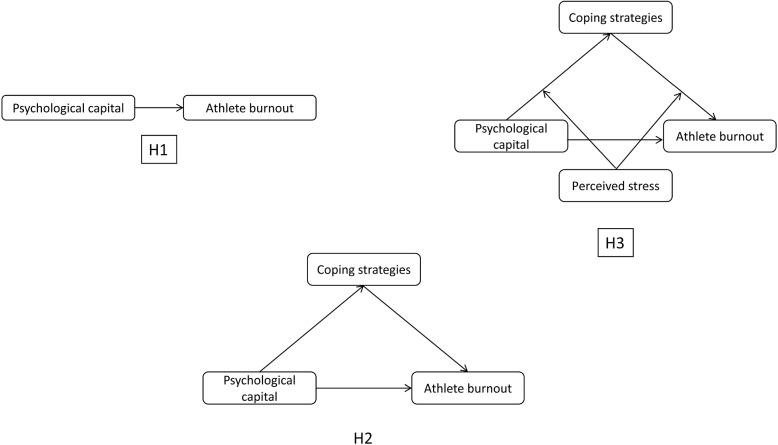
Background: Athlete burnout represents a critical concern in sports psychology, significantly affecting athletes' well-being and performance. This study examined the relationships among psychological capital, coping strategies, perceived stress, and athlete burnout.
Methods: A cross-sectional survey was conducted among 344 athletes, and data were analyzed using SPSS Statistics 25.0 and PROCESS Macro v4.1 for hierarchical stepwise regression and moderated mediation analysis. Control variables included age, gender, sport type, and competitive experience.
Results: The results revealed that psychological capital negatively associated with burnout both directly ( = -0.539, p < 0.01) and indirectly (a*b = -0.803, p < 0.01) through coping strategies. Furthermore, perceived stress influenced both the relationship between psychological capital and coping strategies and the indirect effect of psychological capital on burnout via coping strategies. Notably, under high-stress conditions, the negative association of psychological capital was more pronounced, with a more substantial indirect effect compared to low-stress conditions ( = -1.020, p < .01 vs. = -0.299, p < .01).
Conclusions: These findings underscore the importance of cultivating psychological resources and adaptive coping mechanisms to mitigate burnout, offering valuable insights for targeted interventions aimed at enhancing the well-being of athletes, particularly those experiencing elevated stress levels.
期刊介绍:
BMC Psychology is an open access, peer-reviewed journal that considers manuscripts on all aspects of psychology, human behavior and the mind, including developmental, clinical, cognitive, experimental, health and social psychology, as well as personality and individual differences. The journal welcomes quantitative and qualitative research methods, including animal studies.






 京公网安备 11010802042870号
京ICP备2023020795号-1
京公网安备 11010802042870号
京ICP备2023020795号-1

 分享
分享
 求助内容:
求助内容: 应助结果提醒方式:
 扫码关注我们
