Qian Lin , Wenqing Zhao , Wei Liang , Jie Zeng , Haiyan Gao , Wenhao Li
{"title":"戊二酸酐酯化促进小麦淀粉/麸蛋白复合凝胶相互作用:形成、表征和油凝胶应用。","authors":"Qian Lin , Wenqing Zhao , Wei Liang , Jie Zeng , Haiyan Gao , Wenhao Li","doi":"10.1016/j.foodres.2024.115562","DOIUrl":null,"url":null,"abstract":"<div><div>This study constructed a composite system with different ratios (100:0, 95:5, 90:10, and 80:20) of glutein compounded with various esterified starch (3 % and 6 %). The results demonstrated that the esterification process enhanced the viscosity of the starch gel system. Furthermore, the optimal esterification level (3 %) facilitated the formation of a dense composite gel network, as observed through microstructure observation. Conversely, elevated esterification levels (6 %) resulted in reduced gel system ordering, a loss of crystal structure, and a decline in thermal stability (ΔH reduction). The introduction of glutein promotes interactions within systems, conferring a more continuous structure and positively improving the gel’s oil adsorption capacity. NMR images and oil–water distribution curves can verify the ameliorative effect. However, an excessive protein ratio (≥10 %) leads to a double decrease in adsorption performance and rheological properties. This porous and lipophilic gel network structure can provide insights for designing solid fats for food products and developing adsorbent templates for chemical industries.</div></div>","PeriodicalId":323,"journal":{"name":"Food Research International","volume":"201 ","pages":"Article 115562"},"PeriodicalIF":8.0000,"publicationDate":"2025-02-01","publicationTypes":"Journal Article","fieldsOfStudy":null,"isOpenAccess":false,"openAccessPdf":"","citationCount":"0","resultStr":"{\"title\":\"Glutaric anhydride esterification promotes wheat starch/glutein composite gel interaction: Formation, characterization, and oleogel applications\",\"authors\":\"Qian Lin , Wenqing Zhao , Wei Liang , Jie Zeng , Haiyan Gao , Wenhao Li\",\"doi\":\"10.1016/j.foodres.2024.115562\",\"DOIUrl\":null,\"url\":null,\"abstract\":\"<div><div>This study constructed a composite system with different ratios (100:0, 95:5, 90:10, and 80:20) of glutein compounded with various esterified starch (3 % and 6 %). The results demonstrated that the esterification process enhanced the viscosity of the starch gel system. Furthermore, the optimal esterification level (3 %) facilitated the formation of a dense composite gel network, as observed through microstructure observation. Conversely, elevated esterification levels (6 %) resulted in reduced gel system ordering, a loss of crystal structure, and a decline in thermal stability (ΔH reduction). The introduction of glutein promotes interactions within systems, conferring a more continuous structure and positively improving the gel’s oil adsorption capacity. NMR images and oil–water distribution curves can verify the ameliorative effect. However, an excessive protein ratio (≥10 %) leads to a double decrease in adsorption performance and rheological properties. This porous and lipophilic gel network structure can provide insights for designing solid fats for food products and developing adsorbent templates for chemical industries.</div></div>\",\"PeriodicalId\":323,\"journal\":{\"name\":\"Food Research International\",\"volume\":\"201 \",\"pages\":\"Article 115562\"},\"PeriodicalIF\":8.0000,\"publicationDate\":\"2025-02-01\",\"publicationTypes\":\"Journal Article\",\"fieldsOfStudy\":null,\"isOpenAccess\":false,\"openAccessPdf\":\"\",\"citationCount\":\"0\",\"resultStr\":null,\"platform\":\"Semanticscholar\",\"paperid\":null,\"PeriodicalName\":\"Food Research International\",\"FirstCategoryId\":\"97\",\"ListUrlMain\":\"https://www.sciencedirect.com/science/article/pii/S0963996924016338\",\"RegionNum\":1,\"RegionCategory\":\"农林科学\",\"ArticlePicture\":[],\"TitleCN\":null,\"AbstractTextCN\":null,\"PMCID\":null,\"EPubDate\":\"2024/12/30 0:00:00\",\"PubModel\":\"Epub\",\"JCR\":\"Q1\",\"JCRName\":\"FOOD SCIENCE & TECHNOLOGY\",\"Score\":null,\"Total\":0}","platform":"Semanticscholar","paperid":null,"PeriodicalName":"Food Research International","FirstCategoryId":"97","ListUrlMain":"https://www.sciencedirect.com/science/article/pii/S0963996924016338","RegionNum":1,"RegionCategory":"农林科学","ArticlePicture":[],"TitleCN":null,"AbstractTextCN":null,"PMCID":null,"EPubDate":"2024/12/30 0:00:00","PubModel":"Epub","JCR":"Q1","JCRName":"FOOD SCIENCE & TECHNOLOGY","Score":null,"Total":0}
Glutaric anhydride esterification promotes wheat starch/glutein composite gel interaction: Formation, characterization, and oleogel applications
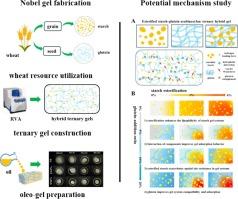
This study constructed a composite system with different ratios (100:0, 95:5, 90:10, and 80:20) of glutein compounded with various esterified starch (3 % and 6 %). The results demonstrated that the esterification process enhanced the viscosity of the starch gel system. Furthermore, the optimal esterification level (3 %) facilitated the formation of a dense composite gel network, as observed through microstructure observation. Conversely, elevated esterification levels (6 %) resulted in reduced gel system ordering, a loss of crystal structure, and a decline in thermal stability (ΔH reduction). The introduction of glutein promotes interactions within systems, conferring a more continuous structure and positively improving the gel’s oil adsorption capacity. NMR images and oil–water distribution curves can verify the ameliorative effect. However, an excessive protein ratio (≥10 %) leads to a double decrease in adsorption performance and rheological properties. This porous and lipophilic gel network structure can provide insights for designing solid fats for food products and developing adsorbent templates for chemical industries.
期刊介绍:
Food Research International serves as a rapid dissemination platform for significant and impactful research in food science, technology, engineering, and nutrition. The journal focuses on publishing novel, high-quality, and high-impact review papers, original research papers, and letters to the editors across various disciplines in the science and technology of food. Additionally, it follows a policy of publishing special issues on topical and emergent subjects in food research or related areas. Selected, peer-reviewed papers from scientific meetings, workshops, and conferences on the science, technology, and engineering of foods are also featured in special issues.




 京公网安备 11010802042870号
京ICP备2023020795号-1
京公网安备 11010802042870号
京ICP备2023020795号-1

 分享
分享
 求助内容:
求助内容: 应助结果提醒方式:
 扫码关注我们
