Qi Wang , Tianyao Chen , Yan Zhu , Yijie Ning , Yang Li , Shizhang Yan , Baokun Qi
{"title":"基于动态亚胺键交联的大豆分离蛋白/双醛海藻酸钠水凝胶:合成及性能。","authors":"Qi Wang , Tianyao Chen , Yan Zhu , Yijie Ning , Yang Li , Shizhang Yan , Baokun Qi","doi":"10.1016/j.foodres.2024.115643","DOIUrl":null,"url":null,"abstract":"<div><div>A soybean protein isolate (SPI)-based hydrogel with controllable properties was prepared under mild conditions using a simple mixing method with dialdehyde sodium alginate (DSA) as an eco-friendly macromolecular crosslinker. DSA was successfully synthesized via periodate oxidation. Analysis of the structure of the SPI/DSA hydrogel indicated that a 3D network was formed between SPI and DSA through dynamic imine and hydrogen bonds. The analysis of the physicochemical properties of the hydrogels showed that the micropore size, mechanical properties, and the swelling and release behavior of the hydrogels could be effectively regulated by changing the DSA content. When 3.0 wt% DSA was added, the hydrogel exhibited a dense and homogeneous network structure with optimal gel properties, which enabled the controlled release of curcumin. This effective structure is mainly attributed to the synergistic effect of short- and long-range chemical and physical crosslinking. Overall, the SPI/DSA hydrogels are effective carriers for the controlled release of bioactive compounds.</div></div>","PeriodicalId":323,"journal":{"name":"Food Research International","volume":"201 ","pages":"Article 115643"},"PeriodicalIF":8.0000,"publicationDate":"2025-02-01","publicationTypes":"Journal Article","fieldsOfStudy":null,"isOpenAccess":false,"openAccessPdf":"","citationCount":"0","resultStr":"{\"title\":\"Soybean protein isolate/dialdehyde sodium alginate hydrogels based on dynamic imine bond cross-linking: Synthesis and properties\",\"authors\":\"Qi Wang , Tianyao Chen , Yan Zhu , Yijie Ning , Yang Li , Shizhang Yan , Baokun Qi\",\"doi\":\"10.1016/j.foodres.2024.115643\",\"DOIUrl\":null,\"url\":null,\"abstract\":\"<div><div>A soybean protein isolate (SPI)-based hydrogel with controllable properties was prepared under mild conditions using a simple mixing method with dialdehyde sodium alginate (DSA) as an eco-friendly macromolecular crosslinker. DSA was successfully synthesized via periodate oxidation. Analysis of the structure of the SPI/DSA hydrogel indicated that a 3D network was formed between SPI and DSA through dynamic imine and hydrogen bonds. The analysis of the physicochemical properties of the hydrogels showed that the micropore size, mechanical properties, and the swelling and release behavior of the hydrogels could be effectively regulated by changing the DSA content. When 3.0 wt% DSA was added, the hydrogel exhibited a dense and homogeneous network structure with optimal gel properties, which enabled the controlled release of curcumin. This effective structure is mainly attributed to the synergistic effect of short- and long-range chemical and physical crosslinking. Overall, the SPI/DSA hydrogels are effective carriers for the controlled release of bioactive compounds.</div></div>\",\"PeriodicalId\":323,\"journal\":{\"name\":\"Food Research International\",\"volume\":\"201 \",\"pages\":\"Article 115643\"},\"PeriodicalIF\":8.0000,\"publicationDate\":\"2025-02-01\",\"publicationTypes\":\"Journal Article\",\"fieldsOfStudy\":null,\"isOpenAccess\":false,\"openAccessPdf\":\"\",\"citationCount\":\"0\",\"resultStr\":null,\"platform\":\"Semanticscholar\",\"paperid\":null,\"PeriodicalName\":\"Food Research International\",\"FirstCategoryId\":\"97\",\"ListUrlMain\":\"https://www.sciencedirect.com/science/article/pii/S0963996924017149\",\"RegionNum\":1,\"RegionCategory\":\"农林科学\",\"ArticlePicture\":[],\"TitleCN\":null,\"AbstractTextCN\":null,\"PMCID\":null,\"EPubDate\":\"2024/12/30 0:00:00\",\"PubModel\":\"Epub\",\"JCR\":\"Q1\",\"JCRName\":\"FOOD SCIENCE & TECHNOLOGY\",\"Score\":null,\"Total\":0}","platform":"Semanticscholar","paperid":null,"PeriodicalName":"Food Research International","FirstCategoryId":"97","ListUrlMain":"https://www.sciencedirect.com/science/article/pii/S0963996924017149","RegionNum":1,"RegionCategory":"农林科学","ArticlePicture":[],"TitleCN":null,"AbstractTextCN":null,"PMCID":null,"EPubDate":"2024/12/30 0:00:00","PubModel":"Epub","JCR":"Q1","JCRName":"FOOD SCIENCE & TECHNOLOGY","Score":null,"Total":0}
Soybean protein isolate/dialdehyde sodium alginate hydrogels based on dynamic imine bond cross-linking: Synthesis and properties
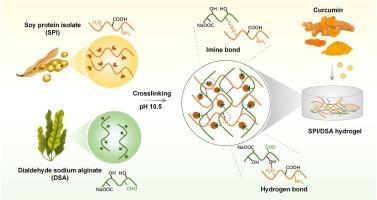
A soybean protein isolate (SPI)-based hydrogel with controllable properties was prepared under mild conditions using a simple mixing method with dialdehyde sodium alginate (DSA) as an eco-friendly macromolecular crosslinker. DSA was successfully synthesized via periodate oxidation. Analysis of the structure of the SPI/DSA hydrogel indicated that a 3D network was formed between SPI and DSA through dynamic imine and hydrogen bonds. The analysis of the physicochemical properties of the hydrogels showed that the micropore size, mechanical properties, and the swelling and release behavior of the hydrogels could be effectively regulated by changing the DSA content. When 3.0 wt% DSA was added, the hydrogel exhibited a dense and homogeneous network structure with optimal gel properties, which enabled the controlled release of curcumin. This effective structure is mainly attributed to the synergistic effect of short- and long-range chemical and physical crosslinking. Overall, the SPI/DSA hydrogels are effective carriers for the controlled release of bioactive compounds.
期刊介绍:
Food Research International serves as a rapid dissemination platform for significant and impactful research in food science, technology, engineering, and nutrition. The journal focuses on publishing novel, high-quality, and high-impact review papers, original research papers, and letters to the editors across various disciplines in the science and technology of food. Additionally, it follows a policy of publishing special issues on topical and emergent subjects in food research or related areas. Selected, peer-reviewed papers from scientific meetings, workshops, and conferences on the science, technology, and engineering of foods are also featured in special issues.




 京公网安备 11010802042870号
京ICP备2023020795号-1
京公网安备 11010802042870号
京ICP备2023020795号-1

 分享
分享
 求助内容:
求助内容: 应助结果提醒方式:
 扫码关注我们
