{"title":"原子力显微镜(AFM)力学测试中环氧胶粘剂界面纳米变形行为的粗粒分子动力学模拟","authors":"Masayoshi Ogawa, Ayumu Morimura, Ikko Haba, Akio Yonezu","doi":"10.1016/j.polymer.2025.128071","DOIUrl":null,"url":null,"abstract":"<div><div>Adhesive interfaces with epoxy resin (adhesive joints and composites) play a critical role in bulk mechanical properties (e.g., load transfer), and it is important to elucidate the strength development mechanism near adhesive interfaces. However, the mechanical properties of epoxy resins on adhesive interfaces are known to be different from those of bulk resin and macroscopic adhesive interfaces because of a difference in the cross-linking ratio of epoxy resin. Since it is difficult to clarify the cross-linking ratio near the adhesive interface and to measure mechanical properties, it is important to establish nano-mechanical testing and simulation methods that can investigate mechanical properties and molecular structure around an adhesive interface. In this study, nanoindentation tests using atomic force microscopy (AFM) and molecular dynamics (MD) simulations that can reproduce the AFM tests were conducted on two-component epoxy resins to clarify the mechanical properties near the nanoscale adhesive interface and to investigate the mechanism of adhesive strength development. MD simulations employed a coarse-graining method that extends the spatial scale to cover the experimental scale of AFM nanoindentation. Furthermore, the mechanical properties of the adhesive interface were investigated from the viewpoint of deformation of molecular chains. It was found that at the interface, nanoindentation showed deformation in the adhesive due to reduction of cross-linking ratio. Coarse-grained (CG) MD simulations also simulated such deformation behavior in order to discuss molecular chain structure in deformation.</div></div>","PeriodicalId":405,"journal":{"name":"Polymer","volume":"320 ","pages":"Article 128071"},"PeriodicalIF":4.5000,"publicationDate":"2025-02-21","publicationTypes":"Journal Article","fieldsOfStudy":null,"isOpenAccess":false,"openAccessPdf":"","citationCount":"0","resultStr":"{\"title\":\"Coarse-grained molecular dynamics simulations of nano-deformation behavior of epoxy adhesives’ interface during atomic force microscopy (AFM) mechanical testing\",\"authors\":\"Masayoshi Ogawa, Ayumu Morimura, Ikko Haba, Akio Yonezu\",\"doi\":\"10.1016/j.polymer.2025.128071\",\"DOIUrl\":null,\"url\":null,\"abstract\":\"<div><div>Adhesive interfaces with epoxy resin (adhesive joints and composites) play a critical role in bulk mechanical properties (e.g., load transfer), and it is important to elucidate the strength development mechanism near adhesive interfaces. However, the mechanical properties of epoxy resins on adhesive interfaces are known to be different from those of bulk resin and macroscopic adhesive interfaces because of a difference in the cross-linking ratio of epoxy resin. Since it is difficult to clarify the cross-linking ratio near the adhesive interface and to measure mechanical properties, it is important to establish nano-mechanical testing and simulation methods that can investigate mechanical properties and molecular structure around an adhesive interface. In this study, nanoindentation tests using atomic force microscopy (AFM) and molecular dynamics (MD) simulations that can reproduce the AFM tests were conducted on two-component epoxy resins to clarify the mechanical properties near the nanoscale adhesive interface and to investigate the mechanism of adhesive strength development. MD simulations employed a coarse-graining method that extends the spatial scale to cover the experimental scale of AFM nanoindentation. Furthermore, the mechanical properties of the adhesive interface were investigated from the viewpoint of deformation of molecular chains. It was found that at the interface, nanoindentation showed deformation in the adhesive due to reduction of cross-linking ratio. Coarse-grained (CG) MD simulations also simulated such deformation behavior in order to discuss molecular chain structure in deformation.</div></div>\",\"PeriodicalId\":405,\"journal\":{\"name\":\"Polymer\",\"volume\":\"320 \",\"pages\":\"Article 128071\"},\"PeriodicalIF\":4.5000,\"publicationDate\":\"2025-02-21\",\"publicationTypes\":\"Journal Article\",\"fieldsOfStudy\":null,\"isOpenAccess\":false,\"openAccessPdf\":\"\",\"citationCount\":\"0\",\"resultStr\":null,\"platform\":\"Semanticscholar\",\"paperid\":null,\"PeriodicalName\":\"Polymer\",\"FirstCategoryId\":\"92\",\"ListUrlMain\":\"https://www.sciencedirect.com/science/article/pii/S0032386125000576\",\"RegionNum\":2,\"RegionCategory\":\"化学\",\"ArticlePicture\":[],\"TitleCN\":null,\"AbstractTextCN\":null,\"PMCID\":null,\"EPubDate\":\"2025/1/25 0:00:00\",\"PubModel\":\"Epub\",\"JCR\":\"Q2\",\"JCRName\":\"POLYMER SCIENCE\",\"Score\":null,\"Total\":0}","platform":"Semanticscholar","paperid":null,"PeriodicalName":"Polymer","FirstCategoryId":"92","ListUrlMain":"https://www.sciencedirect.com/science/article/pii/S0032386125000576","RegionNum":2,"RegionCategory":"化学","ArticlePicture":[],"TitleCN":null,"AbstractTextCN":null,"PMCID":null,"EPubDate":"2025/1/25 0:00:00","PubModel":"Epub","JCR":"Q2","JCRName":"POLYMER SCIENCE","Score":null,"Total":0}
Coarse-grained molecular dynamics simulations of nano-deformation behavior of epoxy adhesives’ interface during atomic force microscopy (AFM) mechanical testing
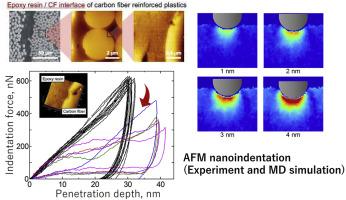
Adhesive interfaces with epoxy resin (adhesive joints and composites) play a critical role in bulk mechanical properties (e.g., load transfer), and it is important to elucidate the strength development mechanism near adhesive interfaces. However, the mechanical properties of epoxy resins on adhesive interfaces are known to be different from those of bulk resin and macroscopic adhesive interfaces because of a difference in the cross-linking ratio of epoxy resin. Since it is difficult to clarify the cross-linking ratio near the adhesive interface and to measure mechanical properties, it is important to establish nano-mechanical testing and simulation methods that can investigate mechanical properties and molecular structure around an adhesive interface. In this study, nanoindentation tests using atomic force microscopy (AFM) and molecular dynamics (MD) simulations that can reproduce the AFM tests were conducted on two-component epoxy resins to clarify the mechanical properties near the nanoscale adhesive interface and to investigate the mechanism of adhesive strength development. MD simulations employed a coarse-graining method that extends the spatial scale to cover the experimental scale of AFM nanoindentation. Furthermore, the mechanical properties of the adhesive interface were investigated from the viewpoint of deformation of molecular chains. It was found that at the interface, nanoindentation showed deformation in the adhesive due to reduction of cross-linking ratio. Coarse-grained (CG) MD simulations also simulated such deformation behavior in order to discuss molecular chain structure in deformation.
期刊介绍:
Polymer is an interdisciplinary journal dedicated to publishing innovative and significant advances in Polymer Physics, Chemistry and Technology. We welcome submissions on polymer hybrids, nanocomposites, characterisation and self-assembly. Polymer also publishes work on the technological application of polymers in energy and optoelectronics.
The main scope is covered but not limited to the following core areas:
Polymer Materials
Nanocomposites and hybrid nanomaterials
Polymer blends, films, fibres, networks and porous materials
Physical Characterization
Characterisation, modelling and simulation* of molecular and materials properties in bulk, solution, and thin films
Polymer Engineering
Advanced multiscale processing methods
Polymer Synthesis, Modification and Self-assembly
Including designer polymer architectures, mechanisms and kinetics, and supramolecular polymerization
Technological Applications
Polymers for energy generation and storage
Polymer membranes for separation technology
Polymers for opto- and microelectronics.





 京公网安备 11010802042870号
京ICP备2023020795号-1
京公网安备 11010802042870号
京ICP备2023020795号-1

 分享
分享
 求助内容:
求助内容: 应助结果提醒方式:
 扫码关注我们
