Karina Kurmanbayeva, Semyon Nikulaichev, Nikolai A. Sokovikov, Viktoriia V. Torbina and Olga V. Vodyankina
{"title":"sn修饰的Zr-UiO-66金属有机骨架用于二羟基丙酮转化成乳酸","authors":"Karina Kurmanbayeva, Semyon Nikulaichev, Nikolai A. Sokovikov, Viktoriia V. Torbina and Olga V. Vodyankina","doi":"10.1039/D4DT02975E","DOIUrl":null,"url":null,"abstract":"<p >Dihydroxyacetone is a valuable waste-valorization compound and is a main intermediate in lactic acid production from different recyclable sources. In the present work, Sn incorporation into a Zr-based metal–organic framework is used to increase its acidity and facilitate dihydroxyacetone conversion to lactic acid through the minimization of side reactions. Three series of Sn-modified metal–organic frameworks with different synthetic conditions and Zr/Sn molar ratios are prepared and characterized by low-temperature nitrogen adsorption, XRD, XRF, TGA, XPS, and FTIR spectra of the adsorbed CO, and NH<small><sub>3</sub></small>-TPD methods. The nature of the Sn species depends on both the Sn precursor and the amount of water in the liquid phase during the synthesis, allowing the control of SnCl<small><sub><em>x</em></sub></small> hydrolysis. Sn addition leads to an increase in the acidity of the MOF and mostly depends on the nature of the Sn species rather than Sn loading. Insertion of a tin species directly into the UiO-66 structure results in an almost quantitative yield of the target products. The material retains its structure after catalysis, but the deposition of the polycondensation products on the MOF surface slightly decreases the selectivity at consecutive runs.</p>","PeriodicalId":71,"journal":{"name":"Dalton Transactions","volume":" 10","pages":" 4234-4243"},"PeriodicalIF":3.3000,"publicationDate":"2025-01-25","publicationTypes":"Journal Article","fieldsOfStudy":null,"isOpenAccess":false,"openAccessPdf":"","citationCount":"0","resultStr":"{\"title\":\"Sn-modified Zr-UiO-66 metal–organic frameworks for dihydroxyacetone conversion into lactic acid†\",\"authors\":\"Karina Kurmanbayeva, Semyon Nikulaichev, Nikolai A. Sokovikov, Viktoriia V. Torbina and Olga V. Vodyankina\",\"doi\":\"10.1039/D4DT02975E\",\"DOIUrl\":null,\"url\":null,\"abstract\":\"<p >Dihydroxyacetone is a valuable waste-valorization compound and is a main intermediate in lactic acid production from different recyclable sources. In the present work, Sn incorporation into a Zr-based metal–organic framework is used to increase its acidity and facilitate dihydroxyacetone conversion to lactic acid through the minimization of side reactions. Three series of Sn-modified metal–organic frameworks with different synthetic conditions and Zr/Sn molar ratios are prepared and characterized by low-temperature nitrogen adsorption, XRD, XRF, TGA, XPS, and FTIR spectra of the adsorbed CO, and NH<small><sub>3</sub></small>-TPD methods. The nature of the Sn species depends on both the Sn precursor and the amount of water in the liquid phase during the synthesis, allowing the control of SnCl<small><sub><em>x</em></sub></small> hydrolysis. Sn addition leads to an increase in the acidity of the MOF and mostly depends on the nature of the Sn species rather than Sn loading. Insertion of a tin species directly into the UiO-66 structure results in an almost quantitative yield of the target products. The material retains its structure after catalysis, but the deposition of the polycondensation products on the MOF surface slightly decreases the selectivity at consecutive runs.</p>\",\"PeriodicalId\":71,\"journal\":{\"name\":\"Dalton Transactions\",\"volume\":\" 10\",\"pages\":\" 4234-4243\"},\"PeriodicalIF\":3.3000,\"publicationDate\":\"2025-01-25\",\"publicationTypes\":\"Journal Article\",\"fieldsOfStudy\":null,\"isOpenAccess\":false,\"openAccessPdf\":\"\",\"citationCount\":\"0\",\"resultStr\":null,\"platform\":\"Semanticscholar\",\"paperid\":null,\"PeriodicalName\":\"Dalton Transactions\",\"FirstCategoryId\":\"92\",\"ListUrlMain\":\"https://pubs.rsc.org/en/content/articlelanding/2025/dt/d4dt02975e\",\"RegionNum\":3,\"RegionCategory\":\"化学\",\"ArticlePicture\":[],\"TitleCN\":null,\"AbstractTextCN\":null,\"PMCID\":null,\"EPubDate\":\"\",\"PubModel\":\"\",\"JCR\":\"Q2\",\"JCRName\":\"CHEMISTRY, INORGANIC & NUCLEAR\",\"Score\":null,\"Total\":0}","platform":"Semanticscholar","paperid":null,"PeriodicalName":"Dalton Transactions","FirstCategoryId":"92","ListUrlMain":"https://pubs.rsc.org/en/content/articlelanding/2025/dt/d4dt02975e","RegionNum":3,"RegionCategory":"化学","ArticlePicture":[],"TitleCN":null,"AbstractTextCN":null,"PMCID":null,"EPubDate":"","PubModel":"","JCR":"Q2","JCRName":"CHEMISTRY, INORGANIC & NUCLEAR","Score":null,"Total":0}
Sn-modified Zr-UiO-66 metal–organic frameworks for dihydroxyacetone conversion into lactic acid†
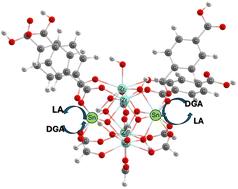
Dihydroxyacetone is a valuable waste-valorization compound and is a main intermediate in lactic acid production from different recyclable sources. In the present work, Sn incorporation into a Zr-based metal–organic framework is used to increase its acidity and facilitate dihydroxyacetone conversion to lactic acid through the minimization of side reactions. Three series of Sn-modified metal–organic frameworks with different synthetic conditions and Zr/Sn molar ratios are prepared and characterized by low-temperature nitrogen adsorption, XRD, XRF, TGA, XPS, and FTIR spectra of the adsorbed CO, and NH3-TPD methods. The nature of the Sn species depends on both the Sn precursor and the amount of water in the liquid phase during the synthesis, allowing the control of SnClx hydrolysis. Sn addition leads to an increase in the acidity of the MOF and mostly depends on the nature of the Sn species rather than Sn loading. Insertion of a tin species directly into the UiO-66 structure results in an almost quantitative yield of the target products. The material retains its structure after catalysis, but the deposition of the polycondensation products on the MOF surface slightly decreases the selectivity at consecutive runs.
期刊介绍:
Dalton Transactions is a journal for all areas of inorganic chemistry, which encompasses the organometallic, bioinorganic and materials chemistry of the elements, with applications including synthesis, catalysis, energy conversion/storage, electrical devices and medicine. Dalton Transactions welcomes high-quality, original submissions in all of these areas and more, where the advancement of knowledge in inorganic chemistry is significant.




 京公网安备 11010802042870号
京ICP备2023020795号-1
京公网安备 11010802042870号
京ICP备2023020795号-1

 分享
分享
 求助内容:
求助内容: 应助结果提醒方式:
 扫码关注我们
