Shuo Yang , Na Tang , Luwei Deng , Yongsheng Xu , Xiaomeng Guo , Yupu Bai , Wenchao Peng , Haiyang Zhang , Jinli Zhang
{"title":"研究过氧单硫酸盐高级氧化过程中氨基对碳的原始活性","authors":"Shuo Yang , Na Tang , Luwei Deng , Yongsheng Xu , Xiaomeng Guo , Yupu Bai , Wenchao Peng , Haiyang Zhang , Jinli Zhang","doi":"10.1016/j.seppur.2025.131808","DOIUrl":null,"url":null,"abstract":"<div><div>Metal-free catalysts featuring nitrogen defects have been developed rapidly in peroxymonosulfate-based advanced oxidation processes (PMS-AOPs) for treating the organic wastewater. While a great deal of research has been conducted on the doped N sites such as pyridinic N, pyrrolic N and graphitic N, less attention has been paid to the role of modified N site (amino group) due to the low catalytic activity. To investigate the original activity of amino group over carbon, in this work, we selected two typical supports including a carbon support (graphene oxide) and a non-carbon support (silica), and subsequently functionalized both with amino groups. The phenol degradation performances in PMS-AOPs revealed that only amino-functionalized reduced graphene oxide could activate PMS, thus achieving the pollutant removal. To better understand the structure–activity relationship between amino groups and carbon supports, we enhanced the degree of reduction of graphene oxide by raising the synthesis temperature during amino group modification. Activity evaluation, reactive oxygen species analysis and density functional theory simulations demonstrated that as the content of hydroxyl groups decreased, both the adsorption and electron transfer of reactants were enhanced, thereby enhancing the contribution of non-radical pathway. Through this facile regulation of synthesis temperatures, the reaction rate constant for phenol degradation in PMS-AOPs using aminated graphene increased by approximately 4.8 times. This work provides a new insight into designing the efficient catalyst with amino sites for PMS-AOPs.</div></div>","PeriodicalId":427,"journal":{"name":"Separation and Purification Technology","volume":"362 ","pages":"Article 131808"},"PeriodicalIF":9.0000,"publicationDate":"2025-07-30","publicationTypes":"Journal Article","fieldsOfStudy":null,"isOpenAccess":false,"openAccessPdf":"","citationCount":"0","resultStr":"{\"title\":\"Investigating the original activity of amino group over carbon in peroxymonosulfate-based advanced oxidation processes\",\"authors\":\"Shuo Yang , Na Tang , Luwei Deng , Yongsheng Xu , Xiaomeng Guo , Yupu Bai , Wenchao Peng , Haiyang Zhang , Jinli Zhang\",\"doi\":\"10.1016/j.seppur.2025.131808\",\"DOIUrl\":null,\"url\":null,\"abstract\":\"<div><div>Metal-free catalysts featuring nitrogen defects have been developed rapidly in peroxymonosulfate-based advanced oxidation processes (PMS-AOPs) for treating the organic wastewater. While a great deal of research has been conducted on the doped N sites such as pyridinic N, pyrrolic N and graphitic N, less attention has been paid to the role of modified N site (amino group) due to the low catalytic activity. To investigate the original activity of amino group over carbon, in this work, we selected two typical supports including a carbon support (graphene oxide) and a non-carbon support (silica), and subsequently functionalized both with amino groups. The phenol degradation performances in PMS-AOPs revealed that only amino-functionalized reduced graphene oxide could activate PMS, thus achieving the pollutant removal. To better understand the structure–activity relationship between amino groups and carbon supports, we enhanced the degree of reduction of graphene oxide by raising the synthesis temperature during amino group modification. Activity evaluation, reactive oxygen species analysis and density functional theory simulations demonstrated that as the content of hydroxyl groups decreased, both the adsorption and electron transfer of reactants were enhanced, thereby enhancing the contribution of non-radical pathway. Through this facile regulation of synthesis temperatures, the reaction rate constant for phenol degradation in PMS-AOPs using aminated graphene increased by approximately 4.8 times. This work provides a new insight into designing the efficient catalyst with amino sites for PMS-AOPs.</div></div>\",\"PeriodicalId\":427,\"journal\":{\"name\":\"Separation and Purification Technology\",\"volume\":\"362 \",\"pages\":\"Article 131808\"},\"PeriodicalIF\":9.0000,\"publicationDate\":\"2025-07-30\",\"publicationTypes\":\"Journal Article\",\"fieldsOfStudy\":null,\"isOpenAccess\":false,\"openAccessPdf\":\"\",\"citationCount\":\"0\",\"resultStr\":null,\"platform\":\"Semanticscholar\",\"paperid\":null,\"PeriodicalName\":\"Separation and Purification Technology\",\"FirstCategoryId\":\"5\",\"ListUrlMain\":\"https://www.sciencedirect.com/science/article/pii/S1383586625004058\",\"RegionNum\":1,\"RegionCategory\":\"工程技术\",\"ArticlePicture\":[],\"TitleCN\":null,\"AbstractTextCN\":null,\"PMCID\":null,\"EPubDate\":\"2025/1/25 0:00:00\",\"PubModel\":\"Epub\",\"JCR\":\"Q1\",\"JCRName\":\"ENGINEERING, CHEMICAL\",\"Score\":null,\"Total\":0}","platform":"Semanticscholar","paperid":null,"PeriodicalName":"Separation and Purification Technology","FirstCategoryId":"5","ListUrlMain":"https://www.sciencedirect.com/science/article/pii/S1383586625004058","RegionNum":1,"RegionCategory":"工程技术","ArticlePicture":[],"TitleCN":null,"AbstractTextCN":null,"PMCID":null,"EPubDate":"2025/1/25 0:00:00","PubModel":"Epub","JCR":"Q1","JCRName":"ENGINEERING, CHEMICAL","Score":null,"Total":0}
Investigating the original activity of amino group over carbon in peroxymonosulfate-based advanced oxidation processes
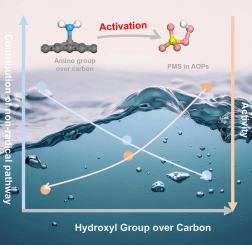
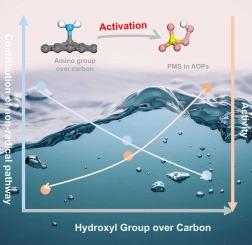
Metal-free catalysts featuring nitrogen defects have been developed rapidly in peroxymonosulfate-based advanced oxidation processes (PMS-AOPs) for treating the organic wastewater. While a great deal of research has been conducted on the doped N sites such as pyridinic N, pyrrolic N and graphitic N, less attention has been paid to the role of modified N site (amino group) due to the low catalytic activity. To investigate the original activity of amino group over carbon, in this work, we selected two typical supports including a carbon support (graphene oxide) and a non-carbon support (silica), and subsequently functionalized both with amino groups. The phenol degradation performances in PMS-AOPs revealed that only amino-functionalized reduced graphene oxide could activate PMS, thus achieving the pollutant removal. To better understand the structure–activity relationship between amino groups and carbon supports, we enhanced the degree of reduction of graphene oxide by raising the synthesis temperature during amino group modification. Activity evaluation, reactive oxygen species analysis and density functional theory simulations demonstrated that as the content of hydroxyl groups decreased, both the adsorption and electron transfer of reactants were enhanced, thereby enhancing the contribution of non-radical pathway. Through this facile regulation of synthesis temperatures, the reaction rate constant for phenol degradation in PMS-AOPs using aminated graphene increased by approximately 4.8 times. This work provides a new insight into designing the efficient catalyst with amino sites for PMS-AOPs.
期刊介绍:
Separation and Purification Technology is a premier journal committed to sharing innovative methods for separation and purification in chemical and environmental engineering, encompassing both homogeneous solutions and heterogeneous mixtures. Our scope includes the separation and/or purification of liquids, vapors, and gases, as well as carbon capture and separation techniques. However, it's important to note that methods solely intended for analytical purposes are not within the scope of the journal. Additionally, disciplines such as soil science, polymer science, and metallurgy fall outside the purview of Separation and Purification Technology. Join us in advancing the field of separation and purification methods for sustainable solutions in chemical and environmental engineering.




 京公网安备 11010802042870号
京ICP备2023020795号-1
京公网安备 11010802042870号
京ICP备2023020795号-1

 分享
分享
 求助内容:
求助内容: 应助结果提醒方式:
 扫码关注我们
