Firas Al-Hindawi, Peter Serhan, Yonas E Geda, Francis Tsow, Teresa Wu, Erica Forzani
{"title":"LiveDrive AI:用于轻度认知障碍实时、无创检测的机器学习驱动诊断系统的试点研究。","authors":"Firas Al-Hindawi, Peter Serhan, Yonas E Geda, Francis Tsow, Teresa Wu, Erica Forzani","doi":"10.3390/bioengineering12010086","DOIUrl":null,"url":null,"abstract":"<p><p>Alzheimer's disease (AD) represents a significant global health issue, affecting over 55 million individuals worldwide, with a progressive impact on cognitive and functional abilities. Early detection, particularly of mild cognitive impairment (MCI) as an indicator of potential AD onset, is crucial yet challenging, given the limitations of current diagnostic biomarkers and the need for non-invasive, accessible tools. This study aims to address these gaps by exploring driving performance as a novel, non-invasive biomarker for MCI detection. Using the LiveDrive AI system, equipped with multimodal sensing (MMS) technology and a driving performance assessment strategy, the proposed work analyzes the predictive capacity of driving patterns in indicating cognitive decline. Machine learning models, trained on an expert-annotated in-house dataset, were employed to detect MCI status from driving performance. Key findings demonstrate the feasibility of using nuanced driving features, such as velocity and acceleration during turning, as indicators of cognitive decline. This approach holds promise for integration into smartphone or car applications, enabling real-time, continuous cognitive health monitoring. The implications of this work suggest a transformative step towards scalable, real-world solutions for early AD diagnosis, with the potential to improve patient outcomes and disease management.</p>","PeriodicalId":8874,"journal":{"name":"Bioengineering","volume":"12 1","pages":""},"PeriodicalIF":3.7000,"publicationDate":"2025-01-17","publicationTypes":"Journal Article","fieldsOfStudy":null,"isOpenAccess":false,"openAccessPdf":"https://www.ncbi.nlm.nih.gov/pmc/articles/PMC11762332/pdf/","citationCount":"0","resultStr":"{\"title\":\"LiveDrive AI: A Pilot Study of a Machine Learning-Powered Diagnostic System for Real-Time, Non-Invasive Detection of Mild Cognitive Impairment.\",\"authors\":\"Firas Al-Hindawi, Peter Serhan, Yonas E Geda, Francis Tsow, Teresa Wu, Erica Forzani\",\"doi\":\"10.3390/bioengineering12010086\",\"DOIUrl\":null,\"url\":null,\"abstract\":\"<p><p>Alzheimer's disease (AD) represents a significant global health issue, affecting over 55 million individuals worldwide, with a progressive impact on cognitive and functional abilities. Early detection, particularly of mild cognitive impairment (MCI) as an indicator of potential AD onset, is crucial yet challenging, given the limitations of current diagnostic biomarkers and the need for non-invasive, accessible tools. This study aims to address these gaps by exploring driving performance as a novel, non-invasive biomarker for MCI detection. Using the LiveDrive AI system, equipped with multimodal sensing (MMS) technology and a driving performance assessment strategy, the proposed work analyzes the predictive capacity of driving patterns in indicating cognitive decline. Machine learning models, trained on an expert-annotated in-house dataset, were employed to detect MCI status from driving performance. Key findings demonstrate the feasibility of using nuanced driving features, such as velocity and acceleration during turning, as indicators of cognitive decline. This approach holds promise for integration into smartphone or car applications, enabling real-time, continuous cognitive health monitoring. The implications of this work suggest a transformative step towards scalable, real-world solutions for early AD diagnosis, with the potential to improve patient outcomes and disease management.</p>\",\"PeriodicalId\":8874,\"journal\":{\"name\":\"Bioengineering\",\"volume\":\"12 1\",\"pages\":\"\"},\"PeriodicalIF\":3.7000,\"publicationDate\":\"2025-01-17\",\"publicationTypes\":\"Journal Article\",\"fieldsOfStudy\":null,\"isOpenAccess\":false,\"openAccessPdf\":\"https://www.ncbi.nlm.nih.gov/pmc/articles/PMC11762332/pdf/\",\"citationCount\":\"0\",\"resultStr\":null,\"platform\":\"Semanticscholar\",\"paperid\":null,\"PeriodicalName\":\"Bioengineering\",\"FirstCategoryId\":\"5\",\"ListUrlMain\":\"https://doi.org/10.3390/bioengineering12010086\",\"RegionNum\":3,\"RegionCategory\":\"医学\",\"ArticlePicture\":[],\"TitleCN\":null,\"AbstractTextCN\":null,\"PMCID\":null,\"EPubDate\":\"\",\"PubModel\":\"\",\"JCR\":\"Q2\",\"JCRName\":\"ENGINEERING, BIOMEDICAL\",\"Score\":null,\"Total\":0}","platform":"Semanticscholar","paperid":null,"PeriodicalName":"Bioengineering","FirstCategoryId":"5","ListUrlMain":"https://doi.org/10.3390/bioengineering12010086","RegionNum":3,"RegionCategory":"医学","ArticlePicture":[],"TitleCN":null,"AbstractTextCN":null,"PMCID":null,"EPubDate":"","PubModel":"","JCR":"Q2","JCRName":"ENGINEERING, BIOMEDICAL","Score":null,"Total":0}
LiveDrive AI: A Pilot Study of a Machine Learning-Powered Diagnostic System for Real-Time, Non-Invasive Detection of Mild Cognitive Impairment.
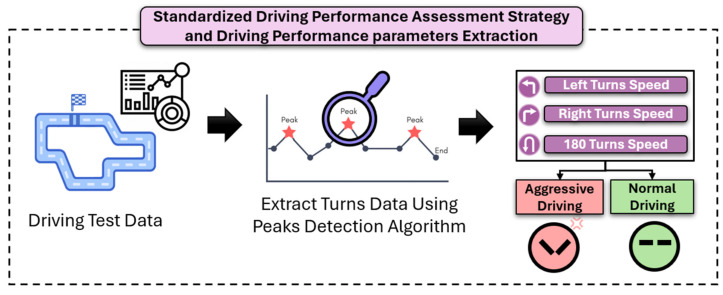
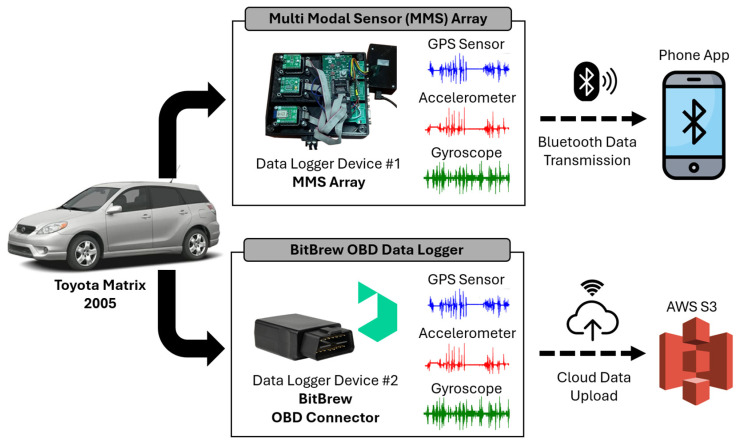
Alzheimer's disease (AD) represents a significant global health issue, affecting over 55 million individuals worldwide, with a progressive impact on cognitive and functional abilities. Early detection, particularly of mild cognitive impairment (MCI) as an indicator of potential AD onset, is crucial yet challenging, given the limitations of current diagnostic biomarkers and the need for non-invasive, accessible tools. This study aims to address these gaps by exploring driving performance as a novel, non-invasive biomarker for MCI detection. Using the LiveDrive AI system, equipped with multimodal sensing (MMS) technology and a driving performance assessment strategy, the proposed work analyzes the predictive capacity of driving patterns in indicating cognitive decline. Machine learning models, trained on an expert-annotated in-house dataset, were employed to detect MCI status from driving performance. Key findings demonstrate the feasibility of using nuanced driving features, such as velocity and acceleration during turning, as indicators of cognitive decline. This approach holds promise for integration into smartphone or car applications, enabling real-time, continuous cognitive health monitoring. The implications of this work suggest a transformative step towards scalable, real-world solutions for early AD diagnosis, with the potential to improve patient outcomes and disease management.
期刊介绍:
Aims
Bioengineering (ISSN 2306-5354) provides an advanced forum for the science and technology of bioengineering. It publishes original research papers, comprehensive reviews, communications and case reports. Our aim is to encourage scientists to publish their experimental and theoretical results in as much detail as possible. All aspects of bioengineering are welcomed from theoretical concepts to education and applications. There is no restriction on the length of the papers. The full experimental details must be provided so that the results can be reproduced. There are, in addition, four key features of this Journal:
● We are introducing a new concept in scientific and technical publications “The Translational Case Report in Bioengineering”. It is a descriptive explanatory analysis of a transformative or translational event. Understanding that the goal of bioengineering scholarship is to advance towards a transformative or clinical solution to an identified transformative/clinical need, the translational case report is used to explore causation in order to find underlying principles that may guide other similar transformative/translational undertakings.
● Manuscripts regarding research proposals and research ideas will be particularly welcomed.
● Electronic files and software regarding the full details of the calculation and experimental procedure, if unable to be published in a normal way, can be deposited as supplementary material.
● We also accept manuscripts communicating to a broader audience with regard to research projects financed with public funds.
Scope
● Bionics and biological cybernetics: implantology; bio–abio interfaces
● Bioelectronics: wearable electronics; implantable electronics; “more than Moore” electronics; bioelectronics devices
● Bioprocess and biosystems engineering and applications: bioprocess design; biocatalysis; bioseparation and bioreactors; bioinformatics; bioenergy; etc.
● Biomolecular, cellular and tissue engineering and applications: tissue engineering; chromosome engineering; embryo engineering; cellular, molecular and synthetic biology; metabolic engineering; bio-nanotechnology; micro/nano technologies; genetic engineering; transgenic technology
● Biomedical engineering and applications: biomechatronics; biomedical electronics; biomechanics; biomaterials; biomimetics; biomedical diagnostics; biomedical therapy; biomedical devices; sensors and circuits; biomedical imaging and medical information systems; implants and regenerative medicine; neurotechnology; clinical engineering; rehabilitation engineering
● Biochemical engineering and applications: metabolic pathway engineering; modeling and simulation
● Translational bioengineering






 京公网安备 11010802042870号
京ICP备2023020795号-1
京公网安备 11010802042870号
京ICP备2023020795号-1

 分享
分享
 求助内容:
求助内容: 应助结果提醒方式:
 扫码关注我们
