Daniela A Alambarrio, Benjamin K Morris, R Benjamin Davis, Emily B Grabarczyk, Kari K Turner, John M Gonzalez
{"title":"研究肌肉疲劳的替代方案的发展。","authors":"Daniela A Alambarrio, Benjamin K Morris, R Benjamin Davis, Emily B Grabarczyk, Kari K Turner, John M Gonzalez","doi":"10.3390/metabo15010054","DOIUrl":null,"url":null,"abstract":"<p><p>When measuring real-time in vivo muscle fatigue with electromyography (<b>EMG</b>), data collection can be compromised by premature sensor removal or environmental noise; therefore, the objective of this study was to develop a postmortem in vivo methodology to induce muscle fatigue and measure it using EMG. Barrows (<i>N</i> = 20) were stratified by weight and randomly allocated into one of two treatments. The treatments consisted of barrows being subjected to a hog electric stunner super-contraction cycle (<b>ES</b>) or not (<b>CON</b>) postmortem. The right hind limb bicep femoris (<b>BF</b>) and semitendinosus (<b>ST</b>) were selected for ambulatory movement simulation using electronic muscle stimulation (<b>EMS</b>). Muscle workload during EMS was measured with EMG using median power frequency (<b>MdPF</b>) and root mean square (<b>RMS</b>) as indicators of action potential velocity and muscle fiber recruitment. Ambulatory movement was induced and recorded for 20 min with a 4:4 duty cycle at 70 Hz. Muscle biopsies were collected pre- and post-EMS for metabolite analyses to corroborate muscle fatigue onset. There was a TRT × Muscle interaction for normalized RMS percentage (<i>p</i> < 0.01), where BF from CON barrows had greater values (<i>p</i> < 0.01). There were no interactions or TRT main effects for the MdPF normalized value (<i>p</i> ≥ 0.25), but there were Period and muscle effects on MdPF (<i>p</i> < 0.01). Bicep femoris had smaller (<i>p</i> < 0.01) MdPF than ST. The percentage of MdPF decreased (<i>p</i> < 0.01) by Period 5 compared to the other Periods, which did not differ from each other (<i>p</i> ≥ 0.38). There were TRT × Muscle and Muscle × Period interactions for ATP muscle concentration (<i>p</i> ≤ 0.03). The concentration of CON BF ATP was greater (<i>p</i> < 0.01) than that of ES BF and CON and ES ST, which did not differ from each other (<i>p</i> ≥ 0.11), but the APT concentration tended to differ between ES BF and ES ST (<i>p</i> = 0.06). Semitendinosus ATP concentration decreased (<i>p</i> < 0.01) post-EMS compared to ST pre- and BF pre- and post-EMS (<i>p</i> ≥ 0.29), but BF and ST concentration tended to differ pre-EMS (<i>p</i> = 0.07). The data indicated that EMS is a valuable tool for replicating ambulatory movement or physical activity, but super-contraction is not a means to accelerate postmortem muscle fatigue onset. Therefore, further refinement, such as longer EMS stimulation time, should be considered.</p>","PeriodicalId":18496,"journal":{"name":"Metabolites","volume":"15 1","pages":""},"PeriodicalIF":4.5000,"publicationDate":"2025-01-16","publicationTypes":"Journal Article","fieldsOfStudy":null,"isOpenAccess":false,"openAccessPdf":"https://www.ncbi.nlm.nih.gov/pmc/articles/PMC11767845/pdf/","citationCount":"0","resultStr":"{\"title\":\"Development of an Alternative Protocol to Study Muscle Fatigue.\",\"authors\":\"Daniela A Alambarrio, Benjamin K Morris, R Benjamin Davis, Emily B Grabarczyk, Kari K Turner, John M Gonzalez\",\"doi\":\"10.3390/metabo15010054\",\"DOIUrl\":null,\"url\":null,\"abstract\":\"<p><p>When measuring real-time in vivo muscle fatigue with electromyography (<b>EMG</b>), data collection can be compromised by premature sensor removal or environmental noise; therefore, the objective of this study was to develop a postmortem in vivo methodology to induce muscle fatigue and measure it using EMG. Barrows (<i>N</i> = 20) were stratified by weight and randomly allocated into one of two treatments. The treatments consisted of barrows being subjected to a hog electric stunner super-contraction cycle (<b>ES</b>) or not (<b>CON</b>) postmortem. The right hind limb bicep femoris (<b>BF</b>) and semitendinosus (<b>ST</b>) were selected for ambulatory movement simulation using electronic muscle stimulation (<b>EMS</b>). Muscle workload during EMS was measured with EMG using median power frequency (<b>MdPF</b>) and root mean square (<b>RMS</b>) as indicators of action potential velocity and muscle fiber recruitment. Ambulatory movement was induced and recorded for 20 min with a 4:4 duty cycle at 70 Hz. Muscle biopsies were collected pre- and post-EMS for metabolite analyses to corroborate muscle fatigue onset. There was a TRT × Muscle interaction for normalized RMS percentage (<i>p</i> < 0.01), where BF from CON barrows had greater values (<i>p</i> < 0.01). There were no interactions or TRT main effects for the MdPF normalized value (<i>p</i> ≥ 0.25), but there were Period and muscle effects on MdPF (<i>p</i> < 0.01). Bicep femoris had smaller (<i>p</i> < 0.01) MdPF than ST. The percentage of MdPF decreased (<i>p</i> < 0.01) by Period 5 compared to the other Periods, which did not differ from each other (<i>p</i> ≥ 0.38). There were TRT × Muscle and Muscle × Period interactions for ATP muscle concentration (<i>p</i> ≤ 0.03). The concentration of CON BF ATP was greater (<i>p</i> < 0.01) than that of ES BF and CON and ES ST, which did not differ from each other (<i>p</i> ≥ 0.11), but the APT concentration tended to differ between ES BF and ES ST (<i>p</i> = 0.06). Semitendinosus ATP concentration decreased (<i>p</i> < 0.01) post-EMS compared to ST pre- and BF pre- and post-EMS (<i>p</i> ≥ 0.29), but BF and ST concentration tended to differ pre-EMS (<i>p</i> = 0.07). The data indicated that EMS is a valuable tool for replicating ambulatory movement or physical activity, but super-contraction is not a means to accelerate postmortem muscle fatigue onset. Therefore, further refinement, such as longer EMS stimulation time, should be considered.</p>\",\"PeriodicalId\":18496,\"journal\":{\"name\":\"Metabolites\",\"volume\":\"15 1\",\"pages\":\"\"},\"PeriodicalIF\":4.5000,\"publicationDate\":\"2025-01-16\",\"publicationTypes\":\"Journal Article\",\"fieldsOfStudy\":null,\"isOpenAccess\":false,\"openAccessPdf\":\"https://www.ncbi.nlm.nih.gov/pmc/articles/PMC11767845/pdf/\",\"citationCount\":\"0\",\"resultStr\":null,\"platform\":\"Semanticscholar\",\"paperid\":null,\"PeriodicalName\":\"Metabolites\",\"FirstCategoryId\":\"99\",\"ListUrlMain\":\"https://doi.org/10.3390/metabo15010054\",\"RegionNum\":3,\"RegionCategory\":\"生物学\",\"ArticlePicture\":[],\"TitleCN\":null,\"AbstractTextCN\":null,\"PMCID\":null,\"EPubDate\":\"\",\"PubModel\":\"\",\"JCR\":\"Q2\",\"JCRName\":\"BIOCHEMISTRY & MOLECULAR BIOLOGY\",\"Score\":null,\"Total\":0}","platform":"Semanticscholar","paperid":null,"PeriodicalName":"Metabolites","FirstCategoryId":"99","ListUrlMain":"https://doi.org/10.3390/metabo15010054","RegionNum":3,"RegionCategory":"生物学","ArticlePicture":[],"TitleCN":null,"AbstractTextCN":null,"PMCID":null,"EPubDate":"","PubModel":"","JCR":"Q2","JCRName":"BIOCHEMISTRY & MOLECULAR BIOLOGY","Score":null,"Total":0}
Development of an Alternative Protocol to Study Muscle Fatigue.
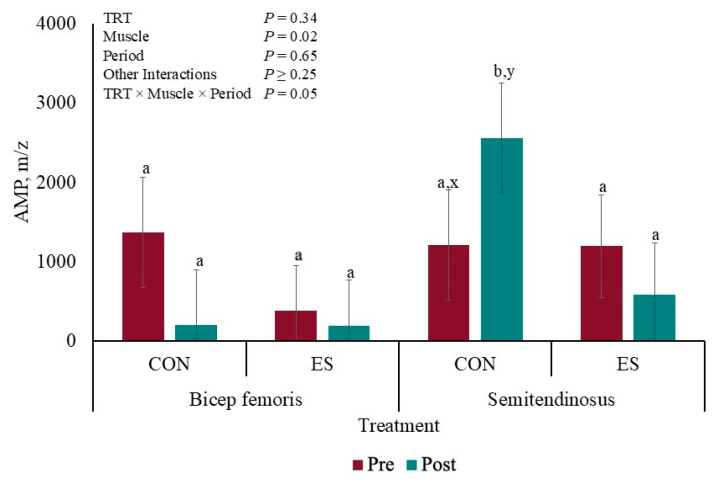
When measuring real-time in vivo muscle fatigue with electromyography (EMG), data collection can be compromised by premature sensor removal or environmental noise; therefore, the objective of this study was to develop a postmortem in vivo methodology to induce muscle fatigue and measure it using EMG. Barrows (N = 20) were stratified by weight and randomly allocated into one of two treatments. The treatments consisted of barrows being subjected to a hog electric stunner super-contraction cycle (ES) or not (CON) postmortem. The right hind limb bicep femoris (BF) and semitendinosus (ST) were selected for ambulatory movement simulation using electronic muscle stimulation (EMS). Muscle workload during EMS was measured with EMG using median power frequency (MdPF) and root mean square (RMS) as indicators of action potential velocity and muscle fiber recruitment. Ambulatory movement was induced and recorded for 20 min with a 4:4 duty cycle at 70 Hz. Muscle biopsies were collected pre- and post-EMS for metabolite analyses to corroborate muscle fatigue onset. There was a TRT × Muscle interaction for normalized RMS percentage (p < 0.01), where BF from CON barrows had greater values (p < 0.01). There were no interactions or TRT main effects for the MdPF normalized value (p ≥ 0.25), but there were Period and muscle effects on MdPF (p < 0.01). Bicep femoris had smaller (p < 0.01) MdPF than ST. The percentage of MdPF decreased (p < 0.01) by Period 5 compared to the other Periods, which did not differ from each other (p ≥ 0.38). There were TRT × Muscle and Muscle × Period interactions for ATP muscle concentration (p ≤ 0.03). The concentration of CON BF ATP was greater (p < 0.01) than that of ES BF and CON and ES ST, which did not differ from each other (p ≥ 0.11), but the APT concentration tended to differ between ES BF and ES ST (p = 0.06). Semitendinosus ATP concentration decreased (p < 0.01) post-EMS compared to ST pre- and BF pre- and post-EMS (p ≥ 0.29), but BF and ST concentration tended to differ pre-EMS (p = 0.07). The data indicated that EMS is a valuable tool for replicating ambulatory movement or physical activity, but super-contraction is not a means to accelerate postmortem muscle fatigue onset. Therefore, further refinement, such as longer EMS stimulation time, should be considered.
MetabolitesBiochemistry, Genetics and Molecular Biology-Molecular Biology
CiteScore
5.70
自引率
7.30%
发文量
1070
审稿时长
17.17 days
期刊介绍:
Metabolites (ISSN 2218-1989) is an international, peer-reviewed open access journal of metabolism and metabolomics. Metabolites publishes original research articles and review articles in all molecular aspects of metabolism relevant to the fields of metabolomics, metabolic biochemistry, computational and systems biology, biotechnology and medicine, with a particular focus on the biological roles of metabolites and small molecule biomarkers. Metabolites encourages scientists to publish their experimental and theoretical results in as much detail as possible. Therefore, there is no restriction on article length. Sufficient experimental details must be provided to enable the results to be accurately reproduced. Electronic material representing additional figures, materials and methods explanation, or supporting results and evidence can be submitted with the main manuscript as supplementary material.







 京公网安备 11010802042870号
京ICP备2023020795号-1
京公网安备 11010802042870号
京ICP备2023020795号-1

 分享
分享
 求助内容:
求助内容: 应助结果提醒方式:
 扫码关注我们
