Laharika Kappari, Todd J Applegate, Anthony E Glenn, Abhijeet Bakre, Revathi Shanmugasundaram
{"title":"检测肉仔鸡亚临床暴露于伏马菌素B1、脱氧雪腐镰刀菌醇和玉米赤霉烯酮的早期生物标志物。","authors":"Laharika Kappari, Todd J Applegate, Anthony E Glenn, Abhijeet Bakre, Revathi Shanmugasundaram","doi":"10.3390/toxins17010001","DOIUrl":null,"url":null,"abstract":"<p><p>Identifying biomarkers of mycotoxin effects in chickens will provide an opportunity for early intervention to reduce the impact of mycotoxicosis. This study aimed to identify whether serum enzyme concentrations, gut integrity, and liver miRNAs can be potential biomarkers for fumonisin B1 (FB1), deoxynivalenol (DON), and zearalenone (ZEA) toxicity in broiler birds as early as 14 days after exposure. A total of 720 male broiler chicks were distributed to six treatment groups: T1: control group (basal diet), T2 (2 FB1 + 2.5 DON + 0.9 ZEA), T3 (5 FB1 + 0.4 DON + 0.1 ZEA), T4 (9 FB1 + 3.5 DON + 0.7 ZEA), T5 (17 FB1 + 1.0 DON + 0.2 ZEA), and T6 (21 FB1 + 3.0 DON + 1.0 ZEA), all in mg/kg diet. On d14, there were no significant differences in the body weight gain (BWG) of mycotoxin treatment groups when compared to the control (<i>p</i> > 0.05), whereas on d21, T6 birds showed significantly reduced BWG compared to the control (<i>p</i> < 0.05). On d14, birds in T6 showed significant upregulation of liver miRNAs, gga-let-7a-5p (14.17-fold), gga-miR-9-5p (7.05-fold), gga-miR-217-5p (16.87-fold), gga-miR-133a-3p (7.41-fold), and gga-miR-215-5p (6.93-fold) (<i>p</i> < 0.05) and elevated serum fluorescein isothiocyanate-dextran (FITC-d) concentrations, aspartate aminotransferase (AST), and creatine kinase (CK) levels compared to the control (<i>p</i> < 0.05). On d21, T2 to T6 birds exhibited reduced serum phosphorus, glucose, and potassium, while total protein, FITC-d, AST, and CK levels increased compared to control (<i>p</i> < 0.05). These findings suggest that serum FITC-d, AST, CK, and liver miRNAs could serve as biomarkers for detecting mycotoxin exposure in broiler chickens.</p>","PeriodicalId":23119,"journal":{"name":"Toxins","volume":"17 1","pages":""},"PeriodicalIF":4.0000,"publicationDate":"2024-12-24","publicationTypes":"Journal Article","fieldsOfStudy":null,"isOpenAccess":false,"openAccessPdf":"https://www.ncbi.nlm.nih.gov/pmc/articles/PMC11769279/pdf/","citationCount":"0","resultStr":"{\"title\":\"Early Biomarkers for Detecting Subclinical Exposure to Fumonisin B1, Deoxynivalenol, and Zearalenone in Broiler Chickens.\",\"authors\":\"Laharika Kappari, Todd J Applegate, Anthony E Glenn, Abhijeet Bakre, Revathi Shanmugasundaram\",\"doi\":\"10.3390/toxins17010001\",\"DOIUrl\":null,\"url\":null,\"abstract\":\"<p><p>Identifying biomarkers of mycotoxin effects in chickens will provide an opportunity for early intervention to reduce the impact of mycotoxicosis. This study aimed to identify whether serum enzyme concentrations, gut integrity, and liver miRNAs can be potential biomarkers for fumonisin B1 (FB1), deoxynivalenol (DON), and zearalenone (ZEA) toxicity in broiler birds as early as 14 days after exposure. A total of 720 male broiler chicks were distributed to six treatment groups: T1: control group (basal diet), T2 (2 FB1 + 2.5 DON + 0.9 ZEA), T3 (5 FB1 + 0.4 DON + 0.1 ZEA), T4 (9 FB1 + 3.5 DON + 0.7 ZEA), T5 (17 FB1 + 1.0 DON + 0.2 ZEA), and T6 (21 FB1 + 3.0 DON + 1.0 ZEA), all in mg/kg diet. On d14, there were no significant differences in the body weight gain (BWG) of mycotoxin treatment groups when compared to the control (<i>p</i> > 0.05), whereas on d21, T6 birds showed significantly reduced BWG compared to the control (<i>p</i> < 0.05). On d14, birds in T6 showed significant upregulation of liver miRNAs, gga-let-7a-5p (14.17-fold), gga-miR-9-5p (7.05-fold), gga-miR-217-5p (16.87-fold), gga-miR-133a-3p (7.41-fold), and gga-miR-215-5p (6.93-fold) (<i>p</i> < 0.05) and elevated serum fluorescein isothiocyanate-dextran (FITC-d) concentrations, aspartate aminotransferase (AST), and creatine kinase (CK) levels compared to the control (<i>p</i> < 0.05). On d21, T2 to T6 birds exhibited reduced serum phosphorus, glucose, and potassium, while total protein, FITC-d, AST, and CK levels increased compared to control (<i>p</i> < 0.05). These findings suggest that serum FITC-d, AST, CK, and liver miRNAs could serve as biomarkers for detecting mycotoxin exposure in broiler chickens.</p>\",\"PeriodicalId\":23119,\"journal\":{\"name\":\"Toxins\",\"volume\":\"17 1\",\"pages\":\"\"},\"PeriodicalIF\":4.0000,\"publicationDate\":\"2024-12-24\",\"publicationTypes\":\"Journal Article\",\"fieldsOfStudy\":null,\"isOpenAccess\":false,\"openAccessPdf\":\"https://www.ncbi.nlm.nih.gov/pmc/articles/PMC11769279/pdf/\",\"citationCount\":\"0\",\"resultStr\":null,\"platform\":\"Semanticscholar\",\"paperid\":null,\"PeriodicalName\":\"Toxins\",\"FirstCategoryId\":\"3\",\"ListUrlMain\":\"https://doi.org/10.3390/toxins17010001\",\"RegionNum\":3,\"RegionCategory\":\"医学\",\"ArticlePicture\":[],\"TitleCN\":null,\"AbstractTextCN\":null,\"PMCID\":null,\"EPubDate\":\"\",\"PubModel\":\"\",\"JCR\":\"Q2\",\"JCRName\":\"FOOD SCIENCE & TECHNOLOGY\",\"Score\":null,\"Total\":0}","platform":"Semanticscholar","paperid":null,"PeriodicalName":"Toxins","FirstCategoryId":"3","ListUrlMain":"https://doi.org/10.3390/toxins17010001","RegionNum":3,"RegionCategory":"医学","ArticlePicture":[],"TitleCN":null,"AbstractTextCN":null,"PMCID":null,"EPubDate":"","PubModel":"","JCR":"Q2","JCRName":"FOOD SCIENCE & TECHNOLOGY","Score":null,"Total":0}
引用次数: 0
摘要
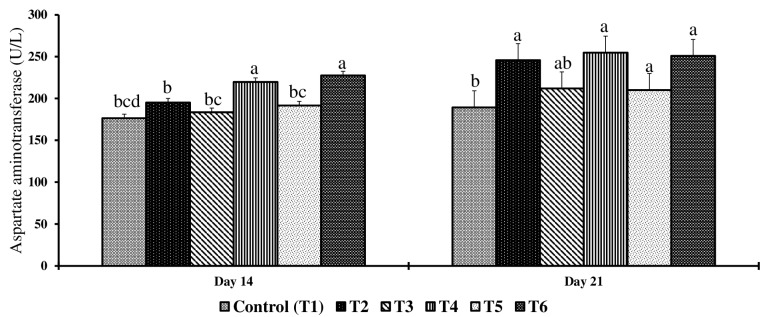
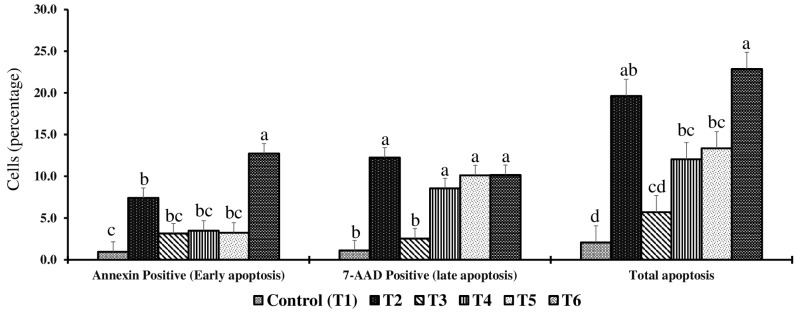
鉴定鸡体内真菌毒素作用的生物标志物将为早期干预提供机会,以减少真菌中毒的影响。本研究旨在确定肉鸡暴露后14天的血清酶浓度、肠道完整性和肝脏mirna是否可以作为伏马菌素B1 (FB1)、脱氧雪腐镰刀菌醇(DON)和玉米赤霉烯酮(ZEA)毒性的潜在生物标志物。选取720只肉鸡,随机分为6个处理组:T1:对照组(基础饲粮)、T2 (2 FB1 + 2.5 DON + 0.9 ZEA)、T3 (5 FB1 + 0.4 DON + 0.1 ZEA)、T4 (9 FB1 + 3.5 DON + 0.7 ZEA)、T5 (17 FB1 + 1.0 DON + 0.2 ZEA)和T6 (21 FB1 + 3.0 DON + 1.0 ZEA),饲粮添加量均为mg/kg。在第14天,真菌毒素处理组的体重增重与对照组相比无显著差异(p < 0.05),而在第21天,T6鸟的体重增重与对照组相比显著降低(p < 0.05)。在第14天,T6组的鸟类肝脏mirna、gga- lett -7a-5p(14.17倍)、gga-miR-9-5p(7.05倍)、gga-miR-217-5p(16.87倍)、gga-miR-133a-3p(7.41倍)和gga-miR-215-5p(6.93倍)显著上调(p < 0.05),血清荧光素异硫氰酸酯-葡聚糖(FITC-d)浓度、天冬氨酸转氨酶(AST)和肌酸激酶(CK)水平与对照组相比升高(p < 0.05)。在第21天,T2至T6雏鸟的血清磷、葡萄糖和钾水平较对照组降低,总蛋白、FITC-d、AST和CK水平较对照组升高(p < 0.05)。提示血清FITC-d、AST、CK和肝脏mirna可作为肉鸡霉菌毒素暴露检测的生物标志物。
Early Biomarkers for Detecting Subclinical Exposure to Fumonisin B1, Deoxynivalenol, and Zearalenone in Broiler Chickens.
Identifying biomarkers of mycotoxin effects in chickens will provide an opportunity for early intervention to reduce the impact of mycotoxicosis. This study aimed to identify whether serum enzyme concentrations, gut integrity, and liver miRNAs can be potential biomarkers for fumonisin B1 (FB1), deoxynivalenol (DON), and zearalenone (ZEA) toxicity in broiler birds as early as 14 days after exposure. A total of 720 male broiler chicks were distributed to six treatment groups: T1: control group (basal diet), T2 (2 FB1 + 2.5 DON + 0.9 ZEA), T3 (5 FB1 + 0.4 DON + 0.1 ZEA), T4 (9 FB1 + 3.5 DON + 0.7 ZEA), T5 (17 FB1 + 1.0 DON + 0.2 ZEA), and T6 (21 FB1 + 3.0 DON + 1.0 ZEA), all in mg/kg diet. On d14, there were no significant differences in the body weight gain (BWG) of mycotoxin treatment groups when compared to the control (p > 0.05), whereas on d21, T6 birds showed significantly reduced BWG compared to the control (p < 0.05). On d14, birds in T6 showed significant upregulation of liver miRNAs, gga-let-7a-5p (14.17-fold), gga-miR-9-5p (7.05-fold), gga-miR-217-5p (16.87-fold), gga-miR-133a-3p (7.41-fold), and gga-miR-215-5p (6.93-fold) (p < 0.05) and elevated serum fluorescein isothiocyanate-dextran (FITC-d) concentrations, aspartate aminotransferase (AST), and creatine kinase (CK) levels compared to the control (p < 0.05). On d21, T2 to T6 birds exhibited reduced serum phosphorus, glucose, and potassium, while total protein, FITC-d, AST, and CK levels increased compared to control (p < 0.05). These findings suggest that serum FITC-d, AST, CK, and liver miRNAs could serve as biomarkers for detecting mycotoxin exposure in broiler chickens.
期刊介绍:
Toxins (ISSN 2072-6651) is an international, peer-reviewed open access journal which provides an advanced forum for studies related to toxins and toxinology. It publishes reviews, regular research papers and short communications. Our aim is to encourage scientists to publish their experimental and theoretical results in as much detail as possible. There is no restriction on the length of the papers. The full experimental details must be provided so that the results can be reproduced.





 京公网安备 11010802042870号
京ICP备2023020795号-1
京公网安备 11010802042870号
京ICP备2023020795号-1

 分享
分享
 求助内容:
求助内容: 应助结果提醒方式:
 扫码关注我们
