{"title":"胃食管反流病首选按需非舒拉赞治疗:一项前瞻性队列研究","authors":"Byung Wook Jung, Chan Hyuk Park, Chang Soo Eun","doi":"10.3390/jpm15010019","DOIUrl":null,"url":null,"abstract":"<p><p><b>Introduction:</b> Maintenance therapy is crucial in managing and preventing symptom relapse in gastroesophageal reflux disease (GERD), with continuous and on-demand therapy being the common approaches. However, maintenance therapy using potassium-competitive acid blockers (P-CABs), such as fexuprazan, remains incompletely evaluated. <b>Methods:</b> This single-center, single-arm, prospective cohort study enrolled individuals with weekly heartburn or acid regurgitation and confirmed erosive esophagitis. The participants received 40 mg fexuprazan daily for 4 weeks as initial therapy, followed by 4 weeks of maintenance therapy. Patients chose either continuous or on-demand therapy for maintenance, according to their preference. The primary endpoint was the proportion of patients selecting on-demand therapy. The symptom scores were assessed using the GERD questionnaire (GERD-Q) and patient assessment of upper-gastrointestinal-disorders symptoms questionnaire (PAGI-SYM). <b>Results:</b> The 31 included participants showed a significant reduction in symptom scores after initial treatment (baseline vs. 4-week: GERD-Q, 9.0 vs. 6.5, <i>p</i> < 0.001; PAGI-SYM, 29.0 vs. 10.8, <i>p</i> < 0.001). Twenty-one (67.7%) patients chose on-demand therapy after initial treatment. The symptom scores did not differ significantly before and after maintenance therapy (4-week vs. 8-week: GERD-Q, 6.5 vs. 6.0, <i>p</i> = 0.225; PAGI-SYM, 10.8 vs. 9.0, <i>p</i> = 0.354). Although this relation was not significant, patients experiencing larger decreases in symptom scores tended to prefer on-demand therapy. After maintenance therapy, the symptom scores did not differ between continuous and on-demand therapy (GERD-Q, 5.3 vs. 6.3, <i>p</i> = 0.342; PAGI-SYM, 9.4 vs. 8.8, <i>p</i> = 0.611). <b>Conclusions:</b> Fexuprazan was effective as an initial and maintenance therapy in patients with GERD who showed typical symptoms. Approximately 68% of the patients preferred on-demand therapy as a maintenance treatment. Based on the patient's preference for maintenance therapy, symptom control did not differ between continuous and on-demand therapy.</p>","PeriodicalId":16722,"journal":{"name":"Journal of Personalized Medicine","volume":"15 1","pages":""},"PeriodicalIF":3.0000,"publicationDate":"2025-01-06","publicationTypes":"Journal Article","fieldsOfStudy":null,"isOpenAccess":false,"openAccessPdf":"https://www.ncbi.nlm.nih.gov/pmc/articles/PMC11766820/pdf/","citationCount":"0","resultStr":"{\"title\":\"Preference for On-Demand Fexuprazan Therapy in Gastroesophageal Reflux Disease: A Prospective Cohort Study.\",\"authors\":\"Byung Wook Jung, Chan Hyuk Park, Chang Soo Eun\",\"doi\":\"10.3390/jpm15010019\",\"DOIUrl\":null,\"url\":null,\"abstract\":\"<p><p><b>Introduction:</b> Maintenance therapy is crucial in managing and preventing symptom relapse in gastroesophageal reflux disease (GERD), with continuous and on-demand therapy being the common approaches. However, maintenance therapy using potassium-competitive acid blockers (P-CABs), such as fexuprazan, remains incompletely evaluated. <b>Methods:</b> This single-center, single-arm, prospective cohort study enrolled individuals with weekly heartburn or acid regurgitation and confirmed erosive esophagitis. The participants received 40 mg fexuprazan daily for 4 weeks as initial therapy, followed by 4 weeks of maintenance therapy. Patients chose either continuous or on-demand therapy for maintenance, according to their preference. The primary endpoint was the proportion of patients selecting on-demand therapy. The symptom scores were assessed using the GERD questionnaire (GERD-Q) and patient assessment of upper-gastrointestinal-disorders symptoms questionnaire (PAGI-SYM). <b>Results:</b> The 31 included participants showed a significant reduction in symptom scores after initial treatment (baseline vs. 4-week: GERD-Q, 9.0 vs. 6.5, <i>p</i> < 0.001; PAGI-SYM, 29.0 vs. 10.8, <i>p</i> < 0.001). Twenty-one (67.7%) patients chose on-demand therapy after initial treatment. The symptom scores did not differ significantly before and after maintenance therapy (4-week vs. 8-week: GERD-Q, 6.5 vs. 6.0, <i>p</i> = 0.225; PAGI-SYM, 10.8 vs. 9.0, <i>p</i> = 0.354). Although this relation was not significant, patients experiencing larger decreases in symptom scores tended to prefer on-demand therapy. After maintenance therapy, the symptom scores did not differ between continuous and on-demand therapy (GERD-Q, 5.3 vs. 6.3, <i>p</i> = 0.342; PAGI-SYM, 9.4 vs. 8.8, <i>p</i> = 0.611). <b>Conclusions:</b> Fexuprazan was effective as an initial and maintenance therapy in patients with GERD who showed typical symptoms. Approximately 68% of the patients preferred on-demand therapy as a maintenance treatment. Based on the patient's preference for maintenance therapy, symptom control did not differ between continuous and on-demand therapy.</p>\",\"PeriodicalId\":16722,\"journal\":{\"name\":\"Journal of Personalized Medicine\",\"volume\":\"15 1\",\"pages\":\"\"},\"PeriodicalIF\":3.0000,\"publicationDate\":\"2025-01-06\",\"publicationTypes\":\"Journal Article\",\"fieldsOfStudy\":null,\"isOpenAccess\":false,\"openAccessPdf\":\"https://www.ncbi.nlm.nih.gov/pmc/articles/PMC11766820/pdf/\",\"citationCount\":\"0\",\"resultStr\":null,\"platform\":\"Semanticscholar\",\"paperid\":null,\"PeriodicalName\":\"Journal of Personalized Medicine\",\"FirstCategoryId\":\"3\",\"ListUrlMain\":\"https://doi.org/10.3390/jpm15010019\",\"RegionNum\":3,\"RegionCategory\":\"医学\",\"ArticlePicture\":[],\"TitleCN\":null,\"AbstractTextCN\":null,\"PMCID\":null,\"EPubDate\":\"\",\"PubModel\":\"\",\"JCR\":\"Q2\",\"JCRName\":\"HEALTH CARE SCIENCES & SERVICES\",\"Score\":null,\"Total\":0}","platform":"Semanticscholar","paperid":null,"PeriodicalName":"Journal of Personalized Medicine","FirstCategoryId":"3","ListUrlMain":"https://doi.org/10.3390/jpm15010019","RegionNum":3,"RegionCategory":"医学","ArticlePicture":[],"TitleCN":null,"AbstractTextCN":null,"PMCID":null,"EPubDate":"","PubModel":"","JCR":"Q2","JCRName":"HEALTH CARE SCIENCES & SERVICES","Score":null,"Total":0}
引用次数: 0
摘要
简介:维持治疗是控制和预防胃食管反流病(GERD)症状复发的关键,持续和按需治疗是常见的方法。然而,使用钾竞争酸阻滞剂(p - cab)的维持治疗,如非昔普拉赞,仍然没有完全评估。方法:这项单中心、单臂、前瞻性队列研究招募了每周出现胃灼热或胃酸倒流并证实糜烂性食管炎的患者。参与者每天接受40mg非须普拉赞作为初始治疗,持续4周,随后进行4周的维持治疗。患者根据自己的喜好选择持续治疗或按需治疗进行维持。主要终点是选择按需治疗的患者比例。采用胃食管反流问卷(GERD- q)和患者上消化道疾病症状评估问卷(PAGI-SYM)评估症状评分。结果:31名纳入的参与者在初始治疗后症状评分显著降低(基线vs. 4周:GERD-Q, 9.0 vs. 6.5, p < 0.001;PAGI-SYM, 29.0比10.8,p < 0.001)。21例(67.7%)患者在初始治疗后选择按需治疗。维持治疗前后症状评分无显著差异(4周vs. 8周:GERD-Q, 6.5 vs. 6.0, p = 0.225;PAGI-SYM, 10.8 vs. 9.0, p = 0.354)。虽然这种关系不显著,但症状评分下降较大的患者倾向于选择按需治疗。维持治疗后,症状评分在持续治疗和按需治疗之间无差异(GERD-Q, 5.3 vs. 6.3, p = 0.342;PAGI-SYM, 9.4比8.8,p = 0.611)。结论:对于表现出典型症状的胃食管反流患者,非舒拉赞作为初始和维持治疗是有效的。大约68%的患者选择按需治疗作为维持治疗。基于患者对维持治疗的偏好,症状控制在持续治疗和按需治疗之间没有差异。
Preference for On-Demand Fexuprazan Therapy in Gastroesophageal Reflux Disease: A Prospective Cohort Study.
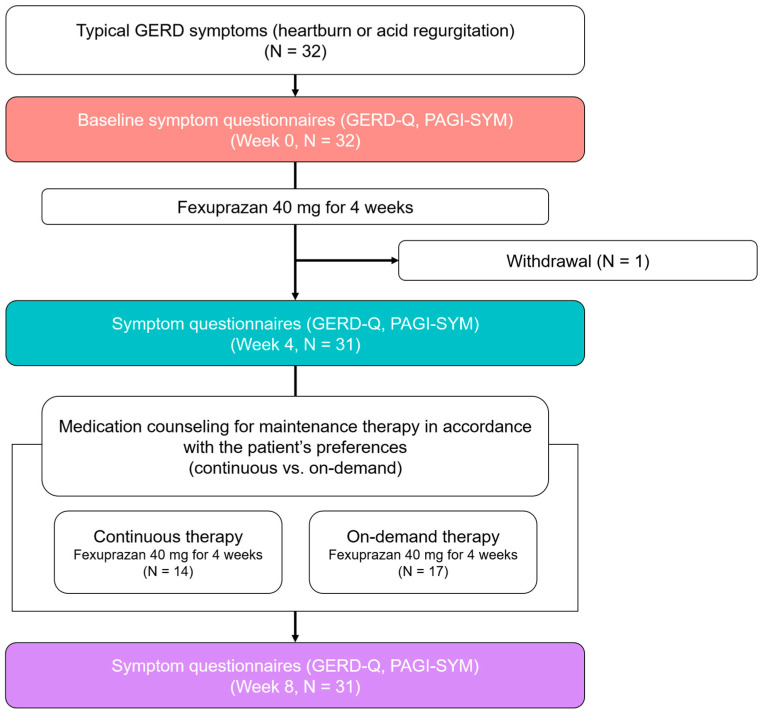
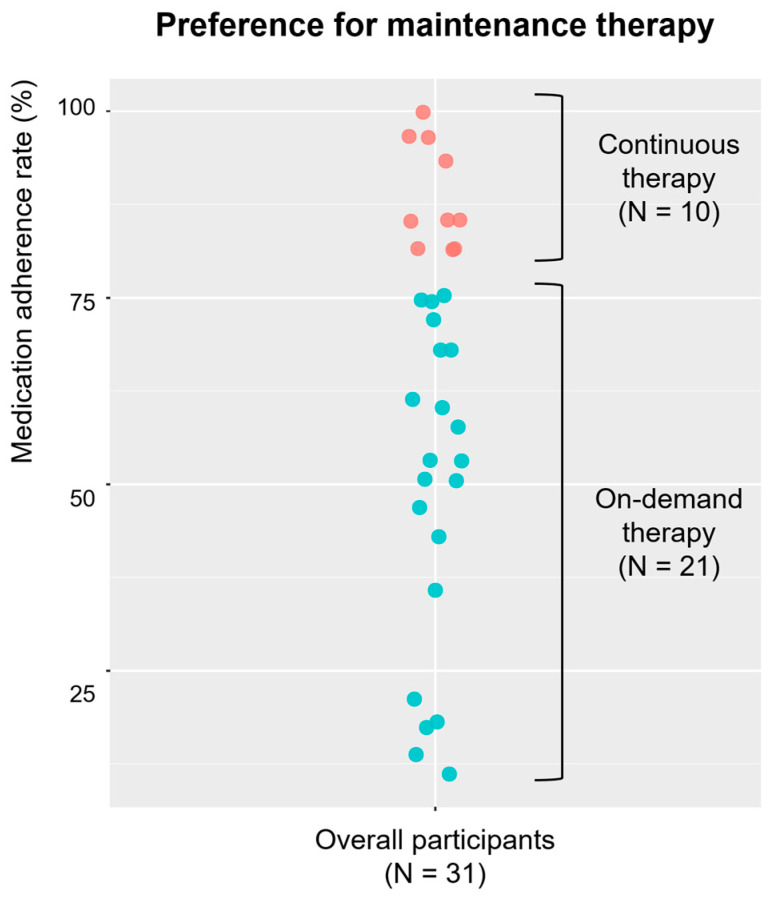
Introduction: Maintenance therapy is crucial in managing and preventing symptom relapse in gastroesophageal reflux disease (GERD), with continuous and on-demand therapy being the common approaches. However, maintenance therapy using potassium-competitive acid blockers (P-CABs), such as fexuprazan, remains incompletely evaluated. Methods: This single-center, single-arm, prospective cohort study enrolled individuals with weekly heartburn or acid regurgitation and confirmed erosive esophagitis. The participants received 40 mg fexuprazan daily for 4 weeks as initial therapy, followed by 4 weeks of maintenance therapy. Patients chose either continuous or on-demand therapy for maintenance, according to their preference. The primary endpoint was the proportion of patients selecting on-demand therapy. The symptom scores were assessed using the GERD questionnaire (GERD-Q) and patient assessment of upper-gastrointestinal-disorders symptoms questionnaire (PAGI-SYM). Results: The 31 included participants showed a significant reduction in symptom scores after initial treatment (baseline vs. 4-week: GERD-Q, 9.0 vs. 6.5, p < 0.001; PAGI-SYM, 29.0 vs. 10.8, p < 0.001). Twenty-one (67.7%) patients chose on-demand therapy after initial treatment. The symptom scores did not differ significantly before and after maintenance therapy (4-week vs. 8-week: GERD-Q, 6.5 vs. 6.0, p = 0.225; PAGI-SYM, 10.8 vs. 9.0, p = 0.354). Although this relation was not significant, patients experiencing larger decreases in symptom scores tended to prefer on-demand therapy. After maintenance therapy, the symptom scores did not differ between continuous and on-demand therapy (GERD-Q, 5.3 vs. 6.3, p = 0.342; PAGI-SYM, 9.4 vs. 8.8, p = 0.611). Conclusions: Fexuprazan was effective as an initial and maintenance therapy in patients with GERD who showed typical symptoms. Approximately 68% of the patients preferred on-demand therapy as a maintenance treatment. Based on the patient's preference for maintenance therapy, symptom control did not differ between continuous and on-demand therapy.
期刊介绍:
Journal of Personalized Medicine (JPM; ISSN 2075-4426) is an international, open access journal aimed at bringing all aspects of personalized medicine to one platform. JPM publishes cutting edge, innovative preclinical and translational scientific research and technologies related to personalized medicine (e.g., pharmacogenomics/proteomics, systems biology). JPM recognizes that personalized medicine—the assessment of genetic, environmental and host factors that cause variability of individuals—is a challenging, transdisciplinary topic that requires discussions from a range of experts. For a comprehensive perspective of personalized medicine, JPM aims to integrate expertise from the molecular and translational sciences, therapeutics and diagnostics, as well as discussions of regulatory, social, ethical and policy aspects. We provide a forum to bring together academic and clinical researchers, biotechnology, diagnostic and pharmaceutical companies, health professionals, regulatory and ethical experts, and government and regulatory authorities.





 京公网安备 11010802042870号
京ICP备2023020795号-1
京公网安备 11010802042870号
京ICP备2023020795号-1

 分享
分享
 求助内容:
求助内容: 应助结果提醒方式:
 扫码关注我们
