Jessica Seetge, Balázs Cséke, Zsófia Nozomi Karádi, Edit Bosnyák, László Szapáry
{"title":"Stroke- score:个性化急性缺血性卒中治疗以改善患者预后。","authors":"Jessica Seetge, Balázs Cséke, Zsófia Nozomi Karádi, Edit Bosnyák, László Szapáry","doi":"10.3390/jpm15010018","DOIUrl":null,"url":null,"abstract":"<p><p><b>Background/Objectives</b>: Acute ischemic stroke (AIS) is a leading cause of disability and mortality worldwide. Despite advances in interventions such as thrombolysis (TL) and mechanical thrombectomy (MT), current treatment protocols remain largely standardized, focusing on general eligibility rather than individual patient characteristics. To address this gap, we introduce the Stroke-SCORE (Simplified Clinical Outcome Risk Evaluation), a predictive tool designed to personalize AIS management by providing data-driven, individualized recommendations to optimize treatment strategies and improve patient outcomes. <b>Methods:</b> The Stroke-SCORE was derived using retrospective data from 793 AIS patients admitted to the University of Pécs (February 2023-September 2024). Logistic regression analysis identified age, National Institutes of Health Stroke Scale (NIHSS) score at admission, and pre-morbid modified Rankin Scale (pre-mRS) score as key predictors of unfavorable outcomes at 90 days (defined as modified Rankin Scale [mRS] score > 2). Based on these predictors, a simplified risk score was developed to stratify patients into low-, moderate-, and high-risk groups, guiding treatment decisions on TL, MT, combination therapy (TL + MT), or standard care (SC). Internal validation was performed to assess the model's predictive performance via receiver operating characteristic (ROC) analysis and isotonic regression calibration with bootstrapping. <b>Results:</b> The Stroke-SCORE was moderately positively correlated with a 90-day mRS score > 2 (odds ratio [OR] = 0.70, 95% confidence interval [CI]: 0.58-0.83, <i>p</i> < 0.001), with an area under the curve (AUC) of 0.86, a sensitivity and specificity of 79% and 81%, respectively, and an overall accuracy of 80%. Simulations indicated that personalized treatment guided by the Stroke-SCORE significantly reduced unfavorable outcomes. <b>Conclusions:</b> The Stroke-SCORE demonstrates strong predictive performance as a practical, data-driven approach for personalizing AIS treatment decisions. In the future, external, multicenter prospective validation is needed to confirm its applicability in real-world settings.</p>","PeriodicalId":16722,"journal":{"name":"Journal of Personalized Medicine","volume":"15 1","pages":""},"PeriodicalIF":3.0000,"publicationDate":"2025-01-04","publicationTypes":"Journal Article","fieldsOfStudy":null,"isOpenAccess":false,"openAccessPdf":"https://www.ncbi.nlm.nih.gov/pmc/articles/PMC11766924/pdf/","citationCount":"0","resultStr":"{\"title\":\"Stroke-SCORE: Personalizing Acute Ischemic Stroke Treatment to Improve Patient Outcomes.\",\"authors\":\"Jessica Seetge, Balázs Cséke, Zsófia Nozomi Karádi, Edit Bosnyák, László Szapáry\",\"doi\":\"10.3390/jpm15010018\",\"DOIUrl\":null,\"url\":null,\"abstract\":\"<p><p><b>Background/Objectives</b>: Acute ischemic stroke (AIS) is a leading cause of disability and mortality worldwide. Despite advances in interventions such as thrombolysis (TL) and mechanical thrombectomy (MT), current treatment protocols remain largely standardized, focusing on general eligibility rather than individual patient characteristics. To address this gap, we introduce the Stroke-SCORE (Simplified Clinical Outcome Risk Evaluation), a predictive tool designed to personalize AIS management by providing data-driven, individualized recommendations to optimize treatment strategies and improve patient outcomes. <b>Methods:</b> The Stroke-SCORE was derived using retrospective data from 793 AIS patients admitted to the University of Pécs (February 2023-September 2024). Logistic regression analysis identified age, National Institutes of Health Stroke Scale (NIHSS) score at admission, and pre-morbid modified Rankin Scale (pre-mRS) score as key predictors of unfavorable outcomes at 90 days (defined as modified Rankin Scale [mRS] score > 2). Based on these predictors, a simplified risk score was developed to stratify patients into low-, moderate-, and high-risk groups, guiding treatment decisions on TL, MT, combination therapy (TL + MT), or standard care (SC). Internal validation was performed to assess the model's predictive performance via receiver operating characteristic (ROC) analysis and isotonic regression calibration with bootstrapping. <b>Results:</b> The Stroke-SCORE was moderately positively correlated with a 90-day mRS score > 2 (odds ratio [OR] = 0.70, 95% confidence interval [CI]: 0.58-0.83, <i>p</i> < 0.001), with an area under the curve (AUC) of 0.86, a sensitivity and specificity of 79% and 81%, respectively, and an overall accuracy of 80%. Simulations indicated that personalized treatment guided by the Stroke-SCORE significantly reduced unfavorable outcomes. <b>Conclusions:</b> The Stroke-SCORE demonstrates strong predictive performance as a practical, data-driven approach for personalizing AIS treatment decisions. In the future, external, multicenter prospective validation is needed to confirm its applicability in real-world settings.</p>\",\"PeriodicalId\":16722,\"journal\":{\"name\":\"Journal of Personalized Medicine\",\"volume\":\"15 1\",\"pages\":\"\"},\"PeriodicalIF\":3.0000,\"publicationDate\":\"2025-01-04\",\"publicationTypes\":\"Journal Article\",\"fieldsOfStudy\":null,\"isOpenAccess\":false,\"openAccessPdf\":\"https://www.ncbi.nlm.nih.gov/pmc/articles/PMC11766924/pdf/\",\"citationCount\":\"0\",\"resultStr\":null,\"platform\":\"Semanticscholar\",\"paperid\":null,\"PeriodicalName\":\"Journal of Personalized Medicine\",\"FirstCategoryId\":\"3\",\"ListUrlMain\":\"https://doi.org/10.3390/jpm15010018\",\"RegionNum\":3,\"RegionCategory\":\"医学\",\"ArticlePicture\":[],\"TitleCN\":null,\"AbstractTextCN\":null,\"PMCID\":null,\"EPubDate\":\"\",\"PubModel\":\"\",\"JCR\":\"Q2\",\"JCRName\":\"HEALTH CARE SCIENCES & SERVICES\",\"Score\":null,\"Total\":0}","platform":"Semanticscholar","paperid":null,"PeriodicalName":"Journal of Personalized Medicine","FirstCategoryId":"3","ListUrlMain":"https://doi.org/10.3390/jpm15010018","RegionNum":3,"RegionCategory":"医学","ArticlePicture":[],"TitleCN":null,"AbstractTextCN":null,"PMCID":null,"EPubDate":"","PubModel":"","JCR":"Q2","JCRName":"HEALTH CARE SCIENCES & SERVICES","Score":null,"Total":0}
引用次数: 0
摘要
背景/目的:急性缺血性卒中(AIS)是世界范围内致残和死亡的主要原因。尽管溶栓(TL)和机械取栓(MT)等干预措施取得了进展,但目前的治疗方案在很大程度上仍然是标准化的,关注的是一般资格,而不是个体患者的特征。为了解决这一差距,我们引入了Stroke-SCORE(简化临床结果风险评估),这是一种预测工具,旨在通过提供数据驱动的个性化建议来优化治疗策略并改善患者预后,从而实现AIS管理的个性化。方法:卒中评分是根据2023年2月至2024年9月在psamacs大学(University of psamacs)住院的793例AIS患者的回顾性数据得出的。Logistic回归分析确定年龄、入院时美国国立卫生研究院卒中量表(NIHSS)评分和发病前改良Rankin量表(pre-mRS)评分为90天不良预后的关键预测因子(定义为改良Rankin量表[mRS]评分bbbb2)。基于这些预测因子,开发了简化的风险评分,将患者分为低、中、高风险组,指导TL、MT、联合治疗(TL + MT)或标准治疗(SC)的治疗决策。通过受试者工作特征(ROC)分析和bootstrapping等渗回归校准进行内部验证,以评估模型的预测性能。结果:卒中- score与90天mRS评分>.2中度正相关(优势比[OR] = 0.70, 95%可信区间[CI]: 0.58-0.83, p < 0.001),曲线下面积(AUC)为0.86,敏感性和特异性分别为79%和81%,总体准确率为80%。模拟表明,在Stroke-SCORE指导下的个性化治疗显著减少了不良结果。结论:Stroke-SCORE作为个性化AIS治疗决策的一种实用的、数据驱动的方法,具有很强的预测性能。在未来,需要外部的、多中心的前瞻性验证来确认其在现实环境中的适用性。
Stroke-SCORE: Personalizing Acute Ischemic Stroke Treatment to Improve Patient Outcomes.
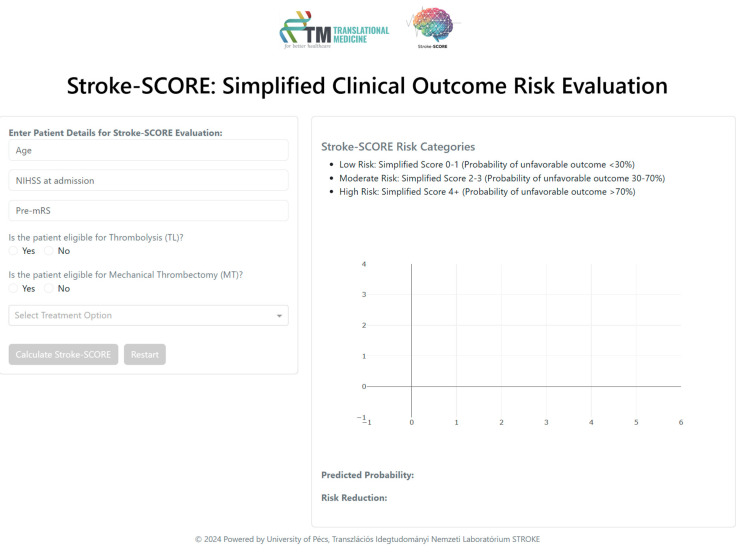
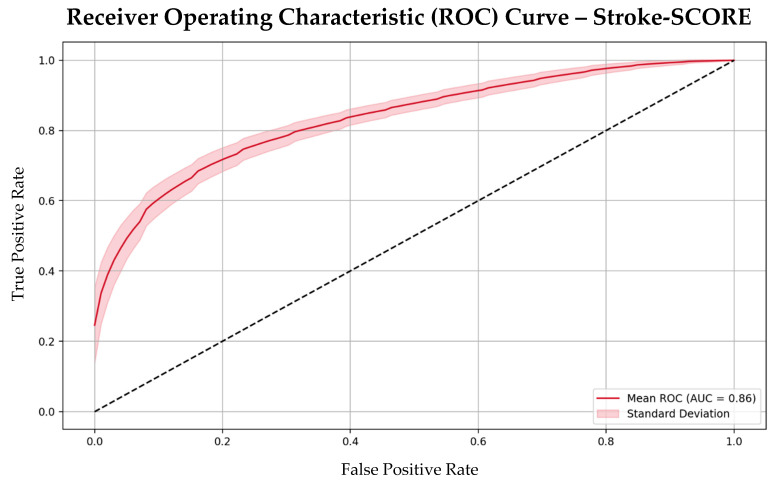
Background/Objectives: Acute ischemic stroke (AIS) is a leading cause of disability and mortality worldwide. Despite advances in interventions such as thrombolysis (TL) and mechanical thrombectomy (MT), current treatment protocols remain largely standardized, focusing on general eligibility rather than individual patient characteristics. To address this gap, we introduce the Stroke-SCORE (Simplified Clinical Outcome Risk Evaluation), a predictive tool designed to personalize AIS management by providing data-driven, individualized recommendations to optimize treatment strategies and improve patient outcomes. Methods: The Stroke-SCORE was derived using retrospective data from 793 AIS patients admitted to the University of Pécs (February 2023-September 2024). Logistic regression analysis identified age, National Institutes of Health Stroke Scale (NIHSS) score at admission, and pre-morbid modified Rankin Scale (pre-mRS) score as key predictors of unfavorable outcomes at 90 days (defined as modified Rankin Scale [mRS] score > 2). Based on these predictors, a simplified risk score was developed to stratify patients into low-, moderate-, and high-risk groups, guiding treatment decisions on TL, MT, combination therapy (TL + MT), or standard care (SC). Internal validation was performed to assess the model's predictive performance via receiver operating characteristic (ROC) analysis and isotonic regression calibration with bootstrapping. Results: The Stroke-SCORE was moderately positively correlated with a 90-day mRS score > 2 (odds ratio [OR] = 0.70, 95% confidence interval [CI]: 0.58-0.83, p < 0.001), with an area under the curve (AUC) of 0.86, a sensitivity and specificity of 79% and 81%, respectively, and an overall accuracy of 80%. Simulations indicated that personalized treatment guided by the Stroke-SCORE significantly reduced unfavorable outcomes. Conclusions: The Stroke-SCORE demonstrates strong predictive performance as a practical, data-driven approach for personalizing AIS treatment decisions. In the future, external, multicenter prospective validation is needed to confirm its applicability in real-world settings.
期刊介绍:
Journal of Personalized Medicine (JPM; ISSN 2075-4426) is an international, open access journal aimed at bringing all aspects of personalized medicine to one platform. JPM publishes cutting edge, innovative preclinical and translational scientific research and technologies related to personalized medicine (e.g., pharmacogenomics/proteomics, systems biology). JPM recognizes that personalized medicine—the assessment of genetic, environmental and host factors that cause variability of individuals—is a challenging, transdisciplinary topic that requires discussions from a range of experts. For a comprehensive perspective of personalized medicine, JPM aims to integrate expertise from the molecular and translational sciences, therapeutics and diagnostics, as well as discussions of regulatory, social, ethical and policy aspects. We provide a forum to bring together academic and clinical researchers, biotechnology, diagnostic and pharmaceutical companies, health professionals, regulatory and ethical experts, and government and regulatory authorities.





 京公网安备 11010802042870号
京ICP备2023020795号-1
京公网安备 11010802042870号
京ICP备2023020795号-1

 分享
分享
 求助内容:
求助内容: 应助结果提醒方式:
 扫码关注我们
