Andrea Piccioni, Fabio Spagnuolo, Silvia Baroni, Gabriele Savioli, Federico Valletta, Maria Chiara Bungaro, Gianluca Tullo, Marcello Candelli, Antonio Gasbarrini, Francesco Franceschi
{"title":"在脓毒症早期诊断中使用单核细胞分布宽度(MDW)需要标准化指南。","authors":"Andrea Piccioni, Fabio Spagnuolo, Silvia Baroni, Gabriele Savioli, Federico Valletta, Maria Chiara Bungaro, Gianluca Tullo, Marcello Candelli, Antonio Gasbarrini, Francesco Franceschi","doi":"10.3390/jpm15010005","DOIUrl":null,"url":null,"abstract":"<p><p>Sepsis is a complex and potentially life-threatening syndrome characterized by an abnormal immune response to an infection, which can lead to organ dysfunction, septic shock, and death. Early diagnosis is crucial to improving prognosis and reducing hospital management costs. This narrative review aims to summarize and evaluate the current literature on the role of monocyte distribution width (MDW) as a diagnostic biomarker for sepsis, highlighting its advantages, limitations, and potential clinical applications. MDW measures the volumetric distribution width of monocytes, reflecting monocytic anisocytosis, and is detected using advanced hematological analyzers. In 2019, it was approved by the FDA as a biomarker for sepsis due to its ability to identify systemic inflammatory response at an early stage. Thirty-one studies analyzed by us have shown that an increased MDW value is associated with a higher risk of sepsis and that its combination with clinical parameters (such as qSOFA) and other biomarkers (CRP, PCT) can enhance diagnostic sensitivity and risk stratification capacity. Despite its high sensitivity, MDW has lower specificity compared to more established biomarkers such as procalcitonin, thus requiring a multimodal integration for an accurate diagnosis. The use of MDW in emergency and intensive care settings represents an opportunity to improve early sepsis diagnosis and critical patient management, particularly when combined with other markers and clinical tools. However, further studies are needed to define a universal cut-off and confirm its validity in different clinical contexts and pathological scenarios.</p>","PeriodicalId":16722,"journal":{"name":"Journal of Personalized Medicine","volume":"15 1","pages":""},"PeriodicalIF":3.0000,"publicationDate":"2024-12-27","publicationTypes":"Journal Article","fieldsOfStudy":null,"isOpenAccess":false,"openAccessPdf":"https://www.ncbi.nlm.nih.gov/pmc/articles/PMC11766780/pdf/","citationCount":"0","resultStr":"{\"title\":\"The Need for Standardized Guidelines for the Use of Monocyte Distribution Width (MDW) in the Early Diagnosis of Sepsis.\",\"authors\":\"Andrea Piccioni, Fabio Spagnuolo, Silvia Baroni, Gabriele Savioli, Federico Valletta, Maria Chiara Bungaro, Gianluca Tullo, Marcello Candelli, Antonio Gasbarrini, Francesco Franceschi\",\"doi\":\"10.3390/jpm15010005\",\"DOIUrl\":null,\"url\":null,\"abstract\":\"<p><p>Sepsis is a complex and potentially life-threatening syndrome characterized by an abnormal immune response to an infection, which can lead to organ dysfunction, septic shock, and death. Early diagnosis is crucial to improving prognosis and reducing hospital management costs. This narrative review aims to summarize and evaluate the current literature on the role of monocyte distribution width (MDW) as a diagnostic biomarker for sepsis, highlighting its advantages, limitations, and potential clinical applications. MDW measures the volumetric distribution width of monocytes, reflecting monocytic anisocytosis, and is detected using advanced hematological analyzers. In 2019, it was approved by the FDA as a biomarker for sepsis due to its ability to identify systemic inflammatory response at an early stage. Thirty-one studies analyzed by us have shown that an increased MDW value is associated with a higher risk of sepsis and that its combination with clinical parameters (such as qSOFA) and other biomarkers (CRP, PCT) can enhance diagnostic sensitivity and risk stratification capacity. Despite its high sensitivity, MDW has lower specificity compared to more established biomarkers such as procalcitonin, thus requiring a multimodal integration for an accurate diagnosis. The use of MDW in emergency and intensive care settings represents an opportunity to improve early sepsis diagnosis and critical patient management, particularly when combined with other markers and clinical tools. However, further studies are needed to define a universal cut-off and confirm its validity in different clinical contexts and pathological scenarios.</p>\",\"PeriodicalId\":16722,\"journal\":{\"name\":\"Journal of Personalized Medicine\",\"volume\":\"15 1\",\"pages\":\"\"},\"PeriodicalIF\":3.0000,\"publicationDate\":\"2024-12-27\",\"publicationTypes\":\"Journal Article\",\"fieldsOfStudy\":null,\"isOpenAccess\":false,\"openAccessPdf\":\"https://www.ncbi.nlm.nih.gov/pmc/articles/PMC11766780/pdf/\",\"citationCount\":\"0\",\"resultStr\":null,\"platform\":\"Semanticscholar\",\"paperid\":null,\"PeriodicalName\":\"Journal of Personalized Medicine\",\"FirstCategoryId\":\"3\",\"ListUrlMain\":\"https://doi.org/10.3390/jpm15010005\",\"RegionNum\":3,\"RegionCategory\":\"医学\",\"ArticlePicture\":[],\"TitleCN\":null,\"AbstractTextCN\":null,\"PMCID\":null,\"EPubDate\":\"\",\"PubModel\":\"\",\"JCR\":\"Q2\",\"JCRName\":\"HEALTH CARE SCIENCES & SERVICES\",\"Score\":null,\"Total\":0}","platform":"Semanticscholar","paperid":null,"PeriodicalName":"Journal of Personalized Medicine","FirstCategoryId":"3","ListUrlMain":"https://doi.org/10.3390/jpm15010005","RegionNum":3,"RegionCategory":"医学","ArticlePicture":[],"TitleCN":null,"AbstractTextCN":null,"PMCID":null,"EPubDate":"","PubModel":"","JCR":"Q2","JCRName":"HEALTH CARE SCIENCES & SERVICES","Score":null,"Total":0}
The Need for Standardized Guidelines for the Use of Monocyte Distribution Width (MDW) in the Early Diagnosis of Sepsis.
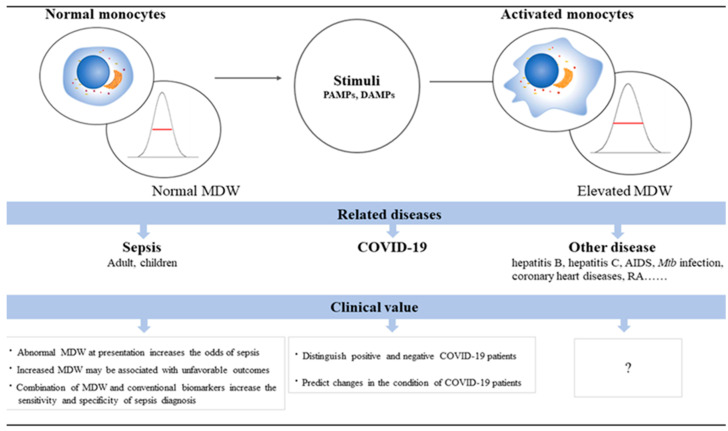
Sepsis is a complex and potentially life-threatening syndrome characterized by an abnormal immune response to an infection, which can lead to organ dysfunction, septic shock, and death. Early diagnosis is crucial to improving prognosis and reducing hospital management costs. This narrative review aims to summarize and evaluate the current literature on the role of monocyte distribution width (MDW) as a diagnostic biomarker for sepsis, highlighting its advantages, limitations, and potential clinical applications. MDW measures the volumetric distribution width of monocytes, reflecting monocytic anisocytosis, and is detected using advanced hematological analyzers. In 2019, it was approved by the FDA as a biomarker for sepsis due to its ability to identify systemic inflammatory response at an early stage. Thirty-one studies analyzed by us have shown that an increased MDW value is associated with a higher risk of sepsis and that its combination with clinical parameters (such as qSOFA) and other biomarkers (CRP, PCT) can enhance diagnostic sensitivity and risk stratification capacity. Despite its high sensitivity, MDW has lower specificity compared to more established biomarkers such as procalcitonin, thus requiring a multimodal integration for an accurate diagnosis. The use of MDW in emergency and intensive care settings represents an opportunity to improve early sepsis diagnosis and critical patient management, particularly when combined with other markers and clinical tools. However, further studies are needed to define a universal cut-off and confirm its validity in different clinical contexts and pathological scenarios.
期刊介绍:
Journal of Personalized Medicine (JPM; ISSN 2075-4426) is an international, open access journal aimed at bringing all aspects of personalized medicine to one platform. JPM publishes cutting edge, innovative preclinical and translational scientific research and technologies related to personalized medicine (e.g., pharmacogenomics/proteomics, systems biology). JPM recognizes that personalized medicine—the assessment of genetic, environmental and host factors that cause variability of individuals—is a challenging, transdisciplinary topic that requires discussions from a range of experts. For a comprehensive perspective of personalized medicine, JPM aims to integrate expertise from the molecular and translational sciences, therapeutics and diagnostics, as well as discussions of regulatory, social, ethical and policy aspects. We provide a forum to bring together academic and clinical researchers, biotechnology, diagnostic and pharmaceutical companies, health professionals, regulatory and ethical experts, and government and regulatory authorities.




 京公网安备 11010802042870号
京ICP备2023020795号-1
京公网安备 11010802042870号
京ICP备2023020795号-1

 分享
分享
 求助内容:
求助内容: 应助结果提醒方式:
 扫码关注我们
