Arianna Sgariboldi, Elena Posté, Nicola Chirico, Alessandro Sangion, Marco Evangelista, Cristiana Morosini, Andrea Re, Vincenzo Torretta, Ester Papa
{"title":"污水处理厂新兴污染物去除的全球评估:在硅危害筛选和风险评估。","authors":"Arianna Sgariboldi, Elena Posté, Nicola Chirico, Alessandro Sangion, Marco Evangelista, Cristiana Morosini, Andrea Re, Vincenzo Torretta, Ester Papa","doi":"10.3390/toxics13010006","DOIUrl":null,"url":null,"abstract":"<p><p>Pharmaceuticals and personal care products (PPCPs) are emerging contaminants (ECs), whose presence in the environment is of increasing concern due to their widespread use and possible detrimental effects on wildlife and humans. These chemicals may present multiple hazardous properties such as environmental persistence, toxicity, high mobility, and the potential for bioaccumulation. In this study, extended bibliographic research was conducted to characterize the removal efficiency (RE) of PPCPs in wastewater treatment plants (WWTPs) considering different technologies. Measured values of RE were collected from the literature or calculated for 251 compounds. The molecular structure of the 245 PPCPs were used as the input to generate predictions of multiple properties using several QSAR tools, such as the OECD Toolbox, OPERA, EPI Suite™, and QSAR-ME Profiler. These predictions were compared to regulatory thresholds to identify hazardous chemicals and to screen persistent, mobile and toxic (PMT) or persistent, bioaccumulative and toxic (PBT) substances. Finally, chemicals were prioritized by combining values of RE and QSAR predictions for multiple properties. A total of 16 out of the 245 molecules were prioritized as the most hazardous compounds to the aquatic environment and, among these, six were associated with potential risk due to their exposure concentrations reported in the literature.</p>","PeriodicalId":23195,"journal":{"name":"Toxics","volume":"13 1","pages":""},"PeriodicalIF":4.9000,"publicationDate":"2024-12-25","publicationTypes":"Journal Article","fieldsOfStudy":null,"isOpenAccess":false,"openAccessPdf":"https://www.ncbi.nlm.nih.gov/pmc/articles/PMC11768813/pdf/","citationCount":"0","resultStr":"{\"title\":\"Global Assessment of Emerging Contaminant Removal in Wastewater Treatment Plants: <i>In Silico</i> Hazard Screening and Risk Evaluation.\",\"authors\":\"Arianna Sgariboldi, Elena Posté, Nicola Chirico, Alessandro Sangion, Marco Evangelista, Cristiana Morosini, Andrea Re, Vincenzo Torretta, Ester Papa\",\"doi\":\"10.3390/toxics13010006\",\"DOIUrl\":null,\"url\":null,\"abstract\":\"<p><p>Pharmaceuticals and personal care products (PPCPs) are emerging contaminants (ECs), whose presence in the environment is of increasing concern due to their widespread use and possible detrimental effects on wildlife and humans. These chemicals may present multiple hazardous properties such as environmental persistence, toxicity, high mobility, and the potential for bioaccumulation. In this study, extended bibliographic research was conducted to characterize the removal efficiency (RE) of PPCPs in wastewater treatment plants (WWTPs) considering different technologies. Measured values of RE were collected from the literature or calculated for 251 compounds. The molecular structure of the 245 PPCPs were used as the input to generate predictions of multiple properties using several QSAR tools, such as the OECD Toolbox, OPERA, EPI Suite™, and QSAR-ME Profiler. These predictions were compared to regulatory thresholds to identify hazardous chemicals and to screen persistent, mobile and toxic (PMT) or persistent, bioaccumulative and toxic (PBT) substances. Finally, chemicals were prioritized by combining values of RE and QSAR predictions for multiple properties. A total of 16 out of the 245 molecules were prioritized as the most hazardous compounds to the aquatic environment and, among these, six were associated with potential risk due to their exposure concentrations reported in the literature.</p>\",\"PeriodicalId\":23195,\"journal\":{\"name\":\"Toxics\",\"volume\":\"13 1\",\"pages\":\"\"},\"PeriodicalIF\":4.9000,\"publicationDate\":\"2024-12-25\",\"publicationTypes\":\"Journal Article\",\"fieldsOfStudy\":null,\"isOpenAccess\":false,\"openAccessPdf\":\"https://www.ncbi.nlm.nih.gov/pmc/articles/PMC11768813/pdf/\",\"citationCount\":\"0\",\"resultStr\":null,\"platform\":\"Semanticscholar\",\"paperid\":null,\"PeriodicalName\":\"Toxics\",\"FirstCategoryId\":\"93\",\"ListUrlMain\":\"https://doi.org/10.3390/toxics13010006\",\"RegionNum\":3,\"RegionCategory\":\"环境科学与生态学\",\"ArticlePicture\":[],\"TitleCN\":null,\"AbstractTextCN\":null,\"PMCID\":null,\"EPubDate\":\"\",\"PubModel\":\"\",\"JCR\":\"Q2\",\"JCRName\":\"ENVIRONMENTAL SCIENCES\",\"Score\":null,\"Total\":0}","platform":"Semanticscholar","paperid":null,"PeriodicalName":"Toxics","FirstCategoryId":"93","ListUrlMain":"https://doi.org/10.3390/toxics13010006","RegionNum":3,"RegionCategory":"环境科学与生态学","ArticlePicture":[],"TitleCN":null,"AbstractTextCN":null,"PMCID":null,"EPubDate":"","PubModel":"","JCR":"Q2","JCRName":"ENVIRONMENTAL SCIENCES","Score":null,"Total":0}
引用次数: 0
摘要
药品和个人护理产品(PPCPs)是新兴污染物(ECs),由于其广泛使用和对野生动物和人类可能产生的有害影响,其在环境中的存在日益受到关注。这些化学品可能具有多种危险特性,如环境持久性、毒性、高流动性和潜在的生物积累。在本研究中,进行了扩展的文献研究,以表征不同技术下污水处理厂(WWTPs)对PPCPs的去除效率(RE)。从文献中收集或计算了251个化合物的RE测量值。245个ppcp的分子结构被用作输入,使用几个QSAR工具(如OECD Toolbox、OPERA、EPI Suite™和QSAR- me Profiler)来生成多种性质的预测。将这些预测与识别危险化学品的监管阈值进行比较,并筛选持久性、流动性和毒性(PMT)或持久性、生物蓄积性和毒性(PBT)物质。最后,通过结合RE和QSAR对多种性质的预测值来确定化学物质的优先级。245种分子中有16种被列为对水生环境最危险的化合物,其中6种由于文献中报道的暴露浓度而与潜在风险相关。
Global Assessment of Emerging Contaminant Removal in Wastewater Treatment Plants: In Silico Hazard Screening and Risk Evaluation.
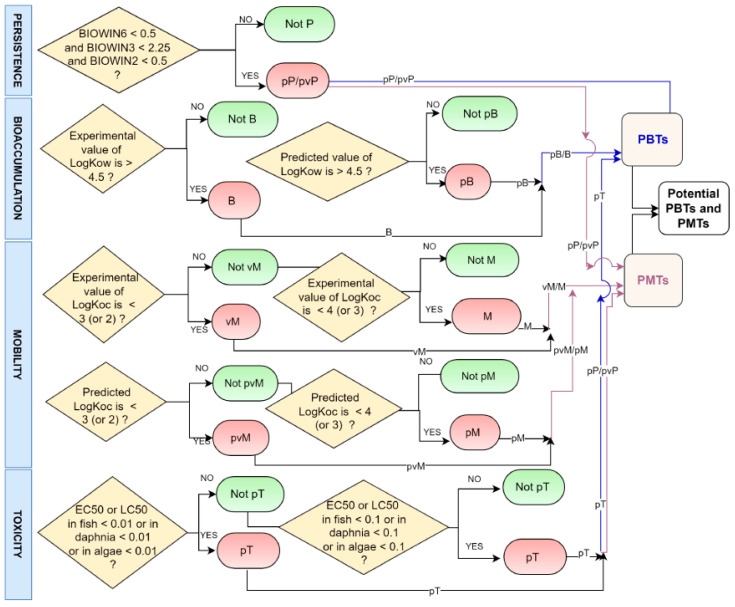
Pharmaceuticals and personal care products (PPCPs) are emerging contaminants (ECs), whose presence in the environment is of increasing concern due to their widespread use and possible detrimental effects on wildlife and humans. These chemicals may present multiple hazardous properties such as environmental persistence, toxicity, high mobility, and the potential for bioaccumulation. In this study, extended bibliographic research was conducted to characterize the removal efficiency (RE) of PPCPs in wastewater treatment plants (WWTPs) considering different technologies. Measured values of RE were collected from the literature or calculated for 251 compounds. The molecular structure of the 245 PPCPs were used as the input to generate predictions of multiple properties using several QSAR tools, such as the OECD Toolbox, OPERA, EPI Suite™, and QSAR-ME Profiler. These predictions were compared to regulatory thresholds to identify hazardous chemicals and to screen persistent, mobile and toxic (PMT) or persistent, bioaccumulative and toxic (PBT) substances. Finally, chemicals were prioritized by combining values of RE and QSAR predictions for multiple properties. A total of 16 out of the 245 molecules were prioritized as the most hazardous compounds to the aquatic environment and, among these, six were associated with potential risk due to their exposure concentrations reported in the literature.
ToxicsChemical Engineering-Chemical Health and Safety
CiteScore
4.50
自引率
10.90%
发文量
681
审稿时长
6 weeks
期刊介绍:
Toxics (ISSN 2305-6304) is an international, peer-reviewed, open access journal which provides an advanced forum for studies related to all aspects of toxic chemicals and materials. It publishes reviews, regular research papers, and short communications. Our aim is to encourage scientists to publish their experimental and theoretical results in detail. There is, therefore, no restriction on the maximum length of the papers, although authors should write their papers in a clear and concise way. The full experimental details must be provided so that the results can be reproduced. Electronic files or software regarding the full details of calculations and experimental procedure can be deposited as supplementary material, if it is not possible to publish them along with the text.





 京公网安备 11010802042870号
京ICP备2023020795号-1
京公网安备 11010802042870号
京ICP备2023020795号-1

 分享
分享
 求助内容:
求助内容: 应助结果提醒方式:
 扫码关注我们
