{"title":"两种小黄蛇的毒液:产量、蛋白质组学和商业抗蛇毒血清免疫识别的差异。","authors":"Xiang-Yu Li, Ya-Qi Zhang, Xin-Ru Qian, Hong-Yan Zhao, Hong-Liang Lu, Jian-Fang Gao","doi":"10.3390/toxins17010019","DOIUrl":null,"url":null,"abstract":"<p><p>Chinese coral snakes (<i>Sinomicrurus</i>) are highly neglected regarding their venom profiles and harm to humans, which impedes our ability to deeply understand their biological properties and explore their medicinal potential. In this study, we performed a comparative analysis to reveal the venom profiles of two Chinese coral snakes in terms of their venom yields, proteomic profiles, and immunorecognition by commercial antivenoms. The results showed that <i>Sinomicrurus kelloggi</i> expels more venom (lyophilized venom mass) than <i>Sinomicrurus maccelellandi</i> but possesses a similar solid venom content. These interspecific differences in venom yield were influenced by the snout-vent length. The venoms of these two species varied in their electrophoretic profiles, as well as in the presence or absence and relative abundance of protein families. They exhibited a 3-FTx-predominant phenotype, where the <i>S. maccelellandi</i> venom was dominated by 3-FTx (32.43%), SVMP (23.63%), PLA<sub>2</sub> (19.88%), and SVSP (12.61%), while the <i>S. kelloggi</i> venom was dominated by 3-FTx (65.81%), LAAO (11.35%), and AMP (10.09%). While both the commercial <i>Naja atra</i> and <i>Bungarus multicinctus</i> antivenoms could immunorecognize these two Chinese coral snake venoms, the <i>N. atra</i> antivenom possessed a higher neutralization capability than the <i>B. multicinctus</i> antivenom for both species of coral snakes. Our findings show significant interspecific variations in the venom profiles of these <i>Sinomicrurus</i> snakes for the first time. We suggest screening or preparing specific antivenoms with high efficiency for the clinical treatment of envenomation caused by these snakes.</p>","PeriodicalId":23119,"journal":{"name":"Toxins","volume":"17 1","pages":""},"PeriodicalIF":4.0000,"publicationDate":"2025-01-02","publicationTypes":"Journal Article","fieldsOfStudy":null,"isOpenAccess":false,"openAccessPdf":"https://www.ncbi.nlm.nih.gov/pmc/articles/PMC11769021/pdf/","citationCount":"0","resultStr":"{\"title\":\"First Look at the Venoms of Two <i>Sinomicrurus</i> Snakes: Differences in Yield, Proteomic Profiles, and Immunorecognition by Commercial Antivenoms.\",\"authors\":\"Xiang-Yu Li, Ya-Qi Zhang, Xin-Ru Qian, Hong-Yan Zhao, Hong-Liang Lu, Jian-Fang Gao\",\"doi\":\"10.3390/toxins17010019\",\"DOIUrl\":null,\"url\":null,\"abstract\":\"<p><p>Chinese coral snakes (<i>Sinomicrurus</i>) are highly neglected regarding their venom profiles and harm to humans, which impedes our ability to deeply understand their biological properties and explore their medicinal potential. In this study, we performed a comparative analysis to reveal the venom profiles of two Chinese coral snakes in terms of their venom yields, proteomic profiles, and immunorecognition by commercial antivenoms. The results showed that <i>Sinomicrurus kelloggi</i> expels more venom (lyophilized venom mass) than <i>Sinomicrurus maccelellandi</i> but possesses a similar solid venom content. These interspecific differences in venom yield were influenced by the snout-vent length. The venoms of these two species varied in their electrophoretic profiles, as well as in the presence or absence and relative abundance of protein families. They exhibited a 3-FTx-predominant phenotype, where the <i>S. maccelellandi</i> venom was dominated by 3-FTx (32.43%), SVMP (23.63%), PLA<sub>2</sub> (19.88%), and SVSP (12.61%), while the <i>S. kelloggi</i> venom was dominated by 3-FTx (65.81%), LAAO (11.35%), and AMP (10.09%). While both the commercial <i>Naja atra</i> and <i>Bungarus multicinctus</i> antivenoms could immunorecognize these two Chinese coral snake venoms, the <i>N. atra</i> antivenom possessed a higher neutralization capability than the <i>B. multicinctus</i> antivenom for both species of coral snakes. Our findings show significant interspecific variations in the venom profiles of these <i>Sinomicrurus</i> snakes for the first time. We suggest screening or preparing specific antivenoms with high efficiency for the clinical treatment of envenomation caused by these snakes.</p>\",\"PeriodicalId\":23119,\"journal\":{\"name\":\"Toxins\",\"volume\":\"17 1\",\"pages\":\"\"},\"PeriodicalIF\":4.0000,\"publicationDate\":\"2025-01-02\",\"publicationTypes\":\"Journal Article\",\"fieldsOfStudy\":null,\"isOpenAccess\":false,\"openAccessPdf\":\"https://www.ncbi.nlm.nih.gov/pmc/articles/PMC11769021/pdf/\",\"citationCount\":\"0\",\"resultStr\":null,\"platform\":\"Semanticscholar\",\"paperid\":null,\"PeriodicalName\":\"Toxins\",\"FirstCategoryId\":\"3\",\"ListUrlMain\":\"https://doi.org/10.3390/toxins17010019\",\"RegionNum\":3,\"RegionCategory\":\"医学\",\"ArticlePicture\":[],\"TitleCN\":null,\"AbstractTextCN\":null,\"PMCID\":null,\"EPubDate\":\"\",\"PubModel\":\"\",\"JCR\":\"Q2\",\"JCRName\":\"FOOD SCIENCE & TECHNOLOGY\",\"Score\":null,\"Total\":0}","platform":"Semanticscholar","paperid":null,"PeriodicalName":"Toxins","FirstCategoryId":"3","ListUrlMain":"https://doi.org/10.3390/toxins17010019","RegionNum":3,"RegionCategory":"医学","ArticlePicture":[],"TitleCN":null,"AbstractTextCN":null,"PMCID":null,"EPubDate":"","PubModel":"","JCR":"Q2","JCRName":"FOOD SCIENCE & TECHNOLOGY","Score":null,"Total":0}
First Look at the Venoms of Two Sinomicrurus Snakes: Differences in Yield, Proteomic Profiles, and Immunorecognition by Commercial Antivenoms.
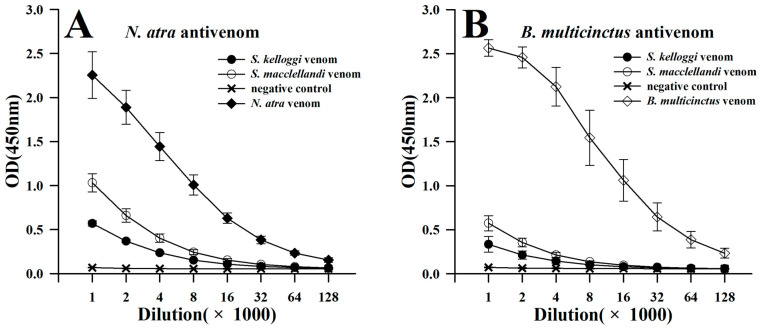
Chinese coral snakes (Sinomicrurus) are highly neglected regarding their venom profiles and harm to humans, which impedes our ability to deeply understand their biological properties and explore their medicinal potential. In this study, we performed a comparative analysis to reveal the venom profiles of two Chinese coral snakes in terms of their venom yields, proteomic profiles, and immunorecognition by commercial antivenoms. The results showed that Sinomicrurus kelloggi expels more venom (lyophilized venom mass) than Sinomicrurus maccelellandi but possesses a similar solid venom content. These interspecific differences in venom yield were influenced by the snout-vent length. The venoms of these two species varied in their electrophoretic profiles, as well as in the presence or absence and relative abundance of protein families. They exhibited a 3-FTx-predominant phenotype, where the S. maccelellandi venom was dominated by 3-FTx (32.43%), SVMP (23.63%), PLA2 (19.88%), and SVSP (12.61%), while the S. kelloggi venom was dominated by 3-FTx (65.81%), LAAO (11.35%), and AMP (10.09%). While both the commercial Naja atra and Bungarus multicinctus antivenoms could immunorecognize these two Chinese coral snake venoms, the N. atra antivenom possessed a higher neutralization capability than the B. multicinctus antivenom for both species of coral snakes. Our findings show significant interspecific variations in the venom profiles of these Sinomicrurus snakes for the first time. We suggest screening or preparing specific antivenoms with high efficiency for the clinical treatment of envenomation caused by these snakes.
期刊介绍:
Toxins (ISSN 2072-6651) is an international, peer-reviewed open access journal which provides an advanced forum for studies related to toxins and toxinology. It publishes reviews, regular research papers and short communications. Our aim is to encourage scientists to publish their experimental and theoretical results in as much detail as possible. There is no restriction on the length of the papers. The full experimental details must be provided so that the results can be reproduced.






 京公网安备 11010802042870号
京ICP备2023020795号-1
京公网安备 11010802042870号
京ICP备2023020795号-1

 分享
分享
 求助内容:
求助内容: 应助结果提醒方式:
 扫码关注我们
