Daniel Koska, Robert Zetzsche, Tobias A Mayer, Christian Maiwald
{"title":"监督与自我管理运动疗法对改善外伤性脱位和扭伤后肩功能的影响:系统回顾和荟萃分析。","authors":"Daniel Koska, Robert Zetzsche, Tobias A Mayer, Christian Maiwald","doi":"10.3390/sports13010023","DOIUrl":null,"url":null,"abstract":"<p><p>Trauma-induced shoulder dislocations and sprains rank among the most common upper extremity injuries, with contact sports accounting for the majority of cases. These injuries often lead to substantial impairments in joint function and long recovery times, requiring targeted therapeutic interventions to restore mobility and prevent recurrent injuries. Given the pivotal role of exercise therapy in restoring shoulder function, this study systematically reviews the literature on the comparative effectiveness of supervised versus self-managed exercise therapy following acute shoulder trauma. PubMed, Cochrane CENTRAL, Embase, Web of Science, and Science Direct were searched up to 13 December 2024. Conservative and post-surgical treatment modes were analyzed separately. Five studies with a total 689 participants were included (conservative: <i>n</i> = 538 across two studies; post-surgical: <i>n</i> = 151 across three studies). Both treatment modes showed similar pooled effects (standardized mean difference, SMD<sub>conservative</sub>: -0.35, 95% CI [-1.39, 0.69]; SMD<sub>post-surgical</sub>: -0.23, 95% CI [-1.21, 0.75]), with a marginal improvement in shoulder function favoring supervised therapy. Four studies had some risk of bias, and one had serious risk; GRADE certainty was low. Supervised exercise therapy may offer slightly greater functional improvements over self-managed training, but evidence is limited by heterogeneity and low certainty. Further high-quality trials with standardized protocols and improved adherence tracking are needed to establish more definitive conclusions and guide clinical decision-making.</p>","PeriodicalId":53303,"journal":{"name":"Sports","volume":"13 1","pages":""},"PeriodicalIF":3.2000,"publicationDate":"2025-01-14","publicationTypes":"Journal Article","fieldsOfStudy":null,"isOpenAccess":false,"openAccessPdf":"https://www.ncbi.nlm.nih.gov/pmc/articles/PMC11769462/pdf/","citationCount":"0","resultStr":"{\"title\":\"Supervised vs. Self-Managed Exercise Therapy for Improving Shoulder Function After Traumatic Dislocation and Sprain: A Systematic Review and Meta-Analysis.\",\"authors\":\"Daniel Koska, Robert Zetzsche, Tobias A Mayer, Christian Maiwald\",\"doi\":\"10.3390/sports13010023\",\"DOIUrl\":null,\"url\":null,\"abstract\":\"<p><p>Trauma-induced shoulder dislocations and sprains rank among the most common upper extremity injuries, with contact sports accounting for the majority of cases. These injuries often lead to substantial impairments in joint function and long recovery times, requiring targeted therapeutic interventions to restore mobility and prevent recurrent injuries. Given the pivotal role of exercise therapy in restoring shoulder function, this study systematically reviews the literature on the comparative effectiveness of supervised versus self-managed exercise therapy following acute shoulder trauma. PubMed, Cochrane CENTRAL, Embase, Web of Science, and Science Direct were searched up to 13 December 2024. Conservative and post-surgical treatment modes were analyzed separately. Five studies with a total 689 participants were included (conservative: <i>n</i> = 538 across two studies; post-surgical: <i>n</i> = 151 across three studies). Both treatment modes showed similar pooled effects (standardized mean difference, SMD<sub>conservative</sub>: -0.35, 95% CI [-1.39, 0.69]; SMD<sub>post-surgical</sub>: -0.23, 95% CI [-1.21, 0.75]), with a marginal improvement in shoulder function favoring supervised therapy. Four studies had some risk of bias, and one had serious risk; GRADE certainty was low. Supervised exercise therapy may offer slightly greater functional improvements over self-managed training, but evidence is limited by heterogeneity and low certainty. Further high-quality trials with standardized protocols and improved adherence tracking are needed to establish more definitive conclusions and guide clinical decision-making.</p>\",\"PeriodicalId\":53303,\"journal\":{\"name\":\"Sports\",\"volume\":\"13 1\",\"pages\":\"\"},\"PeriodicalIF\":3.2000,\"publicationDate\":\"2025-01-14\",\"publicationTypes\":\"Journal Article\",\"fieldsOfStudy\":null,\"isOpenAccess\":false,\"openAccessPdf\":\"https://www.ncbi.nlm.nih.gov/pmc/articles/PMC11769462/pdf/\",\"citationCount\":\"0\",\"resultStr\":null,\"platform\":\"Semanticscholar\",\"paperid\":null,\"PeriodicalName\":\"Sports\",\"FirstCategoryId\":\"1085\",\"ListUrlMain\":\"https://doi.org/10.3390/sports13010023\",\"RegionNum\":0,\"RegionCategory\":null,\"ArticlePicture\":[],\"TitleCN\":null,\"AbstractTextCN\":null,\"PMCID\":null,\"EPubDate\":\"\",\"PubModel\":\"\",\"JCR\":\"Q2\",\"JCRName\":\"SPORT SCIENCES\",\"Score\":null,\"Total\":0}","platform":"Semanticscholar","paperid":null,"PeriodicalName":"Sports","FirstCategoryId":"1085","ListUrlMain":"https://doi.org/10.3390/sports13010023","RegionNum":0,"RegionCategory":null,"ArticlePicture":[],"TitleCN":null,"AbstractTextCN":null,"PMCID":null,"EPubDate":"","PubModel":"","JCR":"Q2","JCRName":"SPORT SCIENCES","Score":null,"Total":0}
引用次数: 0
摘要
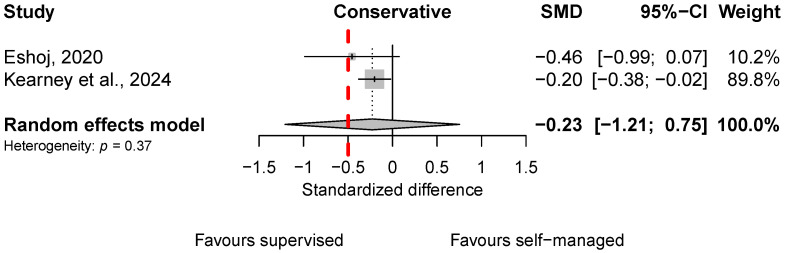
外伤性肩部脱臼和扭伤是最常见的上肢损伤之一,接触性运动占大多数。这些损伤通常会导致关节功能的严重损伤和较长的恢复时间,需要有针对性的治疗干预来恢复活动能力并防止复发性损伤。鉴于运动疗法在恢复肩部功能中的关键作用,本研究系统地回顾了有关急性肩部创伤后监督与自我管理运动疗法的比较效果的文献。PubMed、Cochrane CENTRAL、Embase、Web of Science和Science Direct的检索截止到2024年12月13日。分别分析保守和术后治疗方式。五项研究共纳入689名参与者(保守:两项研究n = 538;术后:3项研究中n = 151)。两种治疗模式显示出相似的综合效果(标准化平均差,SMDconservative: -0.35, 95% CI [-1.39, 0.69];术后smd: -0.23, 95% CI[-1.21, 0.75]),肩关节功能的轻微改善有利于监督治疗。四项研究存在一定的偏倚风险,其中一项风险严重;GRADE确定性较低。与自我管理训练相比,有监督的运动疗法可能提供稍大的功能改善,但证据受到异质性和低确定性的限制。需要进一步采用标准化方案和改进依从性跟踪的高质量试验,以建立更明确的结论并指导临床决策。
Supervised vs. Self-Managed Exercise Therapy for Improving Shoulder Function After Traumatic Dislocation and Sprain: A Systematic Review and Meta-Analysis.
Trauma-induced shoulder dislocations and sprains rank among the most common upper extremity injuries, with contact sports accounting for the majority of cases. These injuries often lead to substantial impairments in joint function and long recovery times, requiring targeted therapeutic interventions to restore mobility and prevent recurrent injuries. Given the pivotal role of exercise therapy in restoring shoulder function, this study systematically reviews the literature on the comparative effectiveness of supervised versus self-managed exercise therapy following acute shoulder trauma. PubMed, Cochrane CENTRAL, Embase, Web of Science, and Science Direct were searched up to 13 December 2024. Conservative and post-surgical treatment modes were analyzed separately. Five studies with a total 689 participants were included (conservative: n = 538 across two studies; post-surgical: n = 151 across three studies). Both treatment modes showed similar pooled effects (standardized mean difference, SMDconservative: -0.35, 95% CI [-1.39, 0.69]; SMDpost-surgical: -0.23, 95% CI [-1.21, 0.75]), with a marginal improvement in shoulder function favoring supervised therapy. Four studies had some risk of bias, and one had serious risk; GRADE certainty was low. Supervised exercise therapy may offer slightly greater functional improvements over self-managed training, but evidence is limited by heterogeneity and low certainty. Further high-quality trials with standardized protocols and improved adherence tracking are needed to establish more definitive conclusions and guide clinical decision-making.







 京公网安备 11010802042870号
京ICP备2023020795号-1
京公网安备 11010802042870号
京ICP备2023020795号-1

 分享
分享
 求助内容:
求助内容: 应助结果提醒方式:
 扫码关注我们
