{"title":"阿司匹林抗癌活性的新发现:其铁螯合抗氧化代谢物的主导作用。","authors":"George J Kontoghiorghes","doi":"10.3390/antiox14010029","DOIUrl":null,"url":null,"abstract":"<p><p>Epidemiological studies have suggested that following long-term, low-dose daily aspirin (LTLDA) administration for more than 5 years at 75-100 mg/day, 20-30% of patients (50-80 years old) had a lower risk of developing colorectal cancer (CRC) and about the same proportion in developing iron deficiency anemia (IDA). In cases of IDA, an increase in iron excretion is suspected, which is caused by aspirin chelating metabolites (ACMs): salicylic acid, salicyluric acid, 2,5-dihydroxybenzoic acid, and 2,3-dihydroxybenzoic acid. The ACMs constitute 70% of the administered aspirin dose and have much longer half-lives than aspirin in blood and tissues. The mechanisms of cancer risk reduction in LTLDA users is likely due to the ACM's targeting of iron involved in free radical damage, iron-containing toxins, iron proteins, and associated metabolic pathways such as ferroptosis. The ACMs from non-absorbed aspirin (about 30%) may also mitigate the toxicity of heme and nitroso-heme and other iron toxins from food, which are responsible for the cause of colorectal cancer. The mode of action of aspirin as a chelating antioxidant pro-drug of the ACMs, with continuous presence in LTLDA users, increases the prospect for prophylaxis in cancer and other diseases. It is suggested that the anticancer effects of aspirin depend primarily on the iron-chelating antioxidant activity of the ACMs. The role of aspirin in cancer and other diseases is incomplete without considering its rapid biotransformation and the longer half-life of the ACMs.</p>","PeriodicalId":7984,"journal":{"name":"Antioxidants","volume":"14 1","pages":""},"PeriodicalIF":6.6000,"publicationDate":"2024-12-29","publicationTypes":"Journal Article","fieldsOfStudy":null,"isOpenAccess":false,"openAccessPdf":"https://www.ncbi.nlm.nih.gov/pmc/articles/PMC11763074/pdf/","citationCount":"0","resultStr":"{\"title\":\"New Insights into Aspirin's Anticancer Activity: The Predominant Role of Its Iron-Chelating Antioxidant Metabolites.\",\"authors\":\"George J Kontoghiorghes\",\"doi\":\"10.3390/antiox14010029\",\"DOIUrl\":null,\"url\":null,\"abstract\":\"<p><p>Epidemiological studies have suggested that following long-term, low-dose daily aspirin (LTLDA) administration for more than 5 years at 75-100 mg/day, 20-30% of patients (50-80 years old) had a lower risk of developing colorectal cancer (CRC) and about the same proportion in developing iron deficiency anemia (IDA). In cases of IDA, an increase in iron excretion is suspected, which is caused by aspirin chelating metabolites (ACMs): salicylic acid, salicyluric acid, 2,5-dihydroxybenzoic acid, and 2,3-dihydroxybenzoic acid. The ACMs constitute 70% of the administered aspirin dose and have much longer half-lives than aspirin in blood and tissues. The mechanisms of cancer risk reduction in LTLDA users is likely due to the ACM's targeting of iron involved in free radical damage, iron-containing toxins, iron proteins, and associated metabolic pathways such as ferroptosis. The ACMs from non-absorbed aspirin (about 30%) may also mitigate the toxicity of heme and nitroso-heme and other iron toxins from food, which are responsible for the cause of colorectal cancer. The mode of action of aspirin as a chelating antioxidant pro-drug of the ACMs, with continuous presence in LTLDA users, increases the prospect for prophylaxis in cancer and other diseases. It is suggested that the anticancer effects of aspirin depend primarily on the iron-chelating antioxidant activity of the ACMs. The role of aspirin in cancer and other diseases is incomplete without considering its rapid biotransformation and the longer half-life of the ACMs.</p>\",\"PeriodicalId\":7984,\"journal\":{\"name\":\"Antioxidants\",\"volume\":\"14 1\",\"pages\":\"\"},\"PeriodicalIF\":6.6000,\"publicationDate\":\"2024-12-29\",\"publicationTypes\":\"Journal Article\",\"fieldsOfStudy\":null,\"isOpenAccess\":false,\"openAccessPdf\":\"https://www.ncbi.nlm.nih.gov/pmc/articles/PMC11763074/pdf/\",\"citationCount\":\"0\",\"resultStr\":null,\"platform\":\"Semanticscholar\",\"paperid\":null,\"PeriodicalName\":\"Antioxidants\",\"FirstCategoryId\":\"3\",\"ListUrlMain\":\"https://doi.org/10.3390/antiox14010029\",\"RegionNum\":2,\"RegionCategory\":\"医学\",\"ArticlePicture\":[],\"TitleCN\":null,\"AbstractTextCN\":null,\"PMCID\":null,\"EPubDate\":\"\",\"PubModel\":\"\",\"JCR\":\"Q1\",\"JCRName\":\"BIOCHEMISTRY & MOLECULAR BIOLOGY\",\"Score\":null,\"Total\":0}","platform":"Semanticscholar","paperid":null,"PeriodicalName":"Antioxidants","FirstCategoryId":"3","ListUrlMain":"https://doi.org/10.3390/antiox14010029","RegionNum":2,"RegionCategory":"医学","ArticlePicture":[],"TitleCN":null,"AbstractTextCN":null,"PMCID":null,"EPubDate":"","PubModel":"","JCR":"Q1","JCRName":"BIOCHEMISTRY & MOLECULAR BIOLOGY","Score":null,"Total":0}
New Insights into Aspirin's Anticancer Activity: The Predominant Role of Its Iron-Chelating Antioxidant Metabolites.
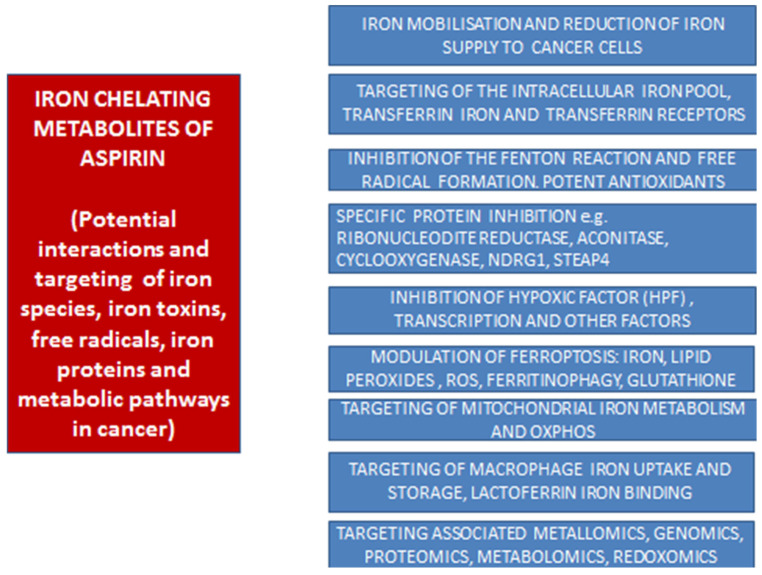
Epidemiological studies have suggested that following long-term, low-dose daily aspirin (LTLDA) administration for more than 5 years at 75-100 mg/day, 20-30% of patients (50-80 years old) had a lower risk of developing colorectal cancer (CRC) and about the same proportion in developing iron deficiency anemia (IDA). In cases of IDA, an increase in iron excretion is suspected, which is caused by aspirin chelating metabolites (ACMs): salicylic acid, salicyluric acid, 2,5-dihydroxybenzoic acid, and 2,3-dihydroxybenzoic acid. The ACMs constitute 70% of the administered aspirin dose and have much longer half-lives than aspirin in blood and tissues. The mechanisms of cancer risk reduction in LTLDA users is likely due to the ACM's targeting of iron involved in free radical damage, iron-containing toxins, iron proteins, and associated metabolic pathways such as ferroptosis. The ACMs from non-absorbed aspirin (about 30%) may also mitigate the toxicity of heme and nitroso-heme and other iron toxins from food, which are responsible for the cause of colorectal cancer. The mode of action of aspirin as a chelating antioxidant pro-drug of the ACMs, with continuous presence in LTLDA users, increases the prospect for prophylaxis in cancer and other diseases. It is suggested that the anticancer effects of aspirin depend primarily on the iron-chelating antioxidant activity of the ACMs. The role of aspirin in cancer and other diseases is incomplete without considering its rapid biotransformation and the longer half-life of the ACMs.
AntioxidantsBiochemistry, Genetics and Molecular Biology-Physiology
CiteScore
10.60
自引率
11.40%
发文量
2123
审稿时长
16.3 days
期刊介绍:
Antioxidants (ISSN 2076-3921), provides an advanced forum for studies related to the science and technology of antioxidants. It publishes research papers, reviews and communications. Our aim is to encourage scientists to publish their experimental and theoretical results in as much detail as possible. There is no restriction on the length of the papers. The full experimental details must be provided so that the results can be reproduced. Electronic files and software regarding the full details of the calculation or experimental procedure, if unable to be published in a normal way, can be deposited as supplementary electronic material.






 京公网安备 11010802042870号
京ICP备2023020795号-1
京公网安备 11010802042870号
京ICP备2023020795号-1

 分享
分享
 求助内容:
求助内容: 应助结果提醒方式:
 扫码关注我们
