{"title":"多酚类物质在非生物胁迫耐受中的作用及其清除活性氧和自由基的抗氧化性能。","authors":"Muhammad Junaid Rao, Bingsong Zheng","doi":"10.3390/antiox14010074","DOIUrl":null,"url":null,"abstract":"<p><p>Plants have evolved complex mechanisms to cope with diverse abiotic stresses, with the phenylpropanoid pathway playing a central role in stress adaptation. This pathway produces an array of secondary metabolites, particularly polyphenols, which serve multiple functions in plant growth, development, regulating cellular processes, and stress responses. Recent advances in understanding the molecular mechanisms underlying phenylpropanoid metabolism have revealed complex regulatory networks involving MYB transcription factors as master regulators and their interactions with stress signaling pathways. This review summarizes our current understanding of polyphenol-mediated stress adaptations in plants, emphasizing the regulation and function of key phenylpropanoid pathway compounds. We discussed how various abiotic stresses, including heat and chilling stress, drought, salinity, light stress, UV radiation, nanoparticles stress, chemical stress, and heavy metal toxicity, modulate phenylpropanoid metabolism and trigger the accumulation of specific polyphenolic compounds. The antioxidant properties of these metabolites, including phenolic acids, flavonoids, anthocyanins, lignin, and polyphenols, and their roles in reactive oxygen species scavenging, neutralizing free radicals, membrane stabilization, and osmotic adjustment are discussed. Understanding these mechanisms and metabolic responses is crucial for developing stress-resilient crops and improving agricultural productivity under increasingly challenging environmental conditions. This review provides comprehensive insights into integrating phenylpropanoid metabolism with plant stress adaptation mechanisms, highlighting potential targets for enhancing crop stress tolerance through metabolic adjustment.</p>","PeriodicalId":7984,"journal":{"name":"Antioxidants","volume":"14 1","pages":""},"PeriodicalIF":6.6000,"publicationDate":"2025-01-10","publicationTypes":"Journal Article","fieldsOfStudy":null,"isOpenAccess":false,"openAccessPdf":"https://www.ncbi.nlm.nih.gov/pmc/articles/PMC11761259/pdf/","citationCount":"0","resultStr":"{\"title\":\"The Role of Polyphenols in Abiotic Stress Tolerance and Their Antioxidant Properties to Scavenge Reactive Oxygen Species and Free Radicals.\",\"authors\":\"Muhammad Junaid Rao, Bingsong Zheng\",\"doi\":\"10.3390/antiox14010074\",\"DOIUrl\":null,\"url\":null,\"abstract\":\"<p><p>Plants have evolved complex mechanisms to cope with diverse abiotic stresses, with the phenylpropanoid pathway playing a central role in stress adaptation. This pathway produces an array of secondary metabolites, particularly polyphenols, which serve multiple functions in plant growth, development, regulating cellular processes, and stress responses. Recent advances in understanding the molecular mechanisms underlying phenylpropanoid metabolism have revealed complex regulatory networks involving MYB transcription factors as master regulators and their interactions with stress signaling pathways. This review summarizes our current understanding of polyphenol-mediated stress adaptations in plants, emphasizing the regulation and function of key phenylpropanoid pathway compounds. We discussed how various abiotic stresses, including heat and chilling stress, drought, salinity, light stress, UV radiation, nanoparticles stress, chemical stress, and heavy metal toxicity, modulate phenylpropanoid metabolism and trigger the accumulation of specific polyphenolic compounds. The antioxidant properties of these metabolites, including phenolic acids, flavonoids, anthocyanins, lignin, and polyphenols, and their roles in reactive oxygen species scavenging, neutralizing free radicals, membrane stabilization, and osmotic adjustment are discussed. Understanding these mechanisms and metabolic responses is crucial for developing stress-resilient crops and improving agricultural productivity under increasingly challenging environmental conditions. This review provides comprehensive insights into integrating phenylpropanoid metabolism with plant stress adaptation mechanisms, highlighting potential targets for enhancing crop stress tolerance through metabolic adjustment.</p>\",\"PeriodicalId\":7984,\"journal\":{\"name\":\"Antioxidants\",\"volume\":\"14 1\",\"pages\":\"\"},\"PeriodicalIF\":6.6000,\"publicationDate\":\"2025-01-10\",\"publicationTypes\":\"Journal Article\",\"fieldsOfStudy\":null,\"isOpenAccess\":false,\"openAccessPdf\":\"https://www.ncbi.nlm.nih.gov/pmc/articles/PMC11761259/pdf/\",\"citationCount\":\"0\",\"resultStr\":null,\"platform\":\"Semanticscholar\",\"paperid\":null,\"PeriodicalName\":\"Antioxidants\",\"FirstCategoryId\":\"3\",\"ListUrlMain\":\"https://doi.org/10.3390/antiox14010074\",\"RegionNum\":2,\"RegionCategory\":\"医学\",\"ArticlePicture\":[],\"TitleCN\":null,\"AbstractTextCN\":null,\"PMCID\":null,\"EPubDate\":\"\",\"PubModel\":\"\",\"JCR\":\"Q1\",\"JCRName\":\"BIOCHEMISTRY & MOLECULAR BIOLOGY\",\"Score\":null,\"Total\":0}","platform":"Semanticscholar","paperid":null,"PeriodicalName":"Antioxidants","FirstCategoryId":"3","ListUrlMain":"https://doi.org/10.3390/antiox14010074","RegionNum":2,"RegionCategory":"医学","ArticlePicture":[],"TitleCN":null,"AbstractTextCN":null,"PMCID":null,"EPubDate":"","PubModel":"","JCR":"Q1","JCRName":"BIOCHEMISTRY & MOLECULAR BIOLOGY","Score":null,"Total":0}
The Role of Polyphenols in Abiotic Stress Tolerance and Their Antioxidant Properties to Scavenge Reactive Oxygen Species and Free Radicals.
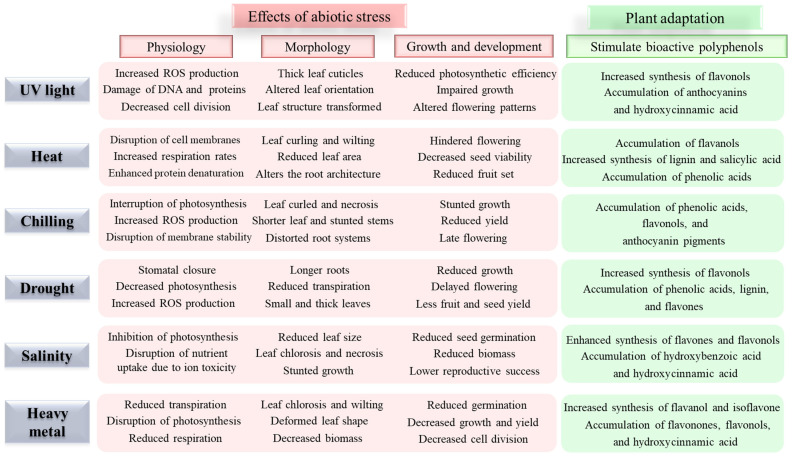
Plants have evolved complex mechanisms to cope with diverse abiotic stresses, with the phenylpropanoid pathway playing a central role in stress adaptation. This pathway produces an array of secondary metabolites, particularly polyphenols, which serve multiple functions in plant growth, development, regulating cellular processes, and stress responses. Recent advances in understanding the molecular mechanisms underlying phenylpropanoid metabolism have revealed complex regulatory networks involving MYB transcription factors as master regulators and their interactions with stress signaling pathways. This review summarizes our current understanding of polyphenol-mediated stress adaptations in plants, emphasizing the regulation and function of key phenylpropanoid pathway compounds. We discussed how various abiotic stresses, including heat and chilling stress, drought, salinity, light stress, UV radiation, nanoparticles stress, chemical stress, and heavy metal toxicity, modulate phenylpropanoid metabolism and trigger the accumulation of specific polyphenolic compounds. The antioxidant properties of these metabolites, including phenolic acids, flavonoids, anthocyanins, lignin, and polyphenols, and their roles in reactive oxygen species scavenging, neutralizing free radicals, membrane stabilization, and osmotic adjustment are discussed. Understanding these mechanisms and metabolic responses is crucial for developing stress-resilient crops and improving agricultural productivity under increasingly challenging environmental conditions. This review provides comprehensive insights into integrating phenylpropanoid metabolism with plant stress adaptation mechanisms, highlighting potential targets for enhancing crop stress tolerance through metabolic adjustment.
AntioxidantsBiochemistry, Genetics and Molecular Biology-Physiology
CiteScore
10.60
自引率
11.40%
发文量
2123
审稿时长
16.3 days
期刊介绍:
Antioxidants (ISSN 2076-3921), provides an advanced forum for studies related to the science and technology of antioxidants. It publishes research papers, reviews and communications. Our aim is to encourage scientists to publish their experimental and theoretical results in as much detail as possible. There is no restriction on the length of the papers. The full experimental details must be provided so that the results can be reproduced. Electronic files and software regarding the full details of the calculation or experimental procedure, if unable to be published in a normal way, can be deposited as supplementary electronic material.






 京公网安备 11010802042870号
京ICP备2023020795号-1
京公网安备 11010802042870号
京ICP备2023020795号-1

 分享
分享
 求助内容:
求助内容: 应助结果提醒方式:
 扫码关注我们
