Marin Kuntić, Ivana Kuntić, Jiayin Zheng, Leonardo Nardi, Matthias Oelze, Arijan Valar, Dominika Mihaliková, Lea Strohm, Henning Ubbens, Qi Tang, Liyu Zhang, Guilherme Horta, Paul Stamm, Omar Hahad, Dilja Krueger-Burg, Huige Li, Sebastian Steven, Adrian Gericke, Michael J Schmeisser, Thomas Münzel, Andreas Daiber
{"title":"心血管药物对飞机噪声引起的心血管氧化应激和损伤的干预作用。","authors":"Marin Kuntić, Ivana Kuntić, Jiayin Zheng, Leonardo Nardi, Matthias Oelze, Arijan Valar, Dominika Mihaliková, Lea Strohm, Henning Ubbens, Qi Tang, Liyu Zhang, Guilherme Horta, Paul Stamm, Omar Hahad, Dilja Krueger-Burg, Huige Li, Sebastian Steven, Adrian Gericke, Michael J Schmeisser, Thomas Münzel, Andreas Daiber","doi":"10.3390/antiox14010059","DOIUrl":null,"url":null,"abstract":"<p><p>Noise pollution is a known health risk factor and evidence for cardiovascular diseases associated with traffic noise is growing. At least 20% of the European Union's population lives in noise-polluted areas with exposure levels exceeding the recommended limits of the World Health Organization, which is considered unhealthy by the European Environment Agency. This results in the annual loss of 1.6 million healthy life years. Here, we investigated the protective effects of cardiovascular drug interventions against aircraft noise-mediated cardiovascular complications such as elevated oxidative stress or endothelial dysfunction. Using our established mouse exposure model, we applied mean sound pressure levels of 72 dB(A) for 4 d. C57BL/6 mice were treated with the beta-blocker propranolol (15 mg/kg/d s.c. for 5 d) or the alpha-blocker phenoxybenzamine (1.5 mg/kg/d s.c. for 5 d) and noise-exposed for the last 4 d of the drug administration. Short-term noise exposure caused hypertension (measured by tail-cuff blood pressure monitoring) and impaired endothelial function (measured by isometric tension recording in the aorta and video microscopy in cerebral arterioles in response to acetylcholine). Noise also increased markers of oxidative stress and inflammation. Treatment of mice with propranolol and phenoxybenzamine prevented endothelial and microvascular dysfunction, which was supported by a decrease in markers of inflammation and oxidative stress in heart tissue and the brain. Amelioration of noise-induced hypertension (systolic blood pressure) was not observed, whereas pulse pressure was lowered by trend. This study provides a novel perspective mitigating the adverse effects of noise pollution, especially in vulnerable groups with medication, a rationale for further pharmacological human studies.</p>","PeriodicalId":7984,"journal":{"name":"Antioxidants","volume":"14 1","pages":""},"PeriodicalIF":6.6000,"publicationDate":"2025-01-07","publicationTypes":"Journal Article","fieldsOfStudy":null,"isOpenAccess":false,"openAccessPdf":"https://www.ncbi.nlm.nih.gov/pmc/articles/PMC11759193/pdf/","citationCount":"0","resultStr":"{\"title\":\"Interventions by Cardiovascular Drugs Against Aircraft Noise-Induced Cardiovascular Oxidative Stress and Damage.\",\"authors\":\"Marin Kuntić, Ivana Kuntić, Jiayin Zheng, Leonardo Nardi, Matthias Oelze, Arijan Valar, Dominika Mihaliková, Lea Strohm, Henning Ubbens, Qi Tang, Liyu Zhang, Guilherme Horta, Paul Stamm, Omar Hahad, Dilja Krueger-Burg, Huige Li, Sebastian Steven, Adrian Gericke, Michael J Schmeisser, Thomas Münzel, Andreas Daiber\",\"doi\":\"10.3390/antiox14010059\",\"DOIUrl\":null,\"url\":null,\"abstract\":\"<p><p>Noise pollution is a known health risk factor and evidence for cardiovascular diseases associated with traffic noise is growing. At least 20% of the European Union's population lives in noise-polluted areas with exposure levels exceeding the recommended limits of the World Health Organization, which is considered unhealthy by the European Environment Agency. This results in the annual loss of 1.6 million healthy life years. Here, we investigated the protective effects of cardiovascular drug interventions against aircraft noise-mediated cardiovascular complications such as elevated oxidative stress or endothelial dysfunction. Using our established mouse exposure model, we applied mean sound pressure levels of 72 dB(A) for 4 d. C57BL/6 mice were treated with the beta-blocker propranolol (15 mg/kg/d s.c. for 5 d) or the alpha-blocker phenoxybenzamine (1.5 mg/kg/d s.c. for 5 d) and noise-exposed for the last 4 d of the drug administration. Short-term noise exposure caused hypertension (measured by tail-cuff blood pressure monitoring) and impaired endothelial function (measured by isometric tension recording in the aorta and video microscopy in cerebral arterioles in response to acetylcholine). Noise also increased markers of oxidative stress and inflammation. Treatment of mice with propranolol and phenoxybenzamine prevented endothelial and microvascular dysfunction, which was supported by a decrease in markers of inflammation and oxidative stress in heart tissue and the brain. Amelioration of noise-induced hypertension (systolic blood pressure) was not observed, whereas pulse pressure was lowered by trend. This study provides a novel perspective mitigating the adverse effects of noise pollution, especially in vulnerable groups with medication, a rationale for further pharmacological human studies.</p>\",\"PeriodicalId\":7984,\"journal\":{\"name\":\"Antioxidants\",\"volume\":\"14 1\",\"pages\":\"\"},\"PeriodicalIF\":6.6000,\"publicationDate\":\"2025-01-07\",\"publicationTypes\":\"Journal Article\",\"fieldsOfStudy\":null,\"isOpenAccess\":false,\"openAccessPdf\":\"https://www.ncbi.nlm.nih.gov/pmc/articles/PMC11759193/pdf/\",\"citationCount\":\"0\",\"resultStr\":null,\"platform\":\"Semanticscholar\",\"paperid\":null,\"PeriodicalName\":\"Antioxidants\",\"FirstCategoryId\":\"3\",\"ListUrlMain\":\"https://doi.org/10.3390/antiox14010059\",\"RegionNum\":2,\"RegionCategory\":\"医学\",\"ArticlePicture\":[],\"TitleCN\":null,\"AbstractTextCN\":null,\"PMCID\":null,\"EPubDate\":\"\",\"PubModel\":\"\",\"JCR\":\"Q1\",\"JCRName\":\"BIOCHEMISTRY & MOLECULAR BIOLOGY\",\"Score\":null,\"Total\":0}","platform":"Semanticscholar","paperid":null,"PeriodicalName":"Antioxidants","FirstCategoryId":"3","ListUrlMain":"https://doi.org/10.3390/antiox14010059","RegionNum":2,"RegionCategory":"医学","ArticlePicture":[],"TitleCN":null,"AbstractTextCN":null,"PMCID":null,"EPubDate":"","PubModel":"","JCR":"Q1","JCRName":"BIOCHEMISTRY & MOLECULAR BIOLOGY","Score":null,"Total":0}
引用次数: 0
摘要
噪音污染是一种已知的健康风险因素,与交通噪音有关的心血管疾病的证据越来越多。欧盟至少有20%的人口生活在噪音污染地区,暴露水平超过了世界卫生组织(World Health Organization)的建议上限,欧洲环境署(European Environment Agency)认为这是不健康的。这导致每年损失160万健康生命年。在这里,我们研究了心血管药物干预对飞机噪声介导的心血管并发症(如氧化应激升高或内皮功能障碍)的保护作用。使用我们建立的小鼠暴露模型,我们使用72 dB(A)的平均声压级连续4天。C57BL/6小鼠分别给予β受体阻滞剂心得安(15 mg/kg/d s.c.,连续5天)或α受体阻滞剂苯氧苄胺(1.5 mg/kg/d s.c.,连续5天),并在给药的最后4天进行噪声暴露。短期噪声暴露导致高血压(通过尾袖带血压监测测量)和内皮功能受损(通过对乙酰胆碱反应的主动脉等长张力记录和脑小动脉视频显微镜测量)。噪音还会增加氧化应激和炎症的标志物。用心得安和苯氧苄胺治疗小鼠可以防止内皮和微血管功能障碍,这是由心脏组织和大脑中炎症和氧化应激标志物的减少所支持的。噪声性高血压(收缩压)未见改善,脉压呈下降趋势。本研究为减轻噪声污染的不良影响提供了一个新的视角,特别是对弱势群体的药物治疗,为进一步的人体药理研究提供了依据。
Interventions by Cardiovascular Drugs Against Aircraft Noise-Induced Cardiovascular Oxidative Stress and Damage.
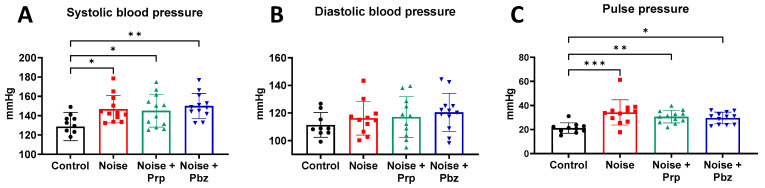
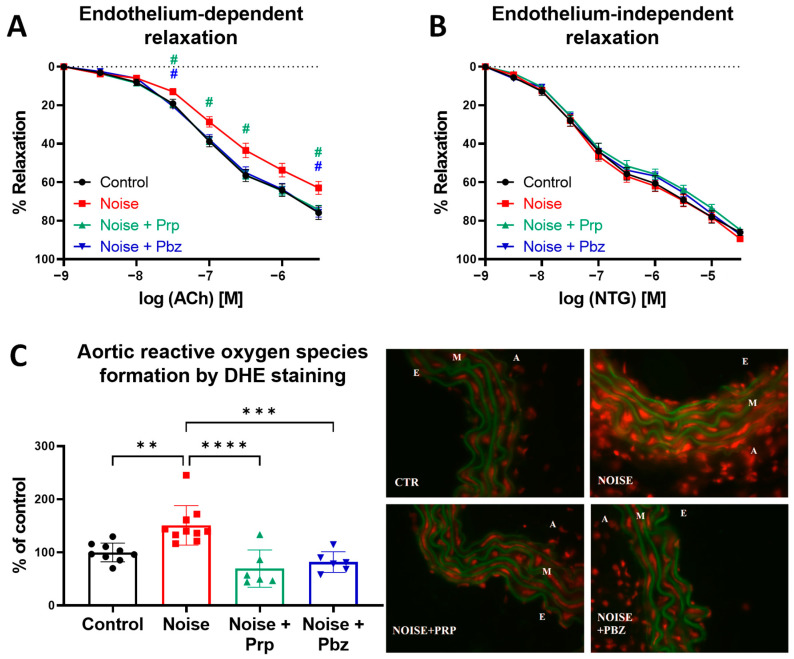
Noise pollution is a known health risk factor and evidence for cardiovascular diseases associated with traffic noise is growing. At least 20% of the European Union's population lives in noise-polluted areas with exposure levels exceeding the recommended limits of the World Health Organization, which is considered unhealthy by the European Environment Agency. This results in the annual loss of 1.6 million healthy life years. Here, we investigated the protective effects of cardiovascular drug interventions against aircraft noise-mediated cardiovascular complications such as elevated oxidative stress or endothelial dysfunction. Using our established mouse exposure model, we applied mean sound pressure levels of 72 dB(A) for 4 d. C57BL/6 mice were treated with the beta-blocker propranolol (15 mg/kg/d s.c. for 5 d) or the alpha-blocker phenoxybenzamine (1.5 mg/kg/d s.c. for 5 d) and noise-exposed for the last 4 d of the drug administration. Short-term noise exposure caused hypertension (measured by tail-cuff blood pressure monitoring) and impaired endothelial function (measured by isometric tension recording in the aorta and video microscopy in cerebral arterioles in response to acetylcholine). Noise also increased markers of oxidative stress and inflammation. Treatment of mice with propranolol and phenoxybenzamine prevented endothelial and microvascular dysfunction, which was supported by a decrease in markers of inflammation and oxidative stress in heart tissue and the brain. Amelioration of noise-induced hypertension (systolic blood pressure) was not observed, whereas pulse pressure was lowered by trend. This study provides a novel perspective mitigating the adverse effects of noise pollution, especially in vulnerable groups with medication, a rationale for further pharmacological human studies.
AntioxidantsBiochemistry, Genetics and Molecular Biology-Physiology
CiteScore
10.60
自引率
11.40%
发文量
2123
审稿时长
16.3 days
期刊介绍:
Antioxidants (ISSN 2076-3921), provides an advanced forum for studies related to the science and technology of antioxidants. It publishes research papers, reviews and communications. Our aim is to encourage scientists to publish their experimental and theoretical results in as much detail as possible. There is no restriction on the length of the papers. The full experimental details must be provided so that the results can be reproduced. Electronic files and software regarding the full details of the calculation or experimental procedure, if unable to be published in a normal way, can be deposited as supplementary electronic material.





 京公网安备 11010802042870号
京ICP备2023020795号-1
京公网安备 11010802042870号
京ICP备2023020795号-1

 分享
分享
 求助内容:
求助内容: 应助结果提醒方式:
 扫码关注我们
