Lamprini Zissi, Virginia D Dimaki, Vassiliki S Birba, Vassiliki C Galani, Vassiliki Magafa, Sophia Hatziantoniou, Fotini N Lamari
{"title":"天然深共晶溶剂作为提取黄芪属植物生物活性化合物的绿色替代品,具有潜在的化妆品应用前景。","authors":"Lamprini Zissi, Virginia D Dimaki, Vassiliki S Birba, Vassiliki C Galani, Vassiliki Magafa, Sophia Hatziantoniou, Fotini N Lamari","doi":"10.3390/antiox14010068","DOIUrl":null,"url":null,"abstract":"<p><p>This study investigated the potential of natural deep eutectic solvents (NADESs) for extracting bioactive compounds from the aerial parts of two mountain tea taxa, <i>Sideritis clandestina</i> ssp. <i>peloponnesiaca</i> (Boiss. & Heldr.) Baden and <i>Sideritis raeseri</i> Boiss. & Heldr. ssp. <i>raeseri</i>. Five NADEs, composed of betaine, glycerol, glucose, urea, citric acid, and sucrose, were evaluated for their extraction efficiency compared to conventional solvents (water and 70% ethanol). The total phenolic content (TPC) and antioxidant activity (FRAP and DPPH assays) were determined. Results showed that water was not a good extraction solvent. Despite the great solvent-dependent differences, most NADEs, particularly the betaine-glycerol-glucose mixture (BGG4), exhibited comparable or even superior extraction efficiency and antioxidant activity compared to 70% ethanol. The secondary metabolites in the BGG4 and 70% ethanol extracts were determined with HPLC-MS. The BGG4 extracts of both <i>Sideritis</i> taxa had a rich phenolic profile, with the major ingredients being chlorogenic acid, verbascoside, and non-, mono- and di-acetylated allosyl hypolaetin glycosides. Although distinct quantitative differences in their composition compared to the respective 70% ethanol extracts, and between them were noted, overall, the content of secondary metabolites in both <i>S. raeseri</i> extracts was lower than that of the <i>S. clandestina</i> extracts. These findings suggest that NADEs, particularly BGG4, are promising green solvents for extracting bioactive compounds from <i>Sideritis</i> taxa, paving the way for potential applications in the development of natural and sustainable cosmetic products.</p>","PeriodicalId":7984,"journal":{"name":"Antioxidants","volume":"14 1","pages":""},"PeriodicalIF":6.6000,"publicationDate":"2025-01-09","publicationTypes":"Journal Article","fieldsOfStudy":null,"isOpenAccess":false,"openAccessPdf":"https://www.ncbi.nlm.nih.gov/pmc/articles/PMC11759769/pdf/","citationCount":"0","resultStr":"{\"title\":\"Natural Deep Eutectic Solvents as Green Alternatives for Extracting Bioactive Compounds from <i>Sideritis</i> Taxa with Potential Cosmetic Applications.\",\"authors\":\"Lamprini Zissi, Virginia D Dimaki, Vassiliki S Birba, Vassiliki C Galani, Vassiliki Magafa, Sophia Hatziantoniou, Fotini N Lamari\",\"doi\":\"10.3390/antiox14010068\",\"DOIUrl\":null,\"url\":null,\"abstract\":\"<p><p>This study investigated the potential of natural deep eutectic solvents (NADESs) for extracting bioactive compounds from the aerial parts of two mountain tea taxa, <i>Sideritis clandestina</i> ssp. <i>peloponnesiaca</i> (Boiss. & Heldr.) Baden and <i>Sideritis raeseri</i> Boiss. & Heldr. ssp. <i>raeseri</i>. Five NADEs, composed of betaine, glycerol, glucose, urea, citric acid, and sucrose, were evaluated for their extraction efficiency compared to conventional solvents (water and 70% ethanol). The total phenolic content (TPC) and antioxidant activity (FRAP and DPPH assays) were determined. Results showed that water was not a good extraction solvent. Despite the great solvent-dependent differences, most NADEs, particularly the betaine-glycerol-glucose mixture (BGG4), exhibited comparable or even superior extraction efficiency and antioxidant activity compared to 70% ethanol. The secondary metabolites in the BGG4 and 70% ethanol extracts were determined with HPLC-MS. The BGG4 extracts of both <i>Sideritis</i> taxa had a rich phenolic profile, with the major ingredients being chlorogenic acid, verbascoside, and non-, mono- and di-acetylated allosyl hypolaetin glycosides. Although distinct quantitative differences in their composition compared to the respective 70% ethanol extracts, and between them were noted, overall, the content of secondary metabolites in both <i>S. raeseri</i> extracts was lower than that of the <i>S. clandestina</i> extracts. These findings suggest that NADEs, particularly BGG4, are promising green solvents for extracting bioactive compounds from <i>Sideritis</i> taxa, paving the way for potential applications in the development of natural and sustainable cosmetic products.</p>\",\"PeriodicalId\":7984,\"journal\":{\"name\":\"Antioxidants\",\"volume\":\"14 1\",\"pages\":\"\"},\"PeriodicalIF\":6.6000,\"publicationDate\":\"2025-01-09\",\"publicationTypes\":\"Journal Article\",\"fieldsOfStudy\":null,\"isOpenAccess\":false,\"openAccessPdf\":\"https://www.ncbi.nlm.nih.gov/pmc/articles/PMC11759769/pdf/\",\"citationCount\":\"0\",\"resultStr\":null,\"platform\":\"Semanticscholar\",\"paperid\":null,\"PeriodicalName\":\"Antioxidants\",\"FirstCategoryId\":\"3\",\"ListUrlMain\":\"https://doi.org/10.3390/antiox14010068\",\"RegionNum\":2,\"RegionCategory\":\"医学\",\"ArticlePicture\":[],\"TitleCN\":null,\"AbstractTextCN\":null,\"PMCID\":null,\"EPubDate\":\"\",\"PubModel\":\"\",\"JCR\":\"Q1\",\"JCRName\":\"BIOCHEMISTRY & MOLECULAR BIOLOGY\",\"Score\":null,\"Total\":0}","platform":"Semanticscholar","paperid":null,"PeriodicalName":"Antioxidants","FirstCategoryId":"3","ListUrlMain":"https://doi.org/10.3390/antiox14010068","RegionNum":2,"RegionCategory":"医学","ArticlePicture":[],"TitleCN":null,"AbstractTextCN":null,"PMCID":null,"EPubDate":"","PubModel":"","JCR":"Q1","JCRName":"BIOCHEMISTRY & MOLECULAR BIOLOGY","Score":null,"Total":0}
Natural Deep Eutectic Solvents as Green Alternatives for Extracting Bioactive Compounds from Sideritis Taxa with Potential Cosmetic Applications.
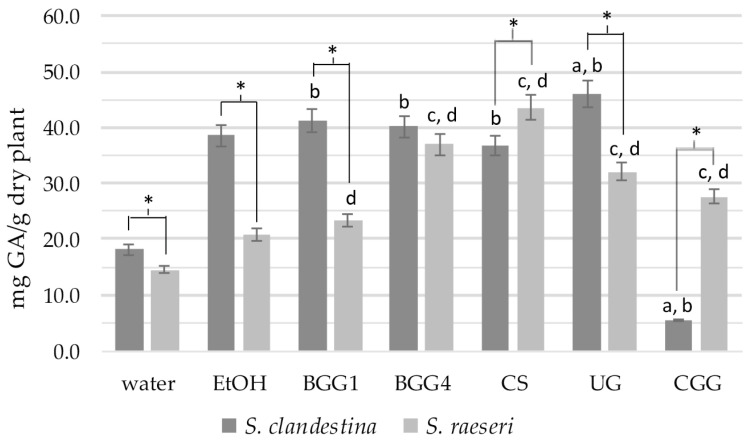
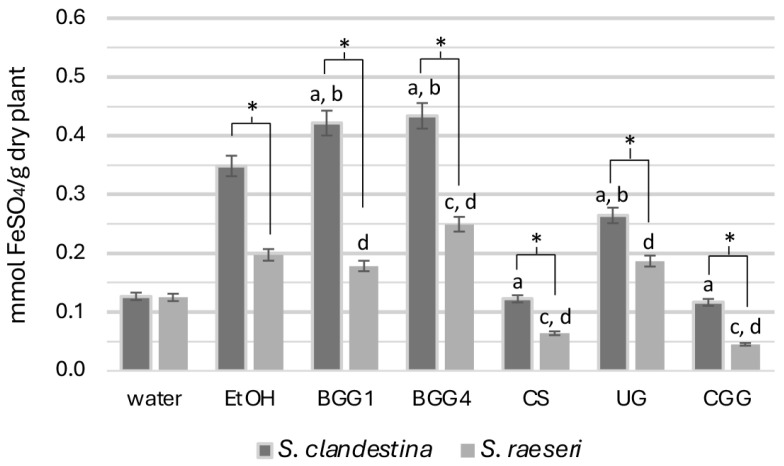
This study investigated the potential of natural deep eutectic solvents (NADESs) for extracting bioactive compounds from the aerial parts of two mountain tea taxa, Sideritis clandestina ssp. peloponnesiaca (Boiss. & Heldr.) Baden and Sideritis raeseri Boiss. & Heldr. ssp. raeseri. Five NADEs, composed of betaine, glycerol, glucose, urea, citric acid, and sucrose, were evaluated for their extraction efficiency compared to conventional solvents (water and 70% ethanol). The total phenolic content (TPC) and antioxidant activity (FRAP and DPPH assays) were determined. Results showed that water was not a good extraction solvent. Despite the great solvent-dependent differences, most NADEs, particularly the betaine-glycerol-glucose mixture (BGG4), exhibited comparable or even superior extraction efficiency and antioxidant activity compared to 70% ethanol. The secondary metabolites in the BGG4 and 70% ethanol extracts were determined with HPLC-MS. The BGG4 extracts of both Sideritis taxa had a rich phenolic profile, with the major ingredients being chlorogenic acid, verbascoside, and non-, mono- and di-acetylated allosyl hypolaetin glycosides. Although distinct quantitative differences in their composition compared to the respective 70% ethanol extracts, and between them were noted, overall, the content of secondary metabolites in both S. raeseri extracts was lower than that of the S. clandestina extracts. These findings suggest that NADEs, particularly BGG4, are promising green solvents for extracting bioactive compounds from Sideritis taxa, paving the way for potential applications in the development of natural and sustainable cosmetic products.
AntioxidantsBiochemistry, Genetics and Molecular Biology-Physiology
CiteScore
10.60
自引率
11.40%
发文量
2123
审稿时长
16.3 days
期刊介绍:
Antioxidants (ISSN 2076-3921), provides an advanced forum for studies related to the science and technology of antioxidants. It publishes research papers, reviews and communications. Our aim is to encourage scientists to publish their experimental and theoretical results in as much detail as possible. There is no restriction on the length of the papers. The full experimental details must be provided so that the results can be reproduced. Electronic files and software regarding the full details of the calculation or experimental procedure, if unable to be published in a normal way, can be deposited as supplementary electronic material.



 京公网安备 11010802042870号
京ICP备2023020795号-1
京公网安备 11010802042870号
京ICP备2023020795号-1

 分享
分享
 求助内容:
求助内容: 应助结果提醒方式:
 扫码关注我们
