Alfredo Caturano, Maria Rocco, Giuseppina Tagliaferri, Alessia Piacevole, Davide Nilo, Giovanni Di Lorenzo, Ilaria Iadicicco, Mariarosaria Donnarumma, Raffaele Galiero, Carlo Acierno, Celestino Sardu, Vincenzo Russo, Erica Vetrano, Caterina Conte, Raffaele Marfella, Luca Rinaldi, Ferdinando Carlo Sasso
{"title":"2型糖尿病的氧化应激和心血管并发症:从病理生理学到生活方式改变","authors":"Alfredo Caturano, Maria Rocco, Giuseppina Tagliaferri, Alessia Piacevole, Davide Nilo, Giovanni Di Lorenzo, Ilaria Iadicicco, Mariarosaria Donnarumma, Raffaele Galiero, Carlo Acierno, Celestino Sardu, Vincenzo Russo, Erica Vetrano, Caterina Conte, Raffaele Marfella, Luca Rinaldi, Ferdinando Carlo Sasso","doi":"10.3390/antiox14010072","DOIUrl":null,"url":null,"abstract":"<p><p>Type 2 diabetes mellitus (T2DM) is a chronic metabolic disorder that significantly increases the risk of cardiovascular disease, which is the leading cause of morbidity and mortality among diabetic patients. A central pathophysiological mechanism linking T2DM to cardiovascular complications is oxidative stress, defined as an imbalance between reactive oxygen species (ROS) production and the body's antioxidant defenses. Hyperglycemia in T2DM promotes oxidative stress through various pathways, including the formation of advanced glycation end products, the activation of protein kinase C, mitochondrial dysfunction, and the polyol pathway. These processes enhance ROS generation, leading to endothelial dysfunction, vascular inflammation, and the exacerbation of cardiovascular damage. Additionally, oxidative stress disrupts nitric oxide signaling, impairing vasodilation and promoting vasoconstriction, which contributes to vascular complications. This review explores the molecular mechanisms by which oxidative stress contributes to the pathogenesis of cardiovascular disease in T2DM. It also examines the potential of lifestyle modifications, such as dietary changes and physical activity, in reducing oxidative stress and mitigating cardiovascular risks in this high-risk population. Understanding these mechanisms is critical for developing targeted therapeutic strategies to improve cardiovascular outcomes in diabetic patients.</p>","PeriodicalId":7984,"journal":{"name":"Antioxidants","volume":"14 1","pages":""},"PeriodicalIF":8.2000,"publicationDate":"2025-01-09","publicationTypes":"Journal Article","fieldsOfStudy":null,"isOpenAccess":false,"openAccessPdf":"https://www.ncbi.nlm.nih.gov/pmc/articles/PMC11759781/pdf/","citationCount":"0","resultStr":"{\"title\":\"Oxidative Stress and Cardiovascular Complications in Type 2 Diabetes: From Pathophysiology to Lifestyle Modifications.\",\"authors\":\"Alfredo Caturano, Maria Rocco, Giuseppina Tagliaferri, Alessia Piacevole, Davide Nilo, Giovanni Di Lorenzo, Ilaria Iadicicco, Mariarosaria Donnarumma, Raffaele Galiero, Carlo Acierno, Celestino Sardu, Vincenzo Russo, Erica Vetrano, Caterina Conte, Raffaele Marfella, Luca Rinaldi, Ferdinando Carlo Sasso\",\"doi\":\"10.3390/antiox14010072\",\"DOIUrl\":null,\"url\":null,\"abstract\":\"<p><p>Type 2 diabetes mellitus (T2DM) is a chronic metabolic disorder that significantly increases the risk of cardiovascular disease, which is the leading cause of morbidity and mortality among diabetic patients. A central pathophysiological mechanism linking T2DM to cardiovascular complications is oxidative stress, defined as an imbalance between reactive oxygen species (ROS) production and the body's antioxidant defenses. Hyperglycemia in T2DM promotes oxidative stress through various pathways, including the formation of advanced glycation end products, the activation of protein kinase C, mitochondrial dysfunction, and the polyol pathway. These processes enhance ROS generation, leading to endothelial dysfunction, vascular inflammation, and the exacerbation of cardiovascular damage. Additionally, oxidative stress disrupts nitric oxide signaling, impairing vasodilation and promoting vasoconstriction, which contributes to vascular complications. This review explores the molecular mechanisms by which oxidative stress contributes to the pathogenesis of cardiovascular disease in T2DM. It also examines the potential of lifestyle modifications, such as dietary changes and physical activity, in reducing oxidative stress and mitigating cardiovascular risks in this high-risk population. Understanding these mechanisms is critical for developing targeted therapeutic strategies to improve cardiovascular outcomes in diabetic patients.</p>\",\"PeriodicalId\":7984,\"journal\":{\"name\":\"Antioxidants\",\"volume\":\"14 1\",\"pages\":\"\"},\"PeriodicalIF\":8.2000,\"publicationDate\":\"2025-01-09\",\"publicationTypes\":\"Journal Article\",\"fieldsOfStudy\":null,\"isOpenAccess\":false,\"openAccessPdf\":\"https://www.ncbi.nlm.nih.gov/pmc/articles/PMC11759781/pdf/\",\"citationCount\":\"0\",\"resultStr\":null,\"platform\":\"Semanticscholar\",\"paperid\":null,\"PeriodicalName\":\"Antioxidants\",\"FirstCategoryId\":\"3\",\"ListUrlMain\":\"https://doi.org/10.3390/antiox14010072\",\"RegionNum\":2,\"RegionCategory\":\"医学\",\"ArticlePicture\":[],\"TitleCN\":null,\"AbstractTextCN\":null,\"PMCID\":null,\"EPubDate\":\"\",\"PubModel\":\"\",\"JCR\":\"Q1\",\"JCRName\":\"BIOCHEMISTRY & MOLECULAR BIOLOGY\",\"Score\":null,\"Total\":0}","platform":"Semanticscholar","paperid":null,"PeriodicalName":"Antioxidants","FirstCategoryId":"3","ListUrlMain":"https://doi.org/10.3390/antiox14010072","RegionNum":2,"RegionCategory":"医学","ArticlePicture":[],"TitleCN":null,"AbstractTextCN":null,"PMCID":null,"EPubDate":"","PubModel":"","JCR":"Q1","JCRName":"BIOCHEMISTRY & MOLECULAR BIOLOGY","Score":null,"Total":0}
Oxidative Stress and Cardiovascular Complications in Type 2 Diabetes: From Pathophysiology to Lifestyle Modifications.
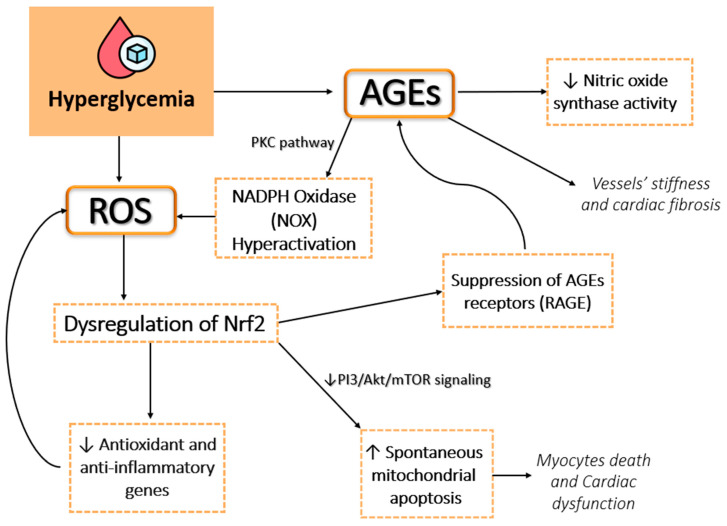
Type 2 diabetes mellitus (T2DM) is a chronic metabolic disorder that significantly increases the risk of cardiovascular disease, which is the leading cause of morbidity and mortality among diabetic patients. A central pathophysiological mechanism linking T2DM to cardiovascular complications is oxidative stress, defined as an imbalance between reactive oxygen species (ROS) production and the body's antioxidant defenses. Hyperglycemia in T2DM promotes oxidative stress through various pathways, including the formation of advanced glycation end products, the activation of protein kinase C, mitochondrial dysfunction, and the polyol pathway. These processes enhance ROS generation, leading to endothelial dysfunction, vascular inflammation, and the exacerbation of cardiovascular damage. Additionally, oxidative stress disrupts nitric oxide signaling, impairing vasodilation and promoting vasoconstriction, which contributes to vascular complications. This review explores the molecular mechanisms by which oxidative stress contributes to the pathogenesis of cardiovascular disease in T2DM. It also examines the potential of lifestyle modifications, such as dietary changes and physical activity, in reducing oxidative stress and mitigating cardiovascular risks in this high-risk population. Understanding these mechanisms is critical for developing targeted therapeutic strategies to improve cardiovascular outcomes in diabetic patients.
AntioxidantsBiochemistry, Genetics and Molecular Biology-Physiology
CiteScore
10.60
自引率
11.40%
发文量
2123
审稿时长
16.3 days
期刊介绍:
Antioxidants (ISSN 2076-3921), provides an advanced forum for studies related to the science and technology of antioxidants. It publishes research papers, reviews and communications. Our aim is to encourage scientists to publish their experimental and theoretical results in as much detail as possible. There is no restriction on the length of the papers. The full experimental details must be provided so that the results can be reproduced. Electronic files and software regarding the full details of the calculation or experimental procedure, if unable to be published in a normal way, can be deposited as supplementary electronic material.





 京公网安备 11010802042870号
京ICP备2023020795号-1
京公网安备 11010802042870号
京ICP备2023020795号-1

 分享
分享
 求助内容:
求助内容: 应助结果提醒方式:
 扫码关注我们
