Blanca Martínez-Inda, Nerea Jiménez-Moreno, Irene Esparza, Carmen Ancín-Azpilicueta
{"title":"咖啡和可可副产品作为生物活性化合物的宝贵来源:乙醇对提取的影响。","authors":"Blanca Martínez-Inda, Nerea Jiménez-Moreno, Irene Esparza, Carmen Ancín-Azpilicueta","doi":"10.3390/antiox14010042","DOIUrl":null,"url":null,"abstract":"<p><p>Cocoa and coffee are two of the world's most important crops. Therefore, their by-products are generated in large quantities. This work proposes a simple method for the valorization of these residues by obtaining phenolic compounds and melanoidins by solid-liquid extraction using different hydroalcoholic solutions as extracting solvents (0, 25, 50, 75, 100% ethanol). Extracts of both by-products presented the highest antioxidant capacity and total phenolic and melanoidin content when using 50-75% ethanol in the solvent. Among all the extracts, those obtained from spent coffee grounds at 75% ethanol showed the highest concentrations of total phenolic compounds (13.5 ± 1.3 mmol gallic acid equivalents/g dry matter) and melanoidins (244.4 ± 20.1 mg/g dry matter). Moreover, the sun protection factor values of the coffee extracts obtained with 50 and 75% of ethanol as extraction solvent (7.8 ± 0.9 and 8.5 ± 0.7, respectively) showed their potential for use in the cosmetic sector. The most important phenolic compounds identified in the coffee by-products extracts were phenolic acids, and most of them were found in higher concentration in extracts obtained with lower percentages of ethanol (0-25%). Protocatechuic acid was the most abundant phenolic in cocoa extracts, with concentrations ranging from 18.49 ± 2.29 to 235.35 ± 5.55 µg/g dry matter, followed by 4-hydroxybenzoic acid, (-)-epicatechin and (+)-catechin. Esculetin was found in both coffee and cocoa extracts, which had not been reported to date in these residues. In summary, the use of 75% ethanol as an extraction solvent seems a good strategy to obtain extracts rich in phenolic compounds from food by-products rich in melanoidins, such as coffee and cocoa by-products. The high antioxidant potential of these extracts makes them of great interest for the cosmetic and nutraceutical industries.</p>","PeriodicalId":7984,"journal":{"name":"Antioxidants","volume":"14 1","pages":""},"PeriodicalIF":8.2000,"publicationDate":"2025-01-01","publicationTypes":"Journal Article","fieldsOfStudy":null,"isOpenAccess":false,"openAccessPdf":"https://www.ncbi.nlm.nih.gov/pmc/articles/PMC11762683/pdf/","citationCount":"0","resultStr":"{\"title\":\"Coffee and Cocoa By-Products as Valuable Sources of Bioactive Compounds: The Influence of Ethanol on Extraction.\",\"authors\":\"Blanca Martínez-Inda, Nerea Jiménez-Moreno, Irene Esparza, Carmen Ancín-Azpilicueta\",\"doi\":\"10.3390/antiox14010042\",\"DOIUrl\":null,\"url\":null,\"abstract\":\"<p><p>Cocoa and coffee are two of the world's most important crops. Therefore, their by-products are generated in large quantities. This work proposes a simple method for the valorization of these residues by obtaining phenolic compounds and melanoidins by solid-liquid extraction using different hydroalcoholic solutions as extracting solvents (0, 25, 50, 75, 100% ethanol). Extracts of both by-products presented the highest antioxidant capacity and total phenolic and melanoidin content when using 50-75% ethanol in the solvent. Among all the extracts, those obtained from spent coffee grounds at 75% ethanol showed the highest concentrations of total phenolic compounds (13.5 ± 1.3 mmol gallic acid equivalents/g dry matter) and melanoidins (244.4 ± 20.1 mg/g dry matter). Moreover, the sun protection factor values of the coffee extracts obtained with 50 and 75% of ethanol as extraction solvent (7.8 ± 0.9 and 8.5 ± 0.7, respectively) showed their potential for use in the cosmetic sector. The most important phenolic compounds identified in the coffee by-products extracts were phenolic acids, and most of them were found in higher concentration in extracts obtained with lower percentages of ethanol (0-25%). Protocatechuic acid was the most abundant phenolic in cocoa extracts, with concentrations ranging from 18.49 ± 2.29 to 235.35 ± 5.55 µg/g dry matter, followed by 4-hydroxybenzoic acid, (-)-epicatechin and (+)-catechin. Esculetin was found in both coffee and cocoa extracts, which had not been reported to date in these residues. In summary, the use of 75% ethanol as an extraction solvent seems a good strategy to obtain extracts rich in phenolic compounds from food by-products rich in melanoidins, such as coffee and cocoa by-products. The high antioxidant potential of these extracts makes them of great interest for the cosmetic and nutraceutical industries.</p>\",\"PeriodicalId\":7984,\"journal\":{\"name\":\"Antioxidants\",\"volume\":\"14 1\",\"pages\":\"\"},\"PeriodicalIF\":8.2000,\"publicationDate\":\"2025-01-01\",\"publicationTypes\":\"Journal Article\",\"fieldsOfStudy\":null,\"isOpenAccess\":false,\"openAccessPdf\":\"https://www.ncbi.nlm.nih.gov/pmc/articles/PMC11762683/pdf/\",\"citationCount\":\"0\",\"resultStr\":null,\"platform\":\"Semanticscholar\",\"paperid\":null,\"PeriodicalName\":\"Antioxidants\",\"FirstCategoryId\":\"3\",\"ListUrlMain\":\"https://doi.org/10.3390/antiox14010042\",\"RegionNum\":2,\"RegionCategory\":\"医学\",\"ArticlePicture\":[],\"TitleCN\":null,\"AbstractTextCN\":null,\"PMCID\":null,\"EPubDate\":\"\",\"PubModel\":\"\",\"JCR\":\"Q1\",\"JCRName\":\"BIOCHEMISTRY & MOLECULAR BIOLOGY\",\"Score\":null,\"Total\":0}","platform":"Semanticscholar","paperid":null,"PeriodicalName":"Antioxidants","FirstCategoryId":"3","ListUrlMain":"https://doi.org/10.3390/antiox14010042","RegionNum":2,"RegionCategory":"医学","ArticlePicture":[],"TitleCN":null,"AbstractTextCN":null,"PMCID":null,"EPubDate":"","PubModel":"","JCR":"Q1","JCRName":"BIOCHEMISTRY & MOLECULAR BIOLOGY","Score":null,"Total":0}
Coffee and Cocoa By-Products as Valuable Sources of Bioactive Compounds: The Influence of Ethanol on Extraction.
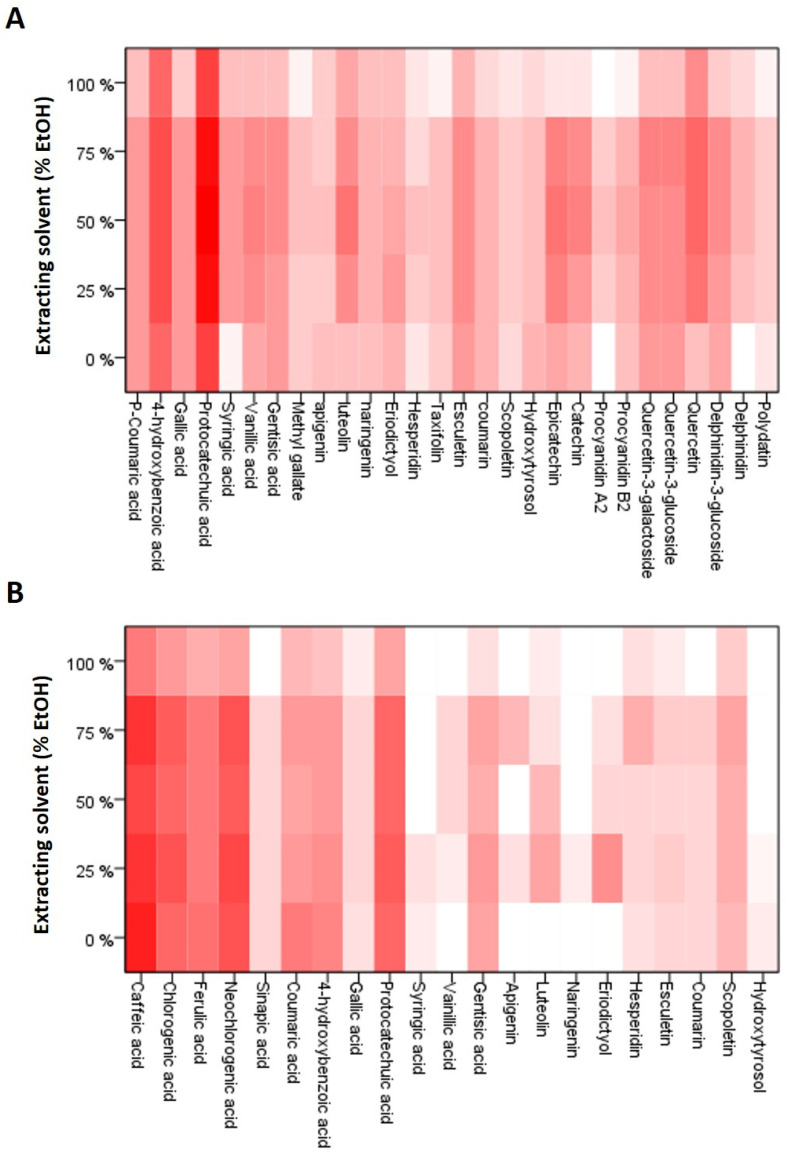
Cocoa and coffee are two of the world's most important crops. Therefore, their by-products are generated in large quantities. This work proposes a simple method for the valorization of these residues by obtaining phenolic compounds and melanoidins by solid-liquid extraction using different hydroalcoholic solutions as extracting solvents (0, 25, 50, 75, 100% ethanol). Extracts of both by-products presented the highest antioxidant capacity and total phenolic and melanoidin content when using 50-75% ethanol in the solvent. Among all the extracts, those obtained from spent coffee grounds at 75% ethanol showed the highest concentrations of total phenolic compounds (13.5 ± 1.3 mmol gallic acid equivalents/g dry matter) and melanoidins (244.4 ± 20.1 mg/g dry matter). Moreover, the sun protection factor values of the coffee extracts obtained with 50 and 75% of ethanol as extraction solvent (7.8 ± 0.9 and 8.5 ± 0.7, respectively) showed their potential for use in the cosmetic sector. The most important phenolic compounds identified in the coffee by-products extracts were phenolic acids, and most of them were found in higher concentration in extracts obtained with lower percentages of ethanol (0-25%). Protocatechuic acid was the most abundant phenolic in cocoa extracts, with concentrations ranging from 18.49 ± 2.29 to 235.35 ± 5.55 µg/g dry matter, followed by 4-hydroxybenzoic acid, (-)-epicatechin and (+)-catechin. Esculetin was found in both coffee and cocoa extracts, which had not been reported to date in these residues. In summary, the use of 75% ethanol as an extraction solvent seems a good strategy to obtain extracts rich in phenolic compounds from food by-products rich in melanoidins, such as coffee and cocoa by-products. The high antioxidant potential of these extracts makes them of great interest for the cosmetic and nutraceutical industries.
AntioxidantsBiochemistry, Genetics and Molecular Biology-Physiology
CiteScore
10.60
自引率
11.40%
发文量
2123
审稿时长
16.3 days
期刊介绍:
Antioxidants (ISSN 2076-3921), provides an advanced forum for studies related to the science and technology of antioxidants. It publishes research papers, reviews and communications. Our aim is to encourage scientists to publish their experimental and theoretical results in as much detail as possible. There is no restriction on the length of the papers. The full experimental details must be provided so that the results can be reproduced. Electronic files and software regarding the full details of the calculation or experimental procedure, if unable to be published in a normal way, can be deposited as supplementary electronic material.






 京公网安备 11010802042870号
京ICP备2023020795号-1
京公网安备 11010802042870号
京ICP备2023020795号-1

 分享
分享
 求助内容:
求助内容: 应助结果提醒方式:
 扫码关注我们
