{"title":"无麸质饮食和健康相关的生活质量:经验证的希腊版本的乳糜泻饮食依从性测试。","authors":"Emmanuel Psylinakis, Alexios Manidis, Fotios Makris, Nikolaos Thalassinos, Anastasia Markaki, Vasileia Kounelaki, Eirini Sfakianaki, Aspasia Spyridaki","doi":"10.3390/nu17020353","DOIUrl":null,"url":null,"abstract":"<p><strong>Background/objectives: </strong>A reliable assessment of gluten-free diet (GFD) adherence is essential for managing celiac disease (CD). This study aimed to validate the Hellenic version of the Celiac Disease Adherence Test (H-CDAT) to evaluate adherence levels and explore the impact of dietary adherence on health-related quality of life (HRQoL)-both of which have never been objectively assessed in Greek CD patients.</p><p><strong>Methods: </strong>The study included 102 adult CD patients who completed H-CDAT, diet-related questions, and the 36-Item Short Form Health Survey (SF-36).</p><p><strong>Results: </strong>H-CDAT demonstrated good psychometric properties and showed multiple strong correlations with HRQoL dimensions. H-CDAT adherence was Good in 38.2%, Moderate in 42.2%, and Poor in 19.6% of patients, despite their perception of effective adherence, with 51% never having visited a dietitian for guidance on a GFD. Patients scored significantly lower across most HRQoL dimensions compared to the general Greek population. When stratified into the three adherence categories, striking differences emerged between Good and Moderate adherence across both physical and mental health domains, highlighting that moderate adherence is not sufficient for optimal health outcomes.</p><p><strong>Conclusions: </strong>These findings emphasize the critical role of strict GFD adherence in improving overall health and underscore the importance of dietetic intervention for achieving optimal patient outcomes.</p>","PeriodicalId":19486,"journal":{"name":"Nutrients","volume":"17 2","pages":""},"PeriodicalIF":5.0000,"publicationDate":"2025-01-20","publicationTypes":"Journal Article","fieldsOfStudy":null,"isOpenAccess":false,"openAccessPdf":"https://www.ncbi.nlm.nih.gov/pmc/articles/PMC11768578/pdf/","citationCount":"0","resultStr":"{\"title\":\"Gluten-Free Diet and Health-Related Quality of Life: The Validated Hellenic Version of the Celiac Dietary Adherence Test.\",\"authors\":\"Emmanuel Psylinakis, Alexios Manidis, Fotios Makris, Nikolaos Thalassinos, Anastasia Markaki, Vasileia Kounelaki, Eirini Sfakianaki, Aspasia Spyridaki\",\"doi\":\"10.3390/nu17020353\",\"DOIUrl\":null,\"url\":null,\"abstract\":\"<p><strong>Background/objectives: </strong>A reliable assessment of gluten-free diet (GFD) adherence is essential for managing celiac disease (CD). This study aimed to validate the Hellenic version of the Celiac Disease Adherence Test (H-CDAT) to evaluate adherence levels and explore the impact of dietary adherence on health-related quality of life (HRQoL)-both of which have never been objectively assessed in Greek CD patients.</p><p><strong>Methods: </strong>The study included 102 adult CD patients who completed H-CDAT, diet-related questions, and the 36-Item Short Form Health Survey (SF-36).</p><p><strong>Results: </strong>H-CDAT demonstrated good psychometric properties and showed multiple strong correlations with HRQoL dimensions. H-CDAT adherence was Good in 38.2%, Moderate in 42.2%, and Poor in 19.6% of patients, despite their perception of effective adherence, with 51% never having visited a dietitian for guidance on a GFD. Patients scored significantly lower across most HRQoL dimensions compared to the general Greek population. When stratified into the three adherence categories, striking differences emerged between Good and Moderate adherence across both physical and mental health domains, highlighting that moderate adherence is not sufficient for optimal health outcomes.</p><p><strong>Conclusions: </strong>These findings emphasize the critical role of strict GFD adherence in improving overall health and underscore the importance of dietetic intervention for achieving optimal patient outcomes.</p>\",\"PeriodicalId\":19486,\"journal\":{\"name\":\"Nutrients\",\"volume\":\"17 2\",\"pages\":\"\"},\"PeriodicalIF\":5.0000,\"publicationDate\":\"2025-01-20\",\"publicationTypes\":\"Journal Article\",\"fieldsOfStudy\":null,\"isOpenAccess\":false,\"openAccessPdf\":\"https://www.ncbi.nlm.nih.gov/pmc/articles/PMC11768578/pdf/\",\"citationCount\":\"0\",\"resultStr\":null,\"platform\":\"Semanticscholar\",\"paperid\":null,\"PeriodicalName\":\"Nutrients\",\"FirstCategoryId\":\"3\",\"ListUrlMain\":\"https://doi.org/10.3390/nu17020353\",\"RegionNum\":2,\"RegionCategory\":\"医学\",\"ArticlePicture\":[],\"TitleCN\":null,\"AbstractTextCN\":null,\"PMCID\":null,\"EPubDate\":\"\",\"PubModel\":\"\",\"JCR\":\"Q1\",\"JCRName\":\"NUTRITION & DIETETICS\",\"Score\":null,\"Total\":0}","platform":"Semanticscholar","paperid":null,"PeriodicalName":"Nutrients","FirstCategoryId":"3","ListUrlMain":"https://doi.org/10.3390/nu17020353","RegionNum":2,"RegionCategory":"医学","ArticlePicture":[],"TitleCN":null,"AbstractTextCN":null,"PMCID":null,"EPubDate":"","PubModel":"","JCR":"Q1","JCRName":"NUTRITION & DIETETICS","Score":null,"Total":0}
Gluten-Free Diet and Health-Related Quality of Life: The Validated Hellenic Version of the Celiac Dietary Adherence Test.
Background/objectives: A reliable assessment of gluten-free diet (GFD) adherence is essential for managing celiac disease (CD). This study aimed to validate the Hellenic version of the Celiac Disease Adherence Test (H-CDAT) to evaluate adherence levels and explore the impact of dietary adherence on health-related quality of life (HRQoL)-both of which have never been objectively assessed in Greek CD patients.
Methods: The study included 102 adult CD patients who completed H-CDAT, diet-related questions, and the 36-Item Short Form Health Survey (SF-36).
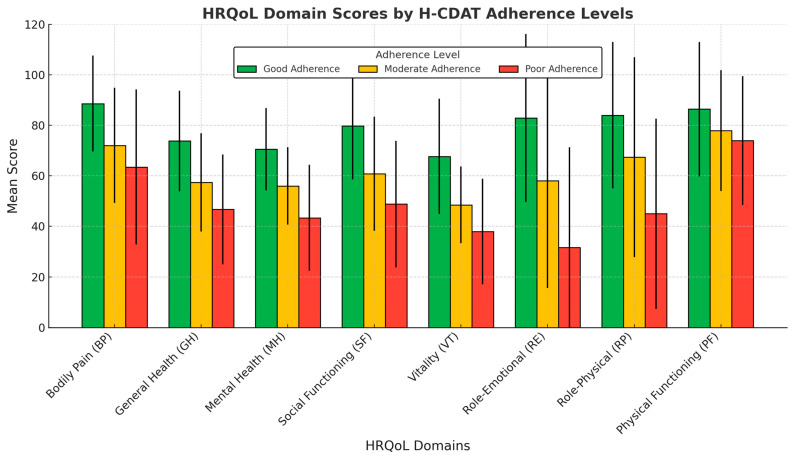
Results: H-CDAT demonstrated good psychometric properties and showed multiple strong correlations with HRQoL dimensions. H-CDAT adherence was Good in 38.2%, Moderate in 42.2%, and Poor in 19.6% of patients, despite their perception of effective adherence, with 51% never having visited a dietitian for guidance on a GFD. Patients scored significantly lower across most HRQoL dimensions compared to the general Greek population. When stratified into the three adherence categories, striking differences emerged between Good and Moderate adherence across both physical and mental health domains, highlighting that moderate adherence is not sufficient for optimal health outcomes.
Conclusions: These findings emphasize the critical role of strict GFD adherence in improving overall health and underscore the importance of dietetic intervention for achieving optimal patient outcomes.
期刊介绍:
Nutrients (ISSN 2072-6643) is an international, peer-reviewed open access advanced forum for studies related to Human Nutrition. It publishes reviews, regular research papers and short communications. Our aim is to encourage scientists to publish their experimental and theoretical results in as much detail as possible. There is no restriction on the length of the papers. The full experimental details must be provided so that the results can be reproduced.




 京公网安备 11010802042870号
京ICP备2023020795号-1
京公网安备 11010802042870号
京ICP备2023020795号-1

 分享
分享
 求助内容:
求助内容: 应助结果提醒方式:
 扫码关注我们
